


BIMSTEC’s Bangkok Summit: A Quiet Revival of Regionalism in the Bay of Bengal
The Bangkok proclamation confirmed BIMSTEC's desire to complete its Free Trade Agreement, a target it still has from 2004.

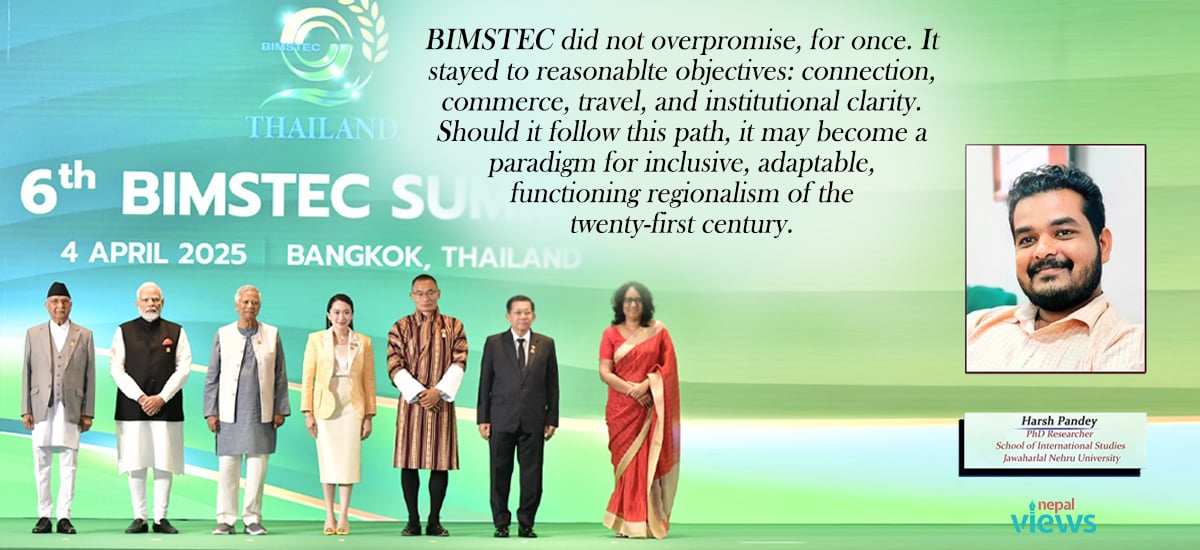

The Bay of Bengal Initiative for Multi-Sectoral Technical and Economic Cooperation (BIMSTEC) discreetly returned in November 2023 in a world progressively marked by divided geopolitics and declining multilateralism. Though it may not have made international news, the results of the sixth BIMSTEC Summit in Bangkok might redefine regional cooperation in one of the most economically bright but institutionally fractured areas in the globe.
Two significant actions of the summit were the formal acceptance of the BIMSTEC Charter and the release of Bangkok Vision 2030. Taken together, they indicate that BIMSTEC is not happy to be a "talk shop." It is looking for change in a disciplined, legally backed, action-oriented regional bloc that can operate as a link between South and Southeast Asia.
Now, in effect, the Charter gives BIMSTEC formalised rotating leadership, a legal personality, and a precise decision-making framework. It turns the group from consultative to institutional. The new framework lets BIMSTEC stand on its own after more than two decades of underwhelming development.
It was abundantly evident when Thailand handed over the Chairmanship to Bangladesh: BIMSTEC is preparing for long-term stability. This cannot come at a better moment. SAARC is not active at all. ASEAN is overwhelmed. With its emphasis on technological and financial collaboration, BIMSTEC is flexible to operate in an ideologically fractured political landscape in the Bay of Bengal.
The Bangkok proclamation confirmed BIMSTEC's desire to complete its Free Trade Agreement, a target it still has from 2004. But this time, there appears to be speed. Regional economies are realising they need each other more than ever as global supply networks change and big nations move home.
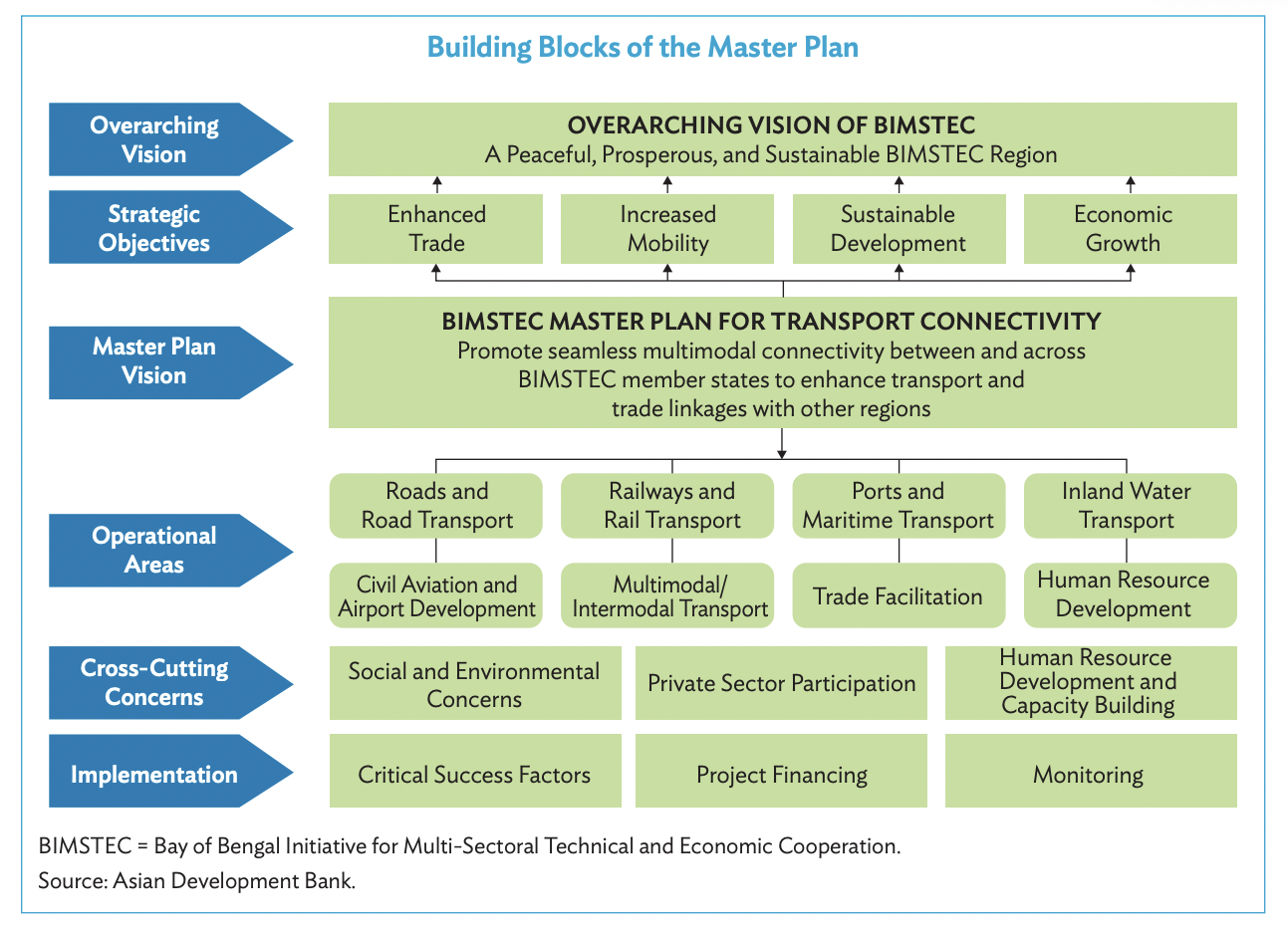
The figures speak for themselves: intra-BIMSTEC commerce accounts for just 6% of group trade overall. This is shockingly low for a territory with one of the fastest-growing economies worldwide and more than 1.7 billion people. This may be altered with the drive to apply the BIMSTEC Transport Connectivity Master Plan, which calls for roads, ports, and railroads. Reducing friction and bringing markets closer depends critically on projects like the India-Myanmar-Thailand Trilateral Highway and multimodal transportation hubs.
Rising as major anchors are Thailand and India. However, the promise of shared prosperity will remain disparate unless emerging economies like Nepal, Bhutan, and Sri Lanka are included in regional value chains.
The summit's focus on person-to-person contact was among its most invigorating features. Not considered afterthoughts—they were front and centre—were tourism, cultural interaction, intellectual mobility, and young discourse. Talks on regional tourist circuits, standard visa policies, and increased student exchanges are underway.
Though they may appear symbolic, soft power and cultural diplomacy may help to foster mutual respect and shared identity in an area marred by past conflict. Linking Buddhist pilgrimage routes or Himalayan eco-trails, for example, may transform historical legacy into motors of development.
Academic partnerships may inspire creativity in digital governance, disaster management, and climate adaptation—fields where the region presents both risk and potential. Still, not everything went perfectly. Under military junta control since 2021, Myanmar was present but mostly missing. With its leadership, there was no meaningful communication; the humanitarian disaster raging in Bangladesh, India, and Thailand remained untreated.
BIMSTEC's fundamental flaw is that it avoids politics. But politics and economics are interwoven in the modern world. BIMSTEC can discuss connection for how long without facing the reality that one of its members is in free fall? The organisation runs the danger of losing credibility without a means of handling such situations.
Another important realisation is that BIMSTEC is awakening to a climate catastrophe. From cross-border renewable energy initiatives to collaborative disaster response, the summit made firm pledges. India's promise to assist regional clean energy corridors and Thailand's appeal for green economic cooperation. Still, they only match eyesight levels.
Funding, execution, and political will now present difficulties. Among the most sensitive areas of climate worldwide is the Bay of Bengal. Before it is too late, BIMSTEC has to transform its vulnerability into a platform for resilience and innovation. Though it lacked flair, the Bangkok Summit was focused.
BIMSTEC did not overpromise, for once. It stayed to reasonable objectives: connection, commerce, travel, and institutional clarity. Should it follow this path, it may become a paradigm for inclusive, adaptable, functioning regionalism of the twenty-first century. But success will rely on follow-through. The route map is supplied by Bangkok Vision 2030 and the Charter. This is now the moment for activity.
Political leaders have to go from pronouncements to execution. BIMSTEC can only develop from a vision to a tool for change in the Bay of Bengal at that point. Perhaps it's the quiet, determined ones we should start observing in a world tired of international forums and summit tiredness.
(Harsh Pandey is a PhD Candidate at the School of International Studies, JNU, New Delhi, and a Life Member of International Centre for Peace Studies, New Delhi.)