Racing against the odds: Nepali women steer their way into global motorsports
Essence Shrestha
10/26/2025 02:26 AM EDT13 min read

Kathmandu: When Nepali racer Bipashna Tamang opened her phone on September 28 and saw the official Instagram post of the Fédération Internationale de l’Automobile (FIA) President, she froze for a moment. The post, captioned “Day 1 of the Asia Pacific Motorsport Championship,” had seven photos. But it was the first one that caught her breath — a picture of herself smiling wide under her racing helmet.
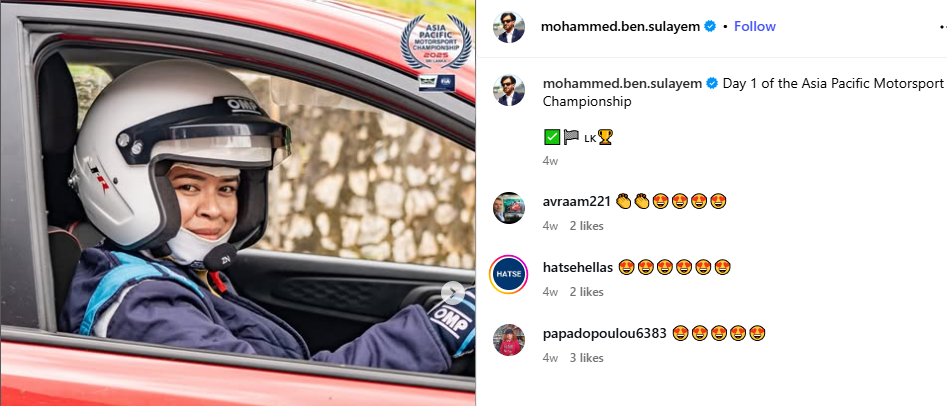
“Oh my god, that was not less than a medal for me,” she laughs now, remembering the moment. “Although I was unable to bring the medal home to Nepal, it was the first time I felt like receiving a medal at an international event. And the FIA President’s first photo was mine. I was jumping with joy, showing it as if it was gold.”
That moment was not only her personal triumph but also a proud one for Nepal. For the first time, a Nepali woman racer was being noticed on a global stage. Yet behind the thrill of being recognized by the FIA President lay pressure and fear. “I was representing my nation,” she says. “Even my smallest error could reflect on the whole country. It felt like carrying the responsibility of the entire nation.”
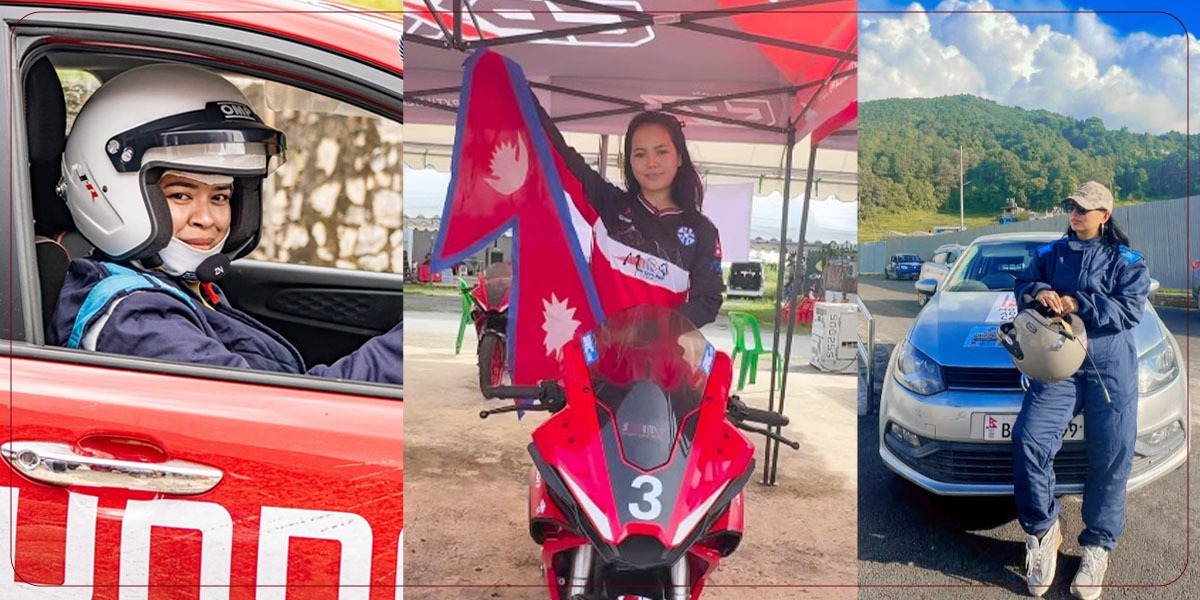
Bipashna represents one of the few women racers in Nepal to have made their names beyond borders, competing in the global motorsport scene.
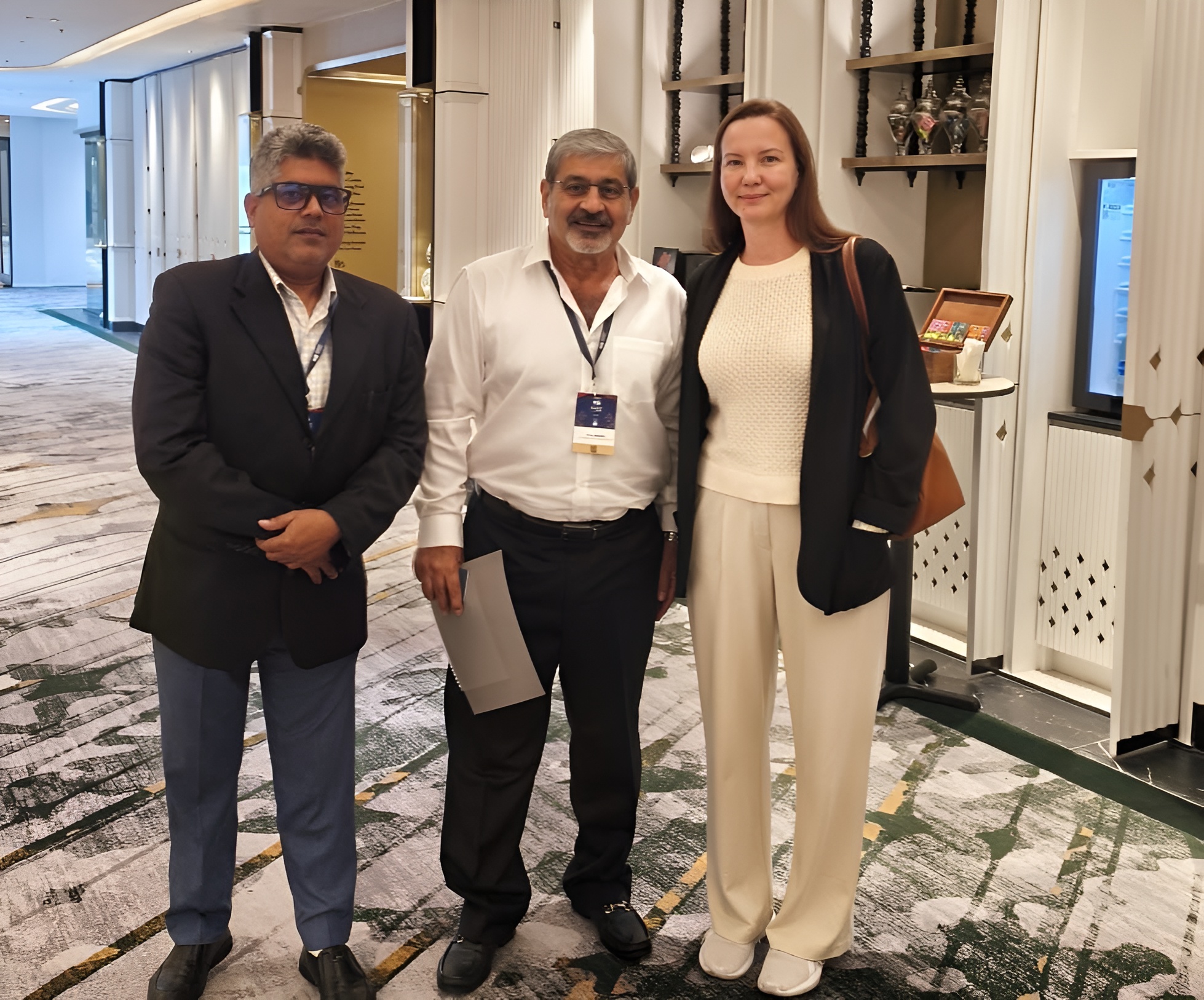
According to Gobinda Bhattarai, Nepal Automobiles’ Association (NASA) Executive Director, the FIA President’s gesture carried a meaning larger than a post.
“It’s extremely positive,” said Bhattarai. “This means that the time has come for NASA Nepal, its players, and officials to be recognized across all sectors within the FIA. On a personal level, too, having a woman from a country like Nepal stand on a racing track is a matter of pride for both us and the FIA.”
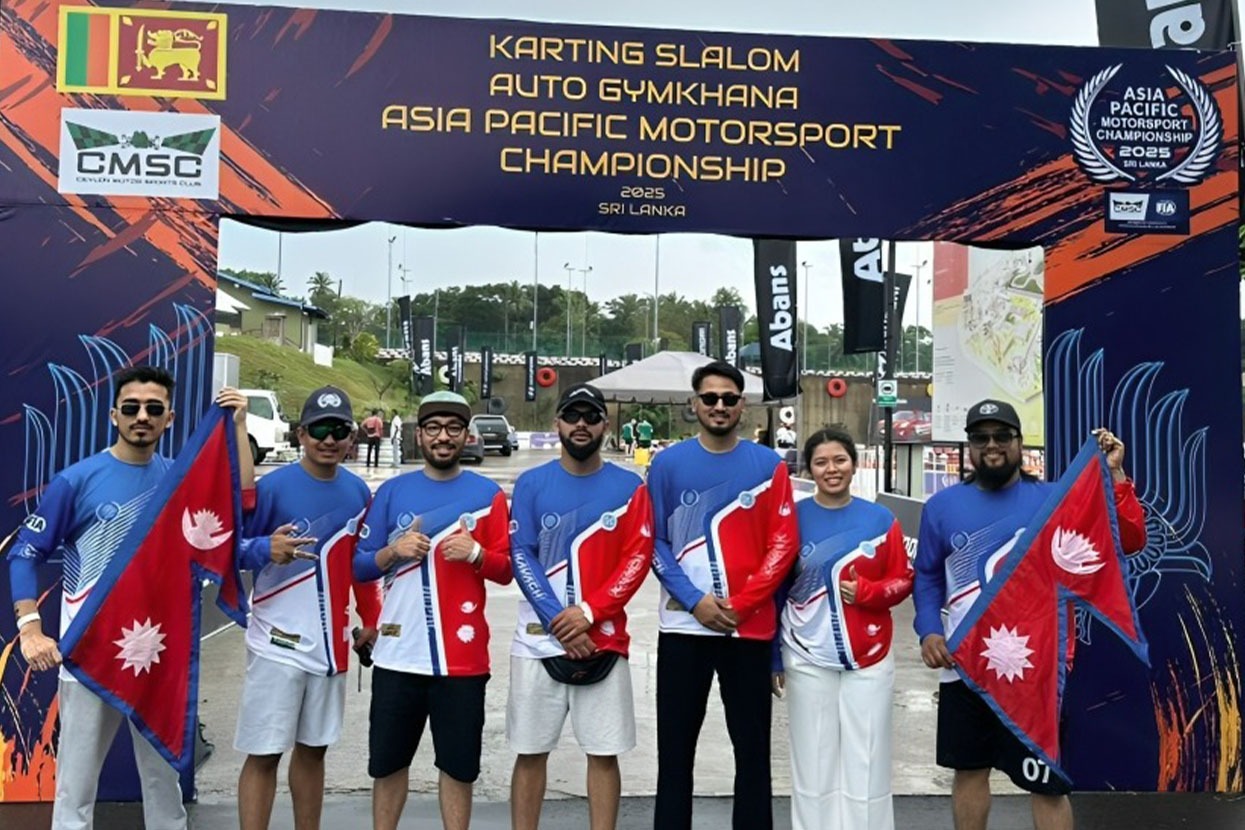
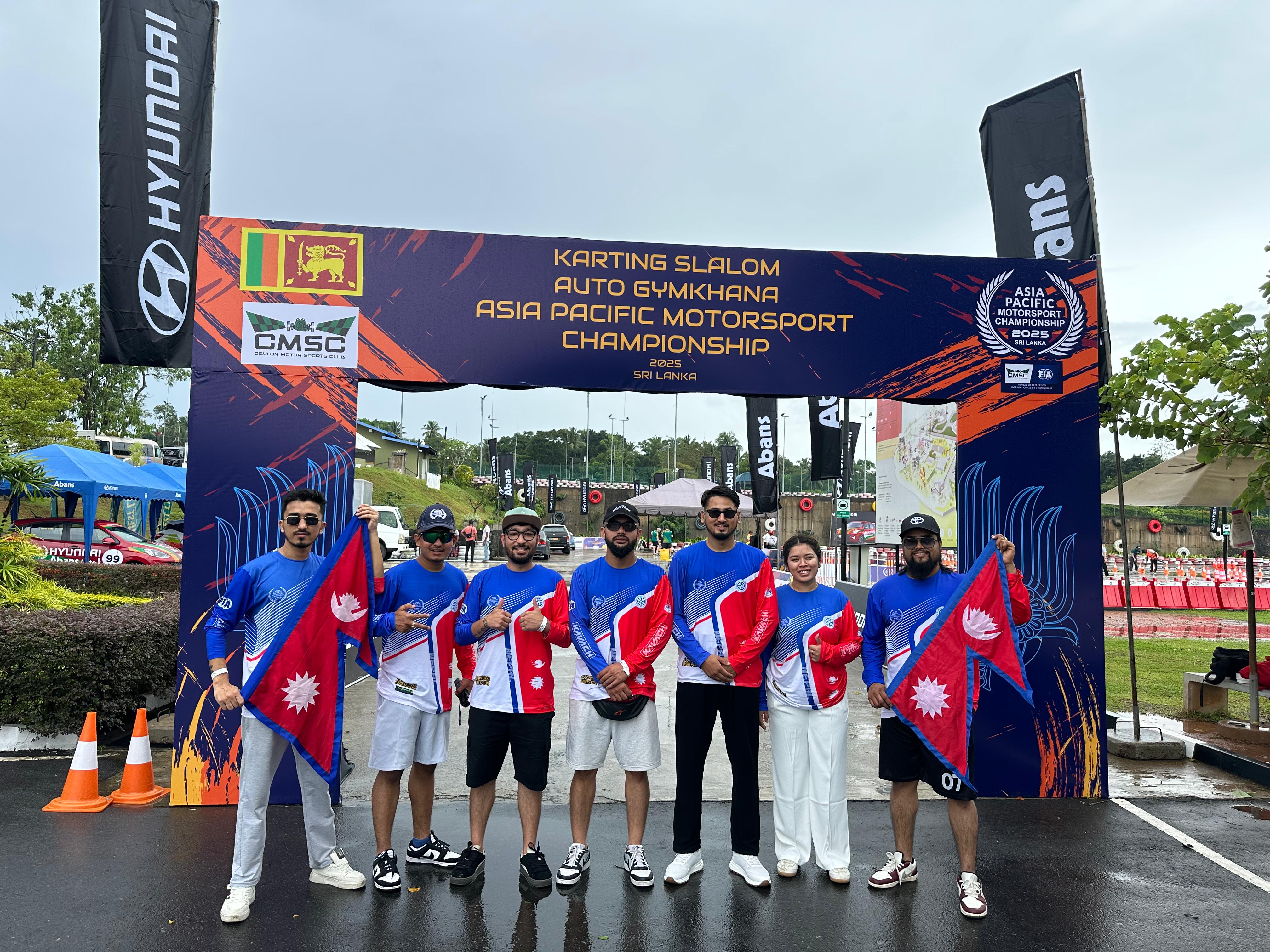
Nepal’s presence at the Asia Pacific Motorsport Championship, held from September 26 to 28 at the Sri Lanka Karting Circuit in Colombo, was modest but meaningful. Out of 204 participants from 18 nations, six athletes represented Nepal — three in Auto Gymkhana, two in Cross Car Autocross, and one in E-sports. In the Women’s Auto Gymkhana Individual category, Bipashna finished ninth out of twelve competitors, missing the top eight by mere milliseconds.
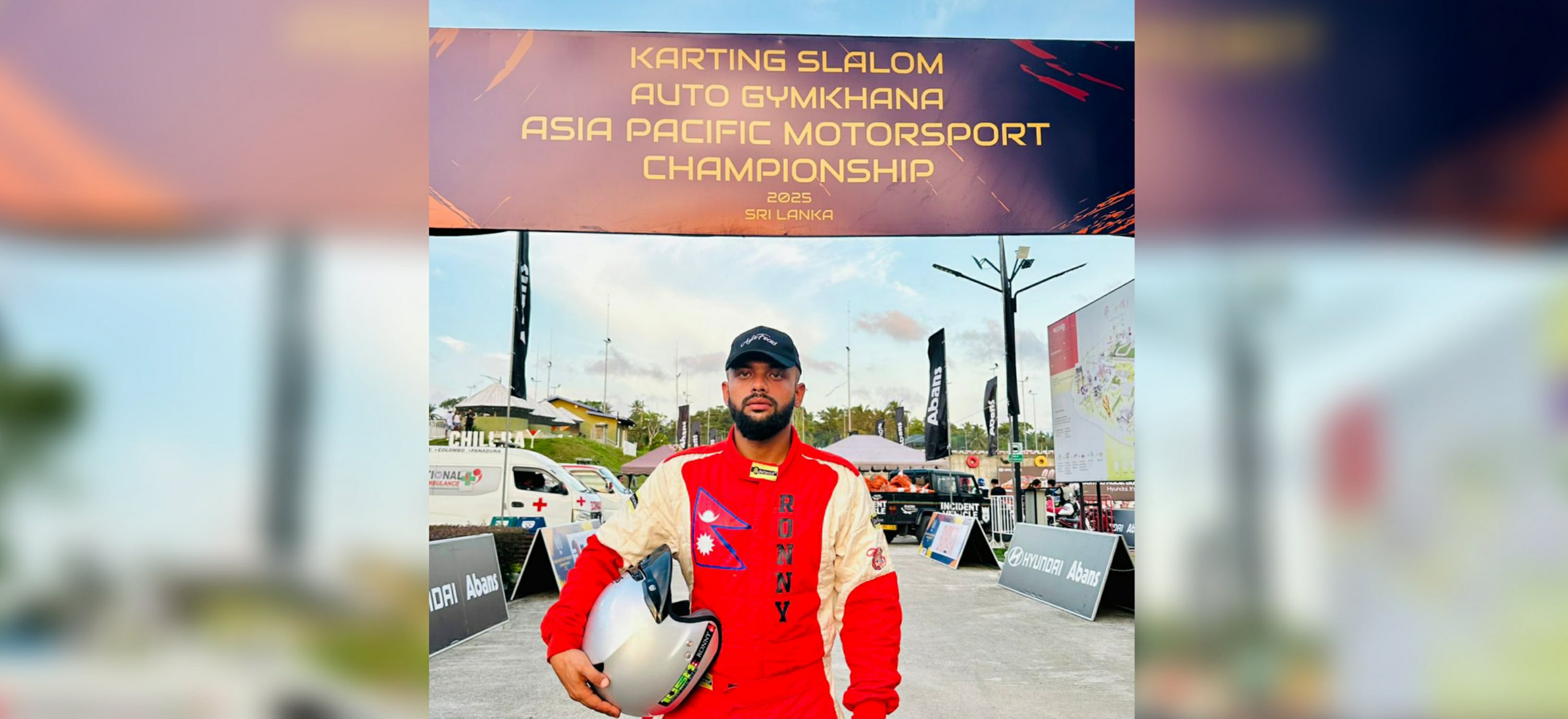
Nepal’s Ashish Bharati “Ronny” bagged the gold medal in the Auto Gymkhana (Men’s Individual) category. The Championship featured 204 participants from 18 nations.
Six athletes represented Nepal: three in Auto Gymkhana, two in Cross Car Autocross, and one in E-sports. In the Women’s Auto Gymkhana Individual, Bipashna secured ninth position in her debut international championship, missing the Top 8 by milliseconds.
Not long before that, Bipashna officially began her participation in a national motor racing event. During a conversation with her friend Sangam Shrestha, she heard about the upcoming Bagmati Auto Gymkhana. He arranged her meeting with Ashish Raurniyaar, and she decided to participate.
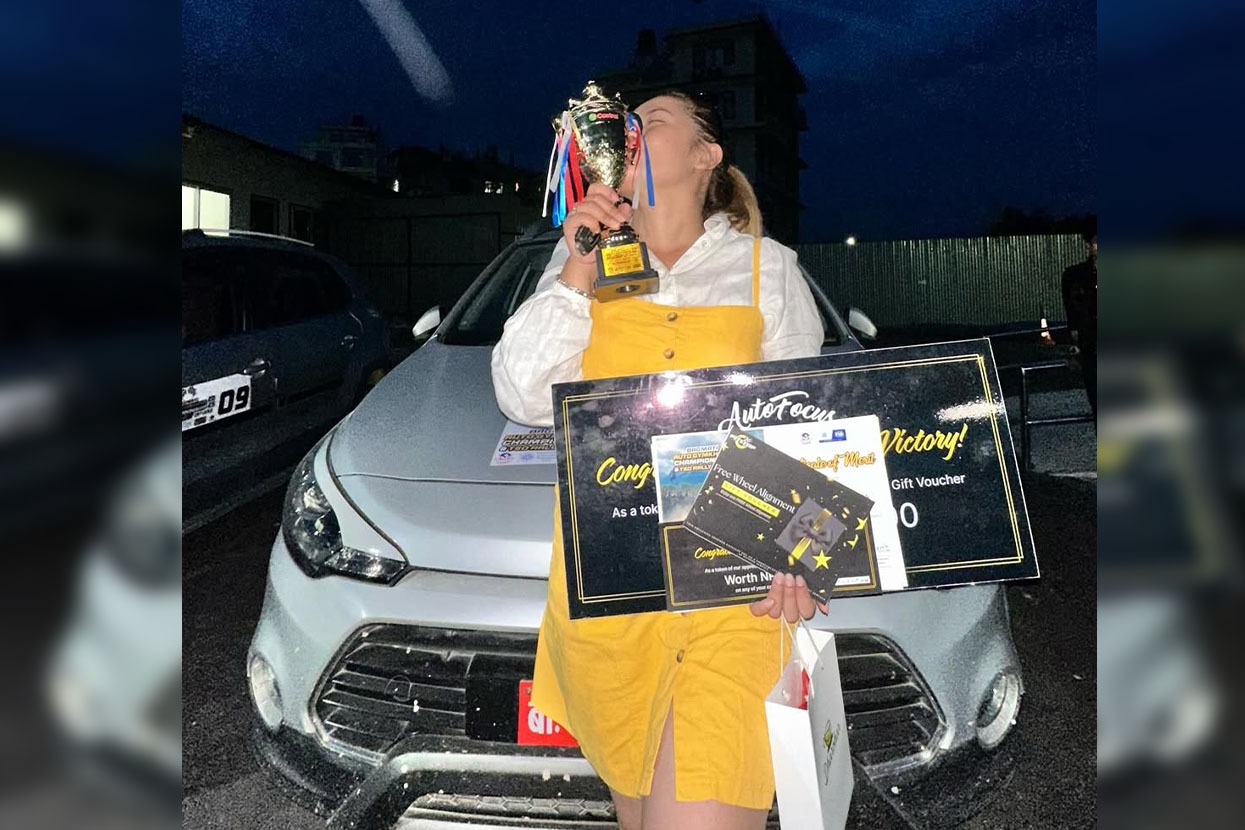
Reminiscing about her first national championship, Bipashna shares, “I just participated with a winning mindset. I was unaware of my competitors. I knew my driving skills and was confident in them.”
Just like Bipashna, it was also a surprise for Puja Pakhrin to discover the motor racing scene for women in Nepal. It was the Bagmati Auto Gymkhana event that introduced Puja to the scene.
Puja had been a motor enthusiast for a long time. She had always been fond of four-wheelers and acceleration. Speed and racing were always part of her wish list. To quench that thirst, she explored international racing scenes online, wishing for the same in Nepal.
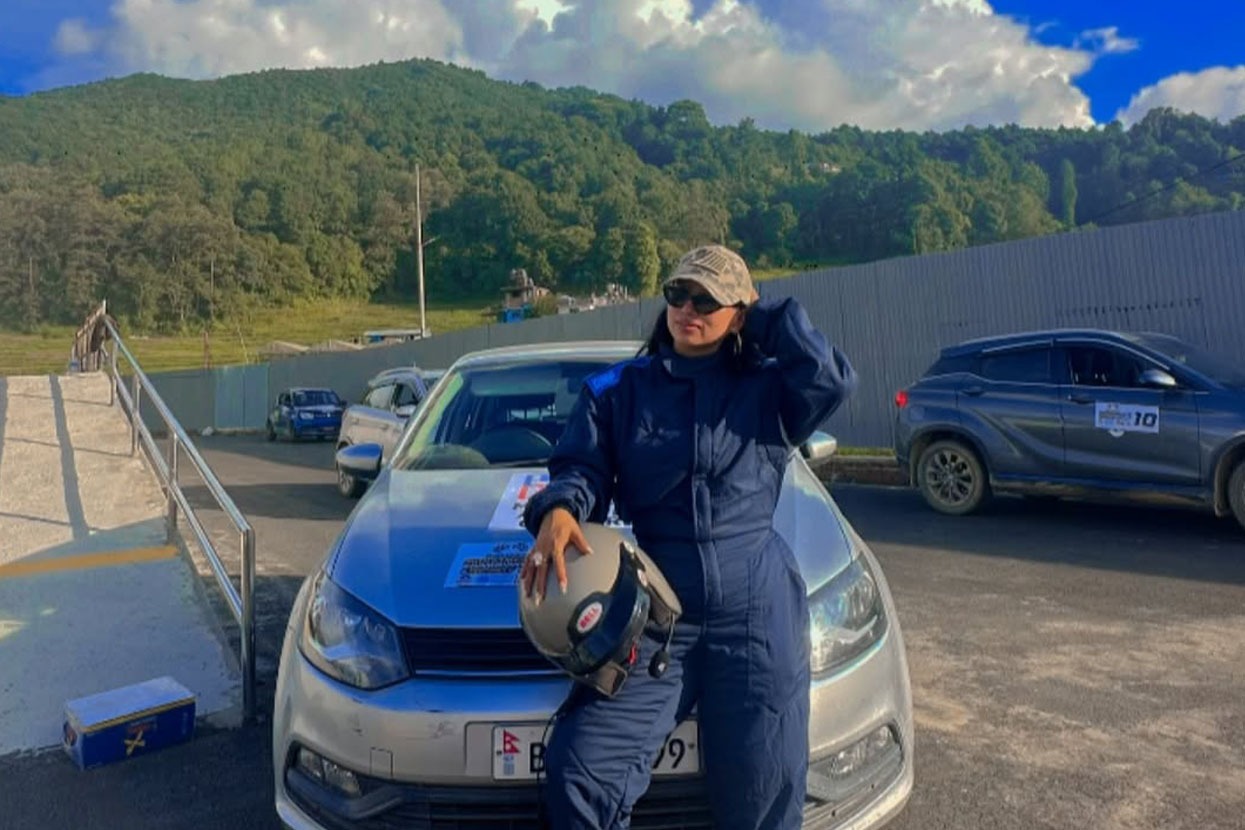
When she discovered Nepal’s motor racing scene — which gave space to women drivers — it was like hitting the jackpot. Though she came to know about it a bit late, it felt like discovering a passion that later turned into an obsession.
Recalling the moment she learned about the event, she said, “I knew about it just two days earlier from my sister, Barsha Basnet. Though I had an important meeting, I skipped it to participate in the race.”
Puja is also the runner-up of the Time Distance Speed (TDS) Rally, which included more than 35 drivers, both male and female. Remembering her achievement, she said, “It was my first participation. It was kind of unbelievable. I felt like if I could achieve this position without any experience, what might I do with proper preparation? It pumped up my confidence.”
In the early days, Puja used to drive toward Lamatar on weekends and evenings. It used to be just the road, her car, and the speed. She often wondered why there wasn’t a racing scene in Nepal. Discovering the championship was enough for her to jump at the opportunity to participate.
With the same excitement, Bipashna competed in the championship. She discovered that Auto Gymkhana was not limited to driving skills; it was also about memory.
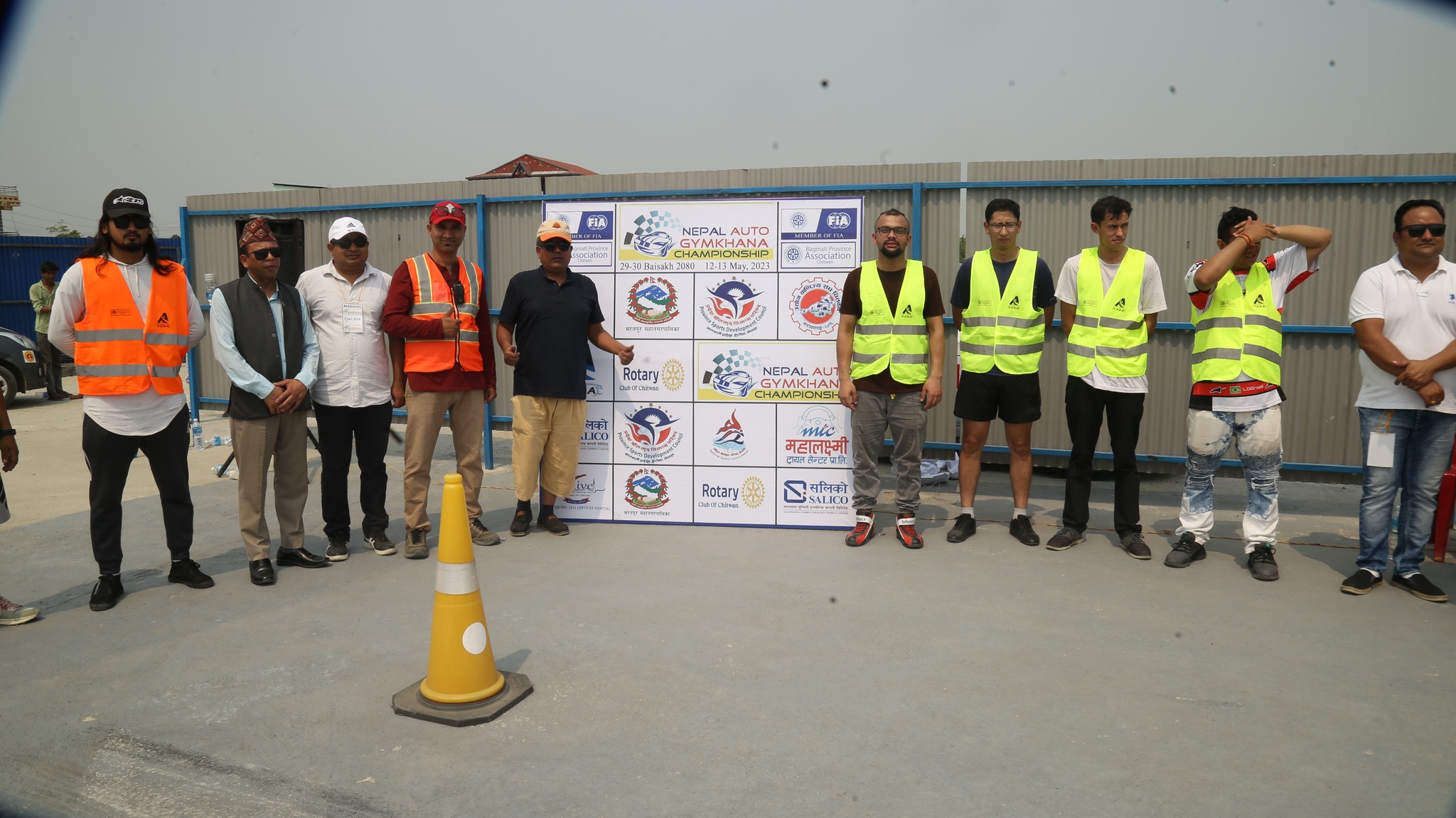
“Other than driving skills, it’s about how a driver uses their mind. There’s a need to remember the map — it’s also a test of how good you are at remembering routes. And you must drive fast on the track,” said Bipashna. Though she secured first position in the qualifying round, she placed second in the finals.
With a background in the newsroom and a career shift to event hosting, she became passionate about motor racing over time.
It had been a month since Bipashna fully dedicated herself to training for the Colombo Championship. Staying away from any full-time job, she focused on preparation.
Thrilled to represent Nepal internationally, she wanted to dedicate her entire month to training. But NASA’s management issues didn’t allow her to fully utilize her time.
Her training sessions faced repeated obstacles. Sometimes, they weren’t permitted even within NASA’s office premises. Even after being allowed to practice after 5 p.m., they faced interruptions. Athletes struggled to get proper areas for training. The restrictions made her think, “If this is how we practice, why should we participate at all? Let’s just quit and think about something else.”
But it wasn’t just about participating — it was about Bipashna’s lifelong love for driving. Watching her father drive as a child ignited her passion.
“Since childhood, watching my father behind the wheel, I was eager to learn to drive as soon as possible. He used to drive a Pajero. I badly wanted to drive and race,” she shared with a giggle.
Explaining her feeling every time she touches the wheel, Bipashna said, “I am alive. I am living.”
Despite her passion, she was aware of the financial stability needed to pursue motor racing. “Though I wanted to explore motor racing early on, I always felt it was expensive. So, I was clear that I needed to be financially settled first,” she said.
Bipashna sees her passion as an heirloom from her father rather than destiny. Her father, a driver by occupation, worked hard to give her a quality education. He taught her to choose happiness over everything. Though Bipashna believes in “Once a journalist, always a journalist,” she found joy in becoming an emcee.
_sOuZMwtPj1.jpg)
Just a day before departing for Sri Lanka, Bipashna brought the practice car from Satdobato. “I brought the car; it was in a bizarre state. Sitting inside, I couldn’t hold back my tears. Everyone asked why I was crying, and I lamented the situation — is this how I’m going international?” she recalls.
Those tears expressed her helplessness. Despite her effort, she lacked proper training time and infrastructure.
She was about to represent Nepal internationally — but where was the support? Athletes had to invest in tickets, food, and lodging, yet they lacked a proper training atmosphere.
Bipashna even approached private companies, but as it was her debut, she had no racing portfolio. Still, she made up her mind to face whatever awaited her in Sri Lanka, financially or mentally.
Before reaching the track, she was confident of winning, but as race day approached, uncertainty took over.
NASA Executive Director Bhattarai admitted they couldn’t provide top-notch training. “We don’t have proper tracks, equipment, trainers, budget, or time,” said Bhattarai. “In most countries, drivers are developed by automobile companies and promoters, while federations focus on policy and management. In Nepal, the federation handles everything — that’s why performance isn’t as expected. Even so, it took nearly a decade of effort to reach this level.”
_Y69jU71k0Z.jpg)
On race day, Bipashna described the experience as surreal. “I felt like everybody was watching me. I am from Nepal, and my performance would reflect what Nepal is about,” she said. “I was afraid. I was participating based only on my driving experience on Nepali roads.”
However, Puja shared the happiness of seeing women on global platforms. “It really makes me proud that Nepali women racers are competing internationally,” said Puja. “We were cheering for Bipashna from here.”
Bipashna shared that her driving experience on Nepal’s winding roads helped her in the championship — a plus point for Nepali racers.
At one point, she also shared the emotional turmoil and limitations the team faced in Sri Lanka. “We missed guardianship. We felt like children without parents. Other countries had big support teams; we had one manager handling everything,” she said. “We had to manage food and logistics ourselves. The number of officials really impacts performance.”
Bhattarai called it a contextual challenge. “Sometimes things don’t align. But we must improve — management, sporting spirit, time, reporting, everything,” he said. “We’re still at a crossroads. Only when all parts come together can we reach the highway.”
Meanwhile, Bipashna emphasized that political instability also challenges international participation. Recalling the recent Gen Z protest in Nepal, she said, “In the recent Asia Cup (ACCR), Nawang Moktan faced a dilemma. Her tickets were ready, but due to the national situation, she missed her practice.”
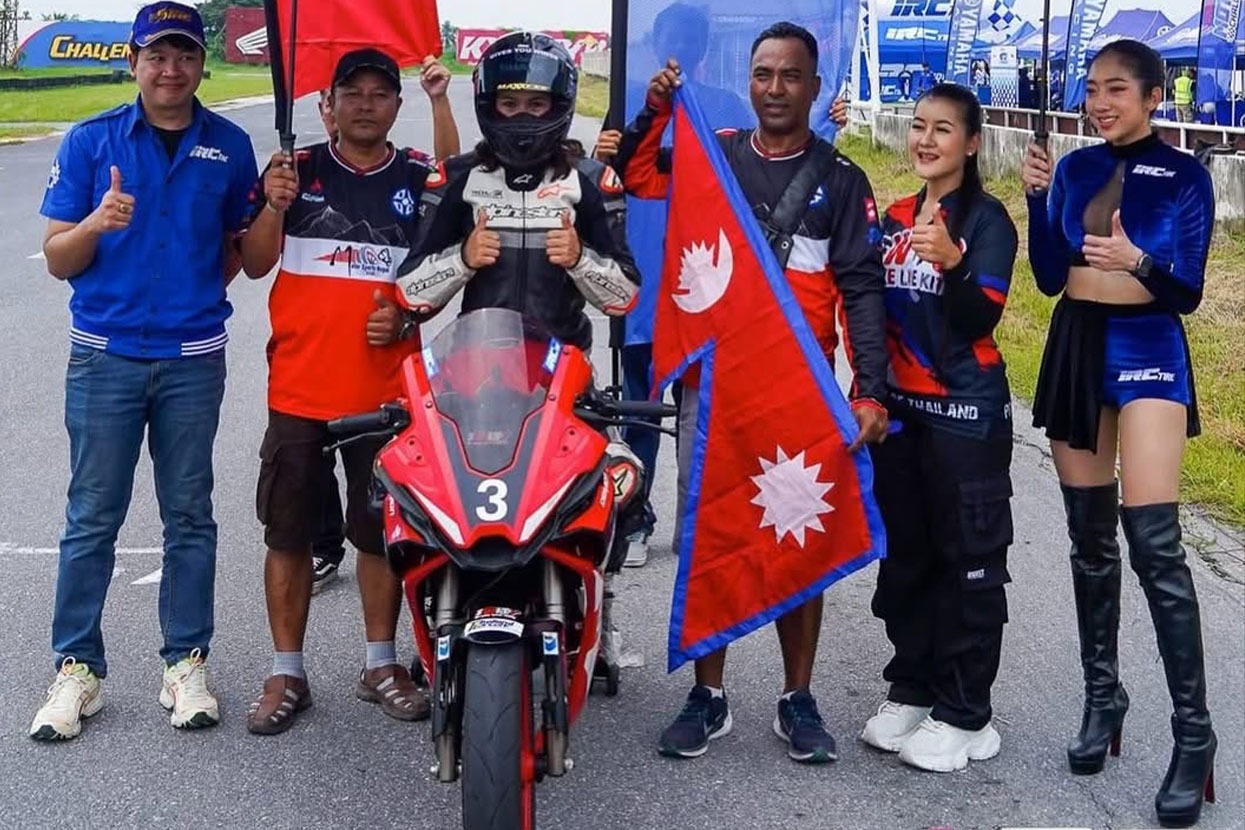
Nawang wrote, “I earned my spot to represent Nepal at the Asia Cup (ACCR). But just when it was all coming together, my country was in turmoil. Protests, pain, and a nationwide curfew led to my flight being canceled. I missed Day 1, no practice, no track reading, and I thought my dream was slipping away.”
“But to my surprise, @motorsportsnepalclub and the FIM organizers stood by me. They rescheduled my flight, welcomed me, and let me race from Day 2,” she wrote. “I left Nepal the next day with a heavy heart, knowing what was happening back home.”
Though Nawang didn’t win a medal, she dedicated her participation to Nepal. “No, I didn’t stand on the podium. But I stood on the track, carrying my country in my heart. I made friends, learned lessons, and raced with gratitude,” wrote the champion of Race Nari 2025 and Mt. Everest Motorsports Festival 2025. “This wasn’t just about racing anymore. It was about resilience, representation, and remembering where I come from.”
Reflecting on women racers, Puja said, “There are a decent number of women racers in Nepal, but due to the lack of events, many potential racers haven’t reached the limelight.”
Despite the challenges, Puja is happy with the growing platform for women. “Most women drivers have family support. Without it, it’s hard to continue. They have potential; what they lack is a platform,” she said. “If programs are organized as planned, Nepali women can shine globally.”
Bhattarai added, “Motorsport is inherently tough — otherwise, anyone could do it. It took NASA Nepal 15 years just to secure insurance for players.”
“The real transformation will come when the private sector gets involved, when athletes become professionals, when federations and local governments recognize our sport,” he said.
Bipashna feels blessed to have supportive parents. “My parents are supportive of my passion. They’re just skeptical about whether spending all my income on motorsports is dumping or investing. Apart from that, they always push me to do what I love,” she said.
Even with family support, her finances are tight. She also supports her family while covering vehicle maintenance and repairs.
Though she didn’t make the Top 8, Bipashna remains optimistic. “I see this journey going far. This is just the starting point,” she said. Still, she’s aware of how financially demanding the sport is.
“During Sri Lanka’s Championship, I had to manage both Dashain expenses and race costs. Honestly, I took advance payments from future events to arrange it,” she said.
She spent around 200,000 rupees for the event, later realizing others had sponsorships from Toyota and Omoda.
This makes athletes question FIA’s funding schemes. There are three types — large, medium, and small — but support isn’t guaranteed. The FIA supports around 25–30 sports clubs annually based on proposal quality and governance.
“NASA Nepal has received that opportunity several times,” said Bhattarai. “Through it, initiatives like the Dhulikhel track, kart purchases, the F1 in Schools program, and driver training have supported Nepali motorsport.”
He added that the Auto Gymkhana event and racing shoot equipment were supported under the same initiative. This year, a small grant is allocated for the timing system, and NASA has applied for sim racing support for next year.
There’s an infamous saying, “Why are you driving like a woman?” but Bipashna believes Nepali women can flip that. “We have many women with racing potential. All we need is to polish and sharpen the skills,” she said.
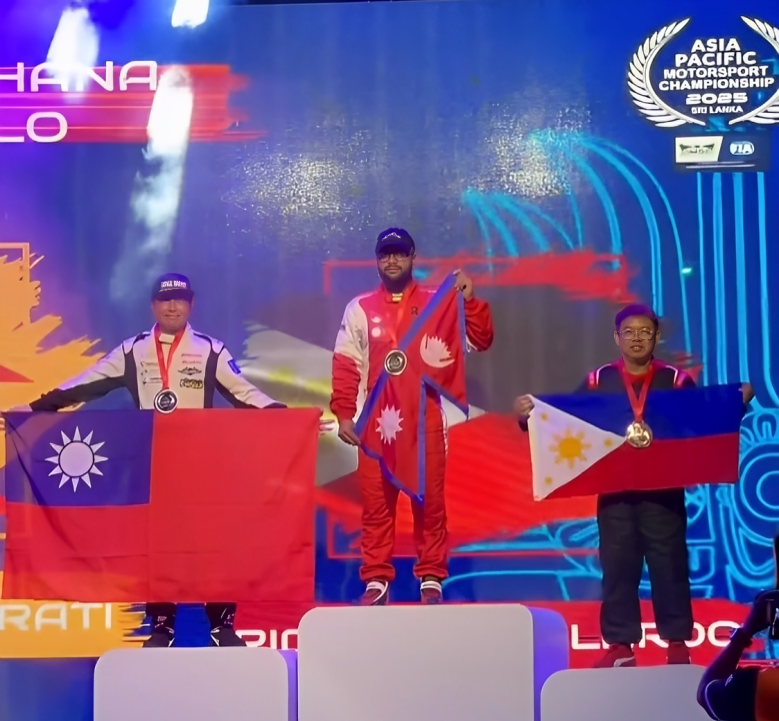
“Though I’m narrating such stories, they’re all excuses unless we deliver results. The result makes people realize — okay, this is the person,” Bipashna said. “If someone has done it without excuses, it’s Ronny. His 16 years of dedication brought Nepal its first international gold medal. That inspires me.”
Puja also urges women motor enthusiasts to come forward. As the owner of Empower Event, she said, “In our recent meeting with NASA Nepal, we discussed organizing a women’s motor racing event to empower women.”
Because motorsport is expensive, it can’t be sustained by the federation and players alone. Athletes need support from local governments, companies, and promoters.
Bhattarai said, “Both the FIA and FIM have shown goodwill, and we’ve come this far because of their support and the players’ persistence. But now, we must take the next step — it’s time to become truly professional.”
NASA Nepal is affiliated with three federations — FIA, FIM, and UIM. While there are currently only female riders in the two-wheeler category, Nawang Moktan and Barsha Basnet, who have come forward actively as four-wheeler drivers, have proven to be excellent in both two-wheeler and four-wheeler motorsports.
Likewise, Bhattarai said that it is still quite challenging to prepare female athletes for power boating. “Through the College to Karts and Formula One in Schools programs, we have trained around two hundred female college students, and they are now entering the racing field,” he said.
Reiterating NASA Nepal’s struggle and dedication, he said, “In Nepal, it’s either the players or the federation taking initiative. We’ve brought the sport this far, but moving to the next level is becoming difficult. For that, cooperation from government bodies, promoters, and the automobile industry is essential. This is our dream — and if we don’t make it real, who will?”
Even with extreme challenges, NASA Nepal continues to provide significant support and training compared to global standards.
“The real question now is — how long can we keep doing this on our own?” says Bhattarai.
Essence Shrestha
10/26/2025 02:26 AM EDT13 min read