


Nepal’s Gen Z rises against censorship and corruption
A government attempt to ban social media backfires as a tech-savvy generation takes to the streets, protesting nepotism, injustice, and the erosion of democratic freedoms.


In 2011, a movement began in New York City against economic inequality and the corporate influence in politics. It was called Occupy Wall Street — referring to the physical and political occupation or intervention of a place or subject.
Over time, the movement expanded globally, addressing a wide range of issues such as social injustice, corruption, and climate change. It eventually became a common banner under which ordinary people voiced dissent against those in power, the powerful themselves, and systems designed to serve only them — a resistance against all forms of injustice.
Occupy — meaning resistance.
On Saturday, a clenched fist image is trending on social media with the slogan: Occupy Maitighar.
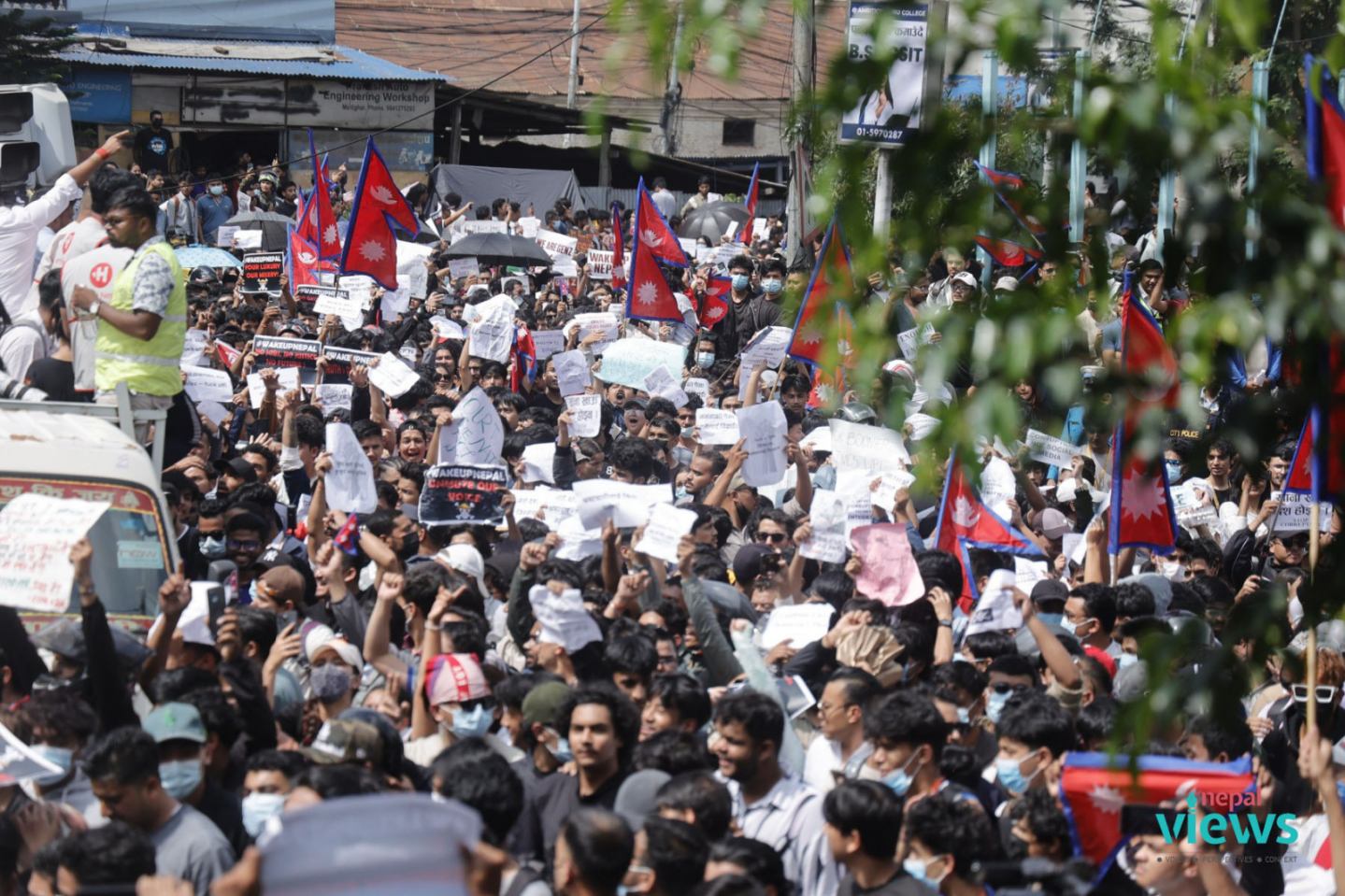
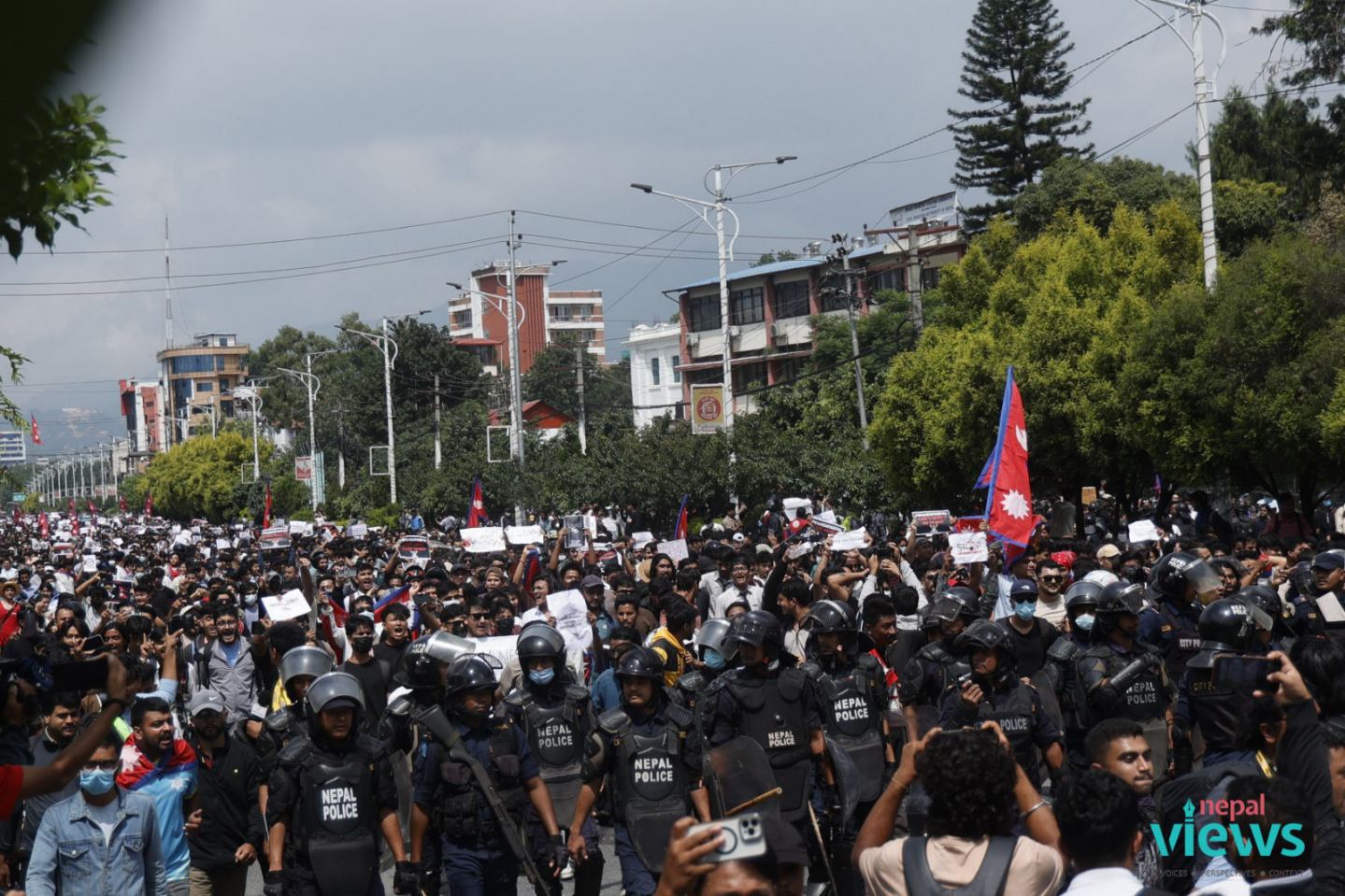
This is a call for resistance — but not the kind typically led by political parties or their affiliated organizations in Nepal. It is being led by a new generation known as Gen Z, who are now protesting the KP Sharma Oli government’s decision to ban 26 social media platforms, including X and Facebook, starting last Thursday.
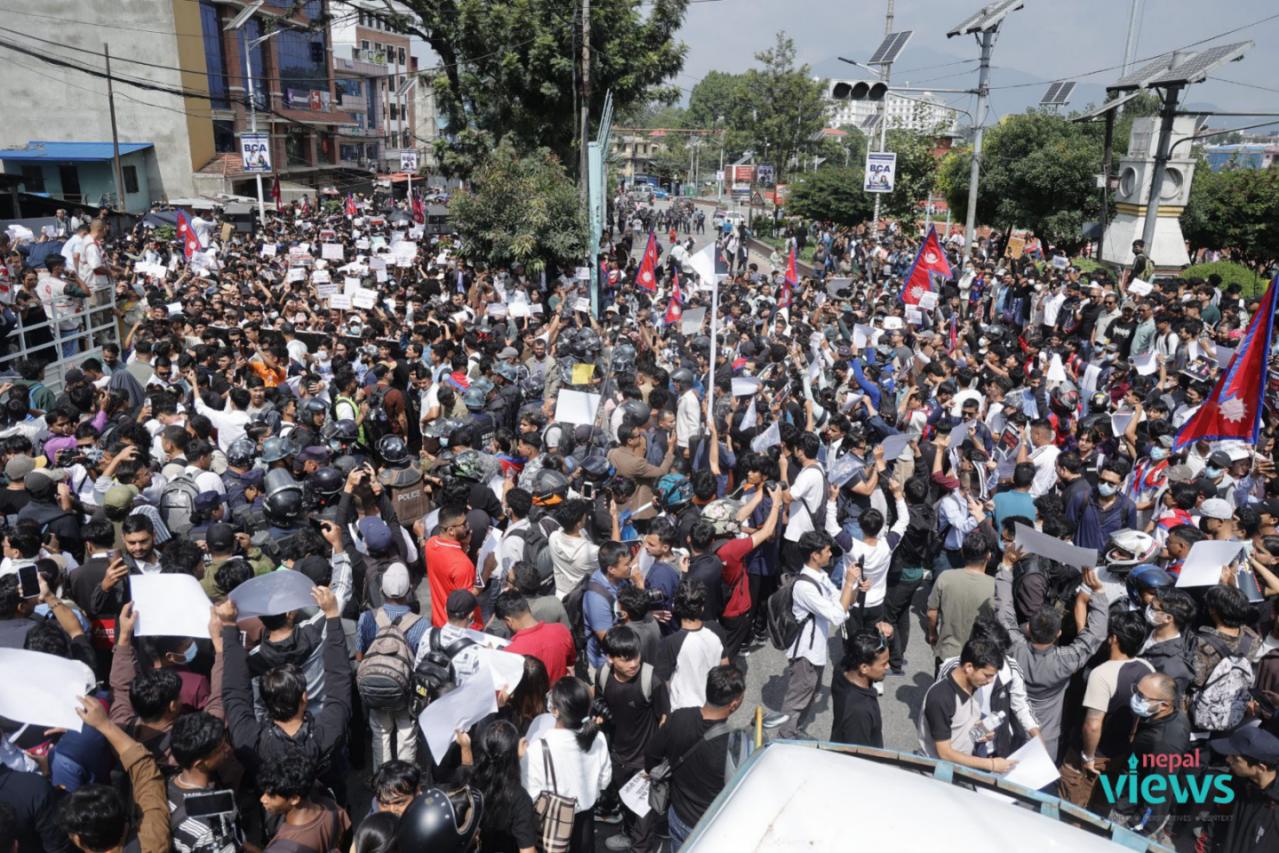
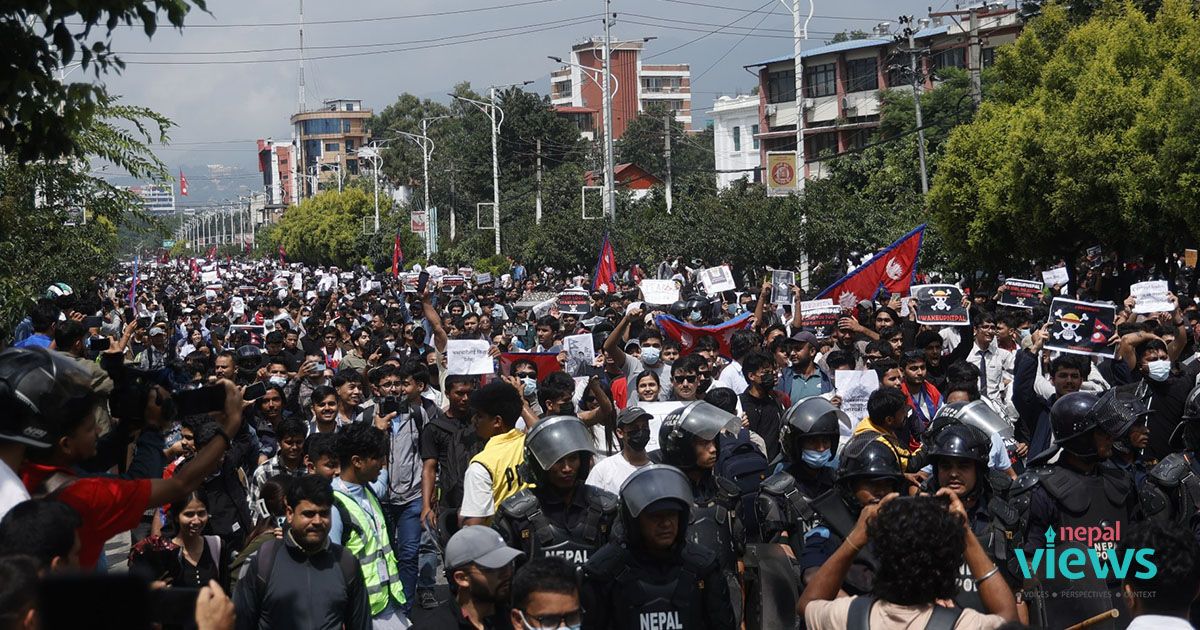
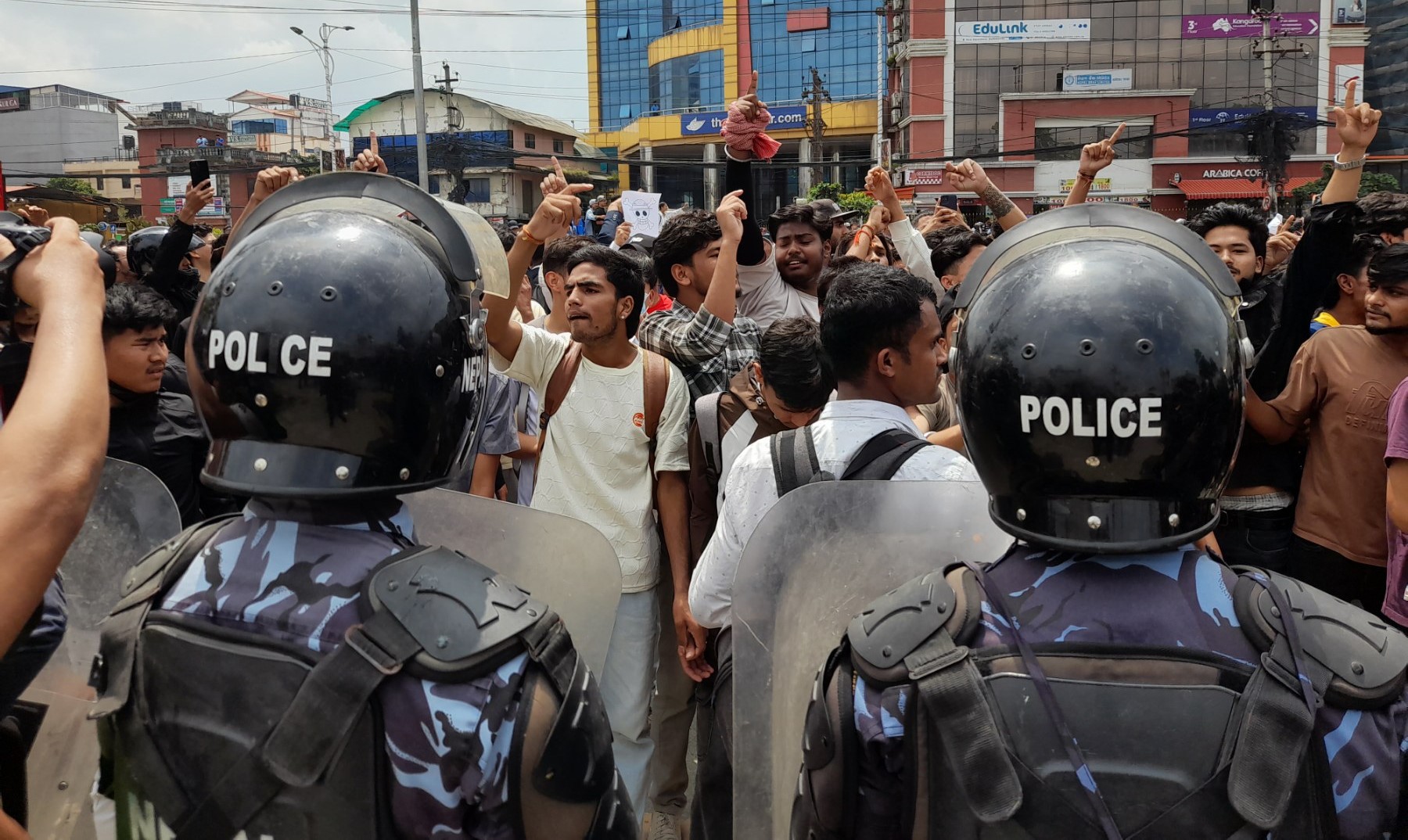
From Monday morning, thousands of Gen Z youth began gathering at Maitighar, chanting slogans against corruption, nepotism, and favoritism. On X, despite it being banned in Nepal, there has been a surge of posts in support of the protest. Meanwhile, platforms like TikTok, which is still operational despite a brief ban in 2023, have seen extensive sharing of protest-related content.
“Is it okay to only speak in favor of the leaders and face punishment for speaking against them? Now they’ve shut down social media altogether,” said one TikTok user. “The corrupt send their kids abroad with illicit money and give them luxurious lifestyles, while we’re told Nepal has enough opportunity, but the youth don’t want to stay? My frustration level is very high — I’m furious. Our parents paid taxes with their sweat and blood — not so your kids could live in luxury.”
The government claimed the platforms were banned due to their failure to comply with Nepal’s registration rules. However, subsequent statements by government ministers suggest that the real motive was to suppress dissenting voices.
Since taking office in July 2024, the Oli government has come under increasing criticism — not only for misgovernance and corruption, but also for authoritarian and vindictive tendencies toward critics.
Free speech advocates argue that the ban is not about regulation, but censorship. And despite numerous warnings, the government moved ahead, completely miscalculating the blowback from a group it failed to account for — Gen Z.
Today, social media isn’t just a platform for expression, it’s also a source of livelihood for many.
On the eve of the protest, one TikTok user said: “Tomorrow, Monday, September 8 (Bhadra 23), youth from Kathmandu’s New Baneshwor and across the country will start a new revolution — a new protest. It’s very unique, very different. Our generation — Gen Z — is leading it.”
On August 25, the Oli Cabinet issued a seven-day ultimatum for platforms to register in Nepal. On August 28, the Ministry of Communications and Information Technology issued a notice saying that if social media companies (like Meta) did not comply, they would be banned.
No platforms complied. On September 5, the government decided to block 26 platforms, including X, Facebook, Instagram, and WhatsApp.
Experts say the non-compliance wasn’t due to unwillingness, but due to intrusive and impractical conditions and provisions.
The Nepali Congress, a key coalition partner in the Oli government, has remained silent on the decision, giving ample room to many to interpret it as tacit support. Some individual leaders, however, have spoken out.
Congress leader Minendra Rijal likened the ban to an “attempt to block the sun with your hand.”
“Banning social media is like trying to silence public voices,” he told Nepalviews. “If there are problems, regulate them through law — don’t shut them down.”
Even Gokul Baskota, a leader from the ruling CPN-UML and former communications minister, criticized the move:
“Gen Z and Alpha generations have arrived, but the Baby Boomer generation is panicking,” he posted on Facebook, a platform banned by his own party’s government. “This isn’t chaos. If someone looks beyond the horizon and moves, no one can stop them. Politics has always had manipulative forces. Why the surprise?”

Ahead of Monday’s protest, Nepal Police Headquarters held meetings with valley police officials. DIG Om Bahadur Rana said police would ensure the protests remain peaceful and property is protected.
“People have the constitutional right to protest and speak. We respect that,” he said. “We’ll make sure property is not damaged.”
Gen Z — those born between 1997 and 2012 — grew up with technology and access to global information. While some dismissed this generation as apolitical or uninformed, sociologists disagree.
“Gen Z is not politically indifferent,” said Dipesh Ghimire, a sociologist. “Their political agenda is different from older generations. This protest is important — it’s the first time they are taking to the streets. Previously, they voiced dissent online. That this is now becoming physical could have a lasting impact.”
The ‘nepo baby’ or ‘nepo kids’ campaign — initially trending online — became the symbolic starting point of the protest. The phrase refers to nepotism, where influential individuals’ children benefit from family ties.
The campaign mirrors one in Indonesia during the 2024 vice-presidential election, when criticism mounted over former President Joko Widodo’s son Gibran and son-in-law Bobby being fast-tracked into politics. While not an organized movement, the “nepo baby” trend sparked widespread online debate, especially on X.
Now, in Nepal, Gen Z's entry into street protests is shaking up the status quo.
On Sunday, they were already on the streets of Kathmandu and elsewhere, raising their voices against corruption, nepotism, favoritism, and injustice — not just to occupy the narrative, but to reclaim it and set their own.
Their chant: “We are the movement.”