


Nepal government misinterprets Supreme Court order to ban social media platforms
Decision raises widespread concerns over threats to freedom of expression

Krishna Bahab
09/05/2025 01:57 AM EDT5 min read


Kathmandu. On Thursday, the Ministry of Communications and Information Technology decided to ban 26 social media platforms, including Facebook, Instagram, X (formerly Twitter), and YouTube, citing their failure to comply with registration rules set by the Nepal government.
Minister for Communications and Information Technology Prithvi Subba Gurung, who is also the government spokesperson, offered three reasons to justify the ban as “legal.”
First, the “Directive to Regulate the Use of Social Media 2080” (2023). Second, the decision of the Cabinet meeting held on 25 August. Third, a Supreme Court ruling on case number 080-CF-0012
Rather than focusing on the Directive or the Cabinet decision, the government claimed it is implementing the Supreme Court’s order to “deactivate social media platforms that have not registered.”
The ministry’s press release issued on Thursday states: “The honourable Supreme Court’s full bench in the contempt of court case (case no. 080-CF-0012) has given a directive order to the Government of Nepal to make it mandatory for online and social media platforms — of foreign and domestic origin — to register with the competent authority before operating, so that undesirable content can be evaluated and monitored.”
The ministry added in the release that the Supreme Court had already ordered registration of social media platforms in case no. 080-CF-0012, the Cabinet had decided to enforce registration, and since some social media platforms did not register, they must be banned
Did the Supreme Court actually order the ban of unregistered social media platforms, as the government claims?
The order mentioned in the government’s press release — case no. 080-CF-0012 — is related to a contempt of court case concerning the Dark File report published by Siddhakura.com. In this case, a bench of nine Supreme Court justices delivered a verdict on 29 September 2024, and the full text of the verdict was made public only recently.
The Supreme Court ordered that online media outlets must be registered with a competent authority before operation. Furthermore, it instructed the government to enact laws that would regulate registered social media platforms through a regulatory body similar to the Press Council of Nepal.
The Supreme Court’s directive order states that online and social media platforms must mandatorily register with the competent authority before operating and be regulated by regulatory bodies such as the Press Council of Nepal through necessary legal provisions. It also directs the government to undertake necessary policy, legal, and structural reforms to enhance the capacity of the Press Council and further protect and promote press freedom.
In simple terms, the Supreme Court gave the government two instructions to regulate social media: one, enact a law to register social media platforms; and two, while making this law, establish a regulatory body like the Press Council to oversee social media.
The Supreme Court used the term “competent authority” to mean a capable regulatory body. Just as Parliament is the competent body to make laws, and courts are competent bodies to interpret and administer justice, along the same lines, a competent regulatory authority must be formed to register social media platforms.
The Supreme Court’s verdict has a clear intent — acknowledging the constitutional right to freedom of expression and emphasising that the regulatory body must be legally constituted.
But does the government’s “Social Media Regulation Directive” establish such a competent regulatory body as the Supreme Court ordered?
No.
Instead, the government has assigned the responsibility of registration to the Ministry of Communications and Information Technology itself. The Directive merely asks social media platforms to register with the ministry, without establishing any separate competent regulatory authority. This does not align with the Supreme Court’s order.
According to the Directive introduced in 2023, the ministry is also responsible for regulating social media. However, the Supreme Court ordered that regulation should be given to a competent body like the Press Council. The mention of the Press Council reflects the Supreme Court’s understanding of the constitutional spirit of freedom of speech and expression.
The major institutional users of freedom of expression are media outlets. The government cannot — and is not allowed to — directly control or monitor media content. The Press Council, which carries out such monitoring, is a quasi-judicial body, although its members are appointed by the Cabinet.
Yes, the Supreme Court’s order to regulate social media calls for the establishment of a regulatory body like the Press Council — or at least one with a similar independent legal status — to regulate online expression.
However, the government has misinterpreted this Supreme Court order and used it as a weapon to shut down platforms that exercise freedom of expression, according to critics.
Sulabh Kharel, an advocate, says the government has wrongly interpreted the Supreme Court’s order. The court gave a directive to create proper legal mechanisms for registration and regulation, but the government appears to be misusing the order to justify the ban.
“The government seems to be moving towards banning by misinterpreting the order,” Kharel told NepalViews.
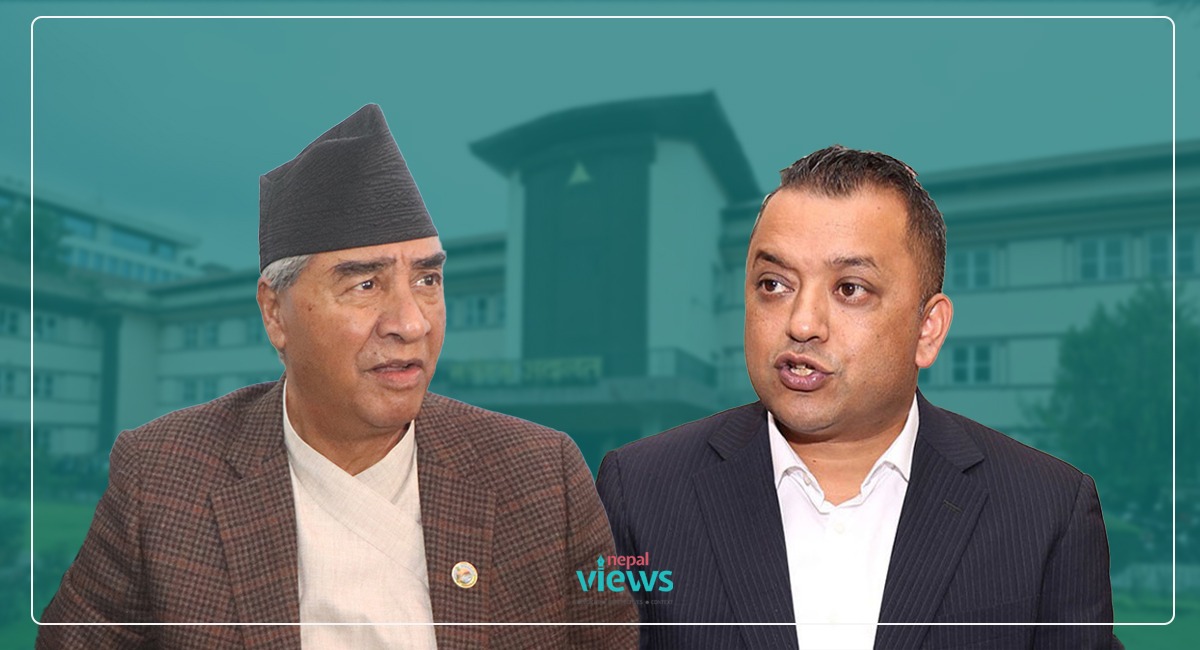
Gagan Thapa, general secretary of the ruling Nepali Congress, has also commented that the government has misinterpreted the Supreme Court’s order.
“The Supreme Court has directed the government to make legal provisions to discourage the misuse of social media,” Thapa wrote on Facebook on Thursday, after the government announced the ban. “Based on that, the government should enact the necessary laws quickly, rather than banning social media platforms using the Directive as an excuse.”
Krishna Bahab
09/05/2025 01:57 AM EDT5 min read
_LqGDyrjJvx.jpg)