


Mosques to Missionaries: Chauthaiwale Raises Concern
Chauthaiwale arrived in Kathmandu as an envoy of Foreign Minister S. Jaishankar, with ministerial-level privileges, on an assignment to 'inform about the religious activities happening in Nepal in the context of the Pahalgam terrorist attack and to understand the political situation in Nepal.
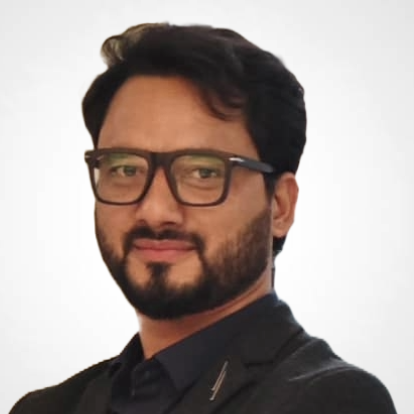
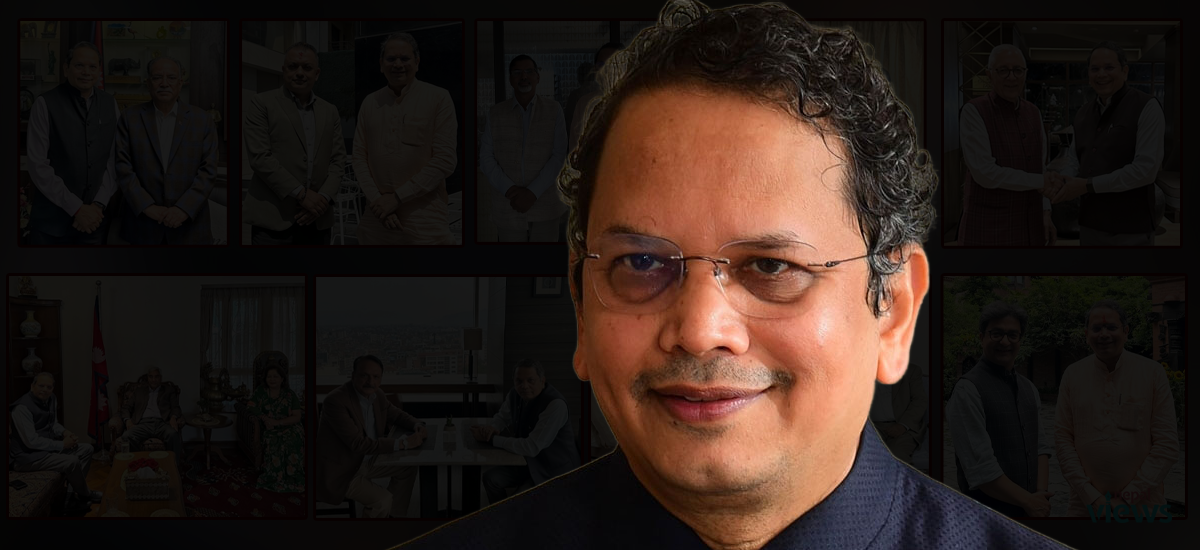

Kathmandu: In between the growing dissatisfaction with the ruling coalition and increasing rumors of a government change, Bharatiya Janata Party (BJP)'s Foreign Department Head Vijay Chauthaiwale arrived in Kathmandu on Wednesday for a three-day visit.
CPN (Maoist Centre) said there would be a discussion, via the parliamentary party meeting, to change the ruling coalition immediately after the return of Sher Bahadur Deuba from Bangkok. Whereas, Deuba assured Prime Minister KP Sharma Oli, on a phone call, that there was no problem in the coalition with CPN (UML) and the question will continue. After 5 days of the conversation, the Minister for India's External Affairs, S. Jaishakhar's Special Envoy, Chauthaiwale, began his meeting, which jolted CPN (UML) for sure.
During his 3-day stay in Nepal, Chauthaiwale met with more than dozens of leaders from various political parties. He returned to India on Friday. He expressed his curiosity regarding the internal politics of Nepal. Chauthaiwale also expressed special concern over the activities of madrasas and Christian missionaries in the border area.
To meet with Deuba, Arzu shifted the meeting time
Chauthaiwale was about to meet Minister for Foreign Affairs Dr. Arzu Rana Deuba in Singha Durbar as per the schedule. But, the schedule was changed after Foreign Minister Rana informed Chauthaiwale to meet in the house rather than in the Ministry.
This also changed the one-to-one meeting of Chauthaiwale and the Nepali Congress President, scheduled by the Embassy of India in Nepal, Kathmandu. The reshuffling of Chauthaiwale's schedule created stress for the Indian Embassy to coordinate the visit of Chauthaiwale. Foreign Minister Rana was worried about her "Rakhi" brother Chauthaiwale being hurt with words from Deuba. It was due to Rana that the official meeting, scheduled by the Embassy as per diplomatic protocol, turned into an unofficial one.
NC President Deuba spoke very few words in a meeting with Chauthaiwale. Foreign Minister Rana spoke more at the meeting. Chauthaiwale expressed his concerns regarding the coalition with CPN (UML). The relation with CPN (UML) is alright. The questions raised, from inside the Nepali Congress in the public platform, are subjective.'
Chauthaiwale wanted to have a single question-and-answer session with Deuba. He also had quite a few questions about it. But he did not have the opportunity to pose the questions.
Then, Chauthaiwale had a dinner with Nepali Congress leader Shekhar Koirala, who is fiercely criticising the government.
In between the rumors of the change in government, Chauthaiwale continued his meetings in a marathon style. Chauthaiwale began his political meetings with Home Minister Ramesh Lekhak. Then, had meetings with NC President Deuba, Foreign Minister Rana, General Secretary Gagan Thapa, who is in the high-level political mechanism of the ruling party, and concluded his meeting series with the outspoken Congress leader.
On the first day of the meeting, he only had meetings with the leaders of the ruling coalition. On the second, his meeting created suspicions for the CPN (UML), which is in the leadership. He only had meetings belong to the opposition party.
Prachanda's meeting with Chauthaiwale, bypassing Oli's meeting
Chauthaiwale only had meetings with the leaders of an opposition party. Chauthaiwale began his second day of meetings from the house of CPN (Unified Socialist) leader Madhav Nepal. Then, he went to the residence of the CPN (Maoist Centre)'s Chairperson, Pushpa Kamal Dahal "Prachanda." Prachanda bypassed the meeting called by the Prime Minister to have a meeting with Chauthaiwale.
During the meeting with Chauthaiwale, Prime Minister Oli's Secretariat and the ruling coalition party, Nepali Congress President Deuba, called Prachanda continuously. According to a high-profile source, Parachanda picked up the phone of Deuba. The top leaders of the three parties were about to talk about the contemporary political issues. Just after the previous meetings of the top leaders, PM Oli immediately dismissed Kulman Ghising. With a suspicion of similar incidents, Prachanda did not show any desire to attend the meeting. Receiving Deuba's call, Prachanda said, 'I will not come to become a witness.'
Leaders present in the Prime Minister's Secretariat, including Agni Kharel, kept calling him. But, Prachada didnt pick up the call. Prachanda, who has been campaigning to topple the government, postponed the meeting with the leaders and had talks with an Indian leader. This developed the restlessness in the ruling parties.
After a meeting with Prachanda, Chauthaiwale met with the Nepali Congress leaders, General Secretary Gagan Thapan, Udaya Shamsher Rana, CPN (Maoist Centre) leaders General Secretary duo Janardan Sharma and Barshaman Pun. Loktantrik Samajbadi Party Chairperson Mahantha Thakur and Janamat Party's Chairperson C.K. Raut at Marriott Hotel. Chauthaiwale had already met Upendra Yadav, who was in Delhi. Then, Chauthaiwale went to Baluwatar to meet Prime Minister Oli. Chauthaiwale concluded his second day of meeting with a dinner at the house of the leader, NP Saud.
Met Shankar Pokharel on the way out
On the third morning, the first person he visited was Finance Minister Bishnu Paudel—also Vice Chair of CPN (UM)—at his office in Singha Durbar. On the final day of his three-day visit, Chauthaiwale met CPN (Maoist Centre) Deputy General Secretary Barshaman Pun, Rastriya Swatantra Party (RSP) Acting Chairperson DP Aryal, and Vice Chairperson Swarnim Wagle at his hotel, the Marriott.
Compared to other parties, Chauthaiwale met fewer leaders from the CPN (UML). After bidding farewell to the Indian Embassy at Marriott, Chauthaiwale called CPN (UML) General Secretary Shankar Pokharel to Hotel Dwarika, which lies on the way to the airport. Pokharel arrived promptly. With the meeting concluded, Chauthaiwale wrapped up his political engagements and returned home.
Concerned about Religious Extremism, Curious about Politics
According to a high-level source close to Chauthaiwale, he had come to Kathmandu with two main objectives: to share concerns regarding religious activities in Nepal in the context of a recent terrorist attack in Pahalgam, India, and to understand the current political situation in Nepal.
Acting as an informal envoy of Indian External Affairs Minister S. Jaishankar, Chauthaiwale met with over a dozen political leaders, showing more curiosity than expressing opinions on Nepal’s political dynamics. Showing deep concerns, he cautiously responded to topics like government reshuffle, dissatisfaction within the ruling coalition, and the rise of monarchist movements.
However, in most high-level meetings, he expressed concern over the rising activities of mosques, madrasas, and missionary organizations in Nepal, citing potential security threats. During discussions with Prime Minister Oli, Finance Minister Paudel, Home Minister Lamichhane, Foreign Minister Rana, and former Prime Ministers Deuba, Prachanda, and Madhav Nepal, he presented data on developments in Nepal’s border areas with India.
Chauthaiwale made the following key claims:
The number of mosques and madrasas in the Terai-Madhesh region bordering India has significantly increased in recent years.
This is due to three main reasons: First, the influx of Rohingya refugees from Bangladesh. Second, the shift of terrorist activities following India’s revocation of Article 370 in Kashmir. And, foreign funding in some INGOs operating in Nepal.
Similarly, he also raised concerns about increased religious conversions driven by Christian missionaries using foreign funding. While the first three concerns were related to the Muslim community, he grouped the Christian-related issues alongside them.
A source quoted Chauthaiwale as saying, 'Nepal needs to pay immediate attention to these issues. There’s a growing risk that terrorist activities currently occurring in India may shift towards Nepal. What’s happening in the border region now poses challenges not just for India but also for Nepal.' He presented records of recent communal incidents in the Terai and suggested increased cooperation through border security agencies.
In response, Prime Minister Oli reportedly said, 'There is no such situation here. We are aware of all activities happening in our country.'
However, Chauthaiwale reiterated the need to be vigilant and even named certain organizations allegedly involved in foreign-funded activities. Foreign Minister Rana responded by saying that Nepal has clear laws against forced conversions, and such actions are neither permissible nor tolerated.
In almost every meeting, Chauthaiwale thanked Nepal for raising its voice against the Pahalgam terrorist attack. However, during his meetings with Congress President Deuba and Foreign Minister Rana, he also questioned statements made in Parliament by Nepali Congress MPs. Minister Rana responded, 'The MPs must have shared their personal views, but we have already presented our official stance. Please listen to us, and don’t pay too much attention to what others say.'
Oli Raises Eyebrows over the invitation
After the discussion on these issues concluded, Prime Minister Oli inquired about his visit to India.
According to the source, Chauthaiwale explained that the situation in India has been tense since the Pahalgam incident. 'There’s internal pressure. Prime Minister Modi himself postponed his planned visit to Russia and other countries. Inviting guests during such a time would not send the right message,' said Chauthaiwale.
Reassuringly, Chauthaiwale said, 'Once the situation eases, the visit should move forward.'