


Beyond the Brew: Youth, Tea, and Talk
Tea shops have evolved beyond mere beverage stops. Amid the city’s chaos, they offer a moment of calm, where conversations flow, dreams take shape, and friendships blossom.

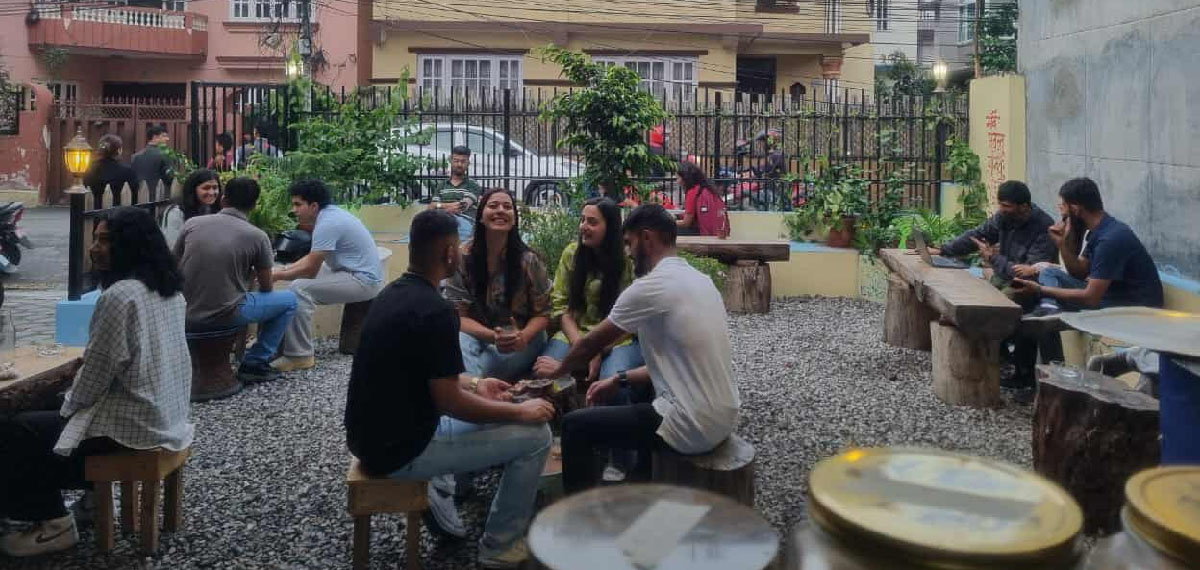

Kathmandu: From morning till evening, a steady stream of tea lovers — mostly young people — flock to ‘Chiyawala’ in Sankhamul. Among them is 24-year-old Suraj Paudel from Bhaktapur, who was spotted one afternoon sitting in a quiet corner with three friends, savoring their tea.
“Drinking tea is really just an excuse to meet up with friends,” Suraj says.
But what do these conversations revolve around?
“It’s a mix — work, personal life, world events, the future, and of course, politics,” he explains.
With each sip, the talk shifts — from frustrations over political parties’ failure to focus on youth and public welfare, to thoughts on the need for young leaders to take charge of the nation.
“Though, honestly, the topics change depending on who’s there, the time of day, and the mood,” Suraj adds.
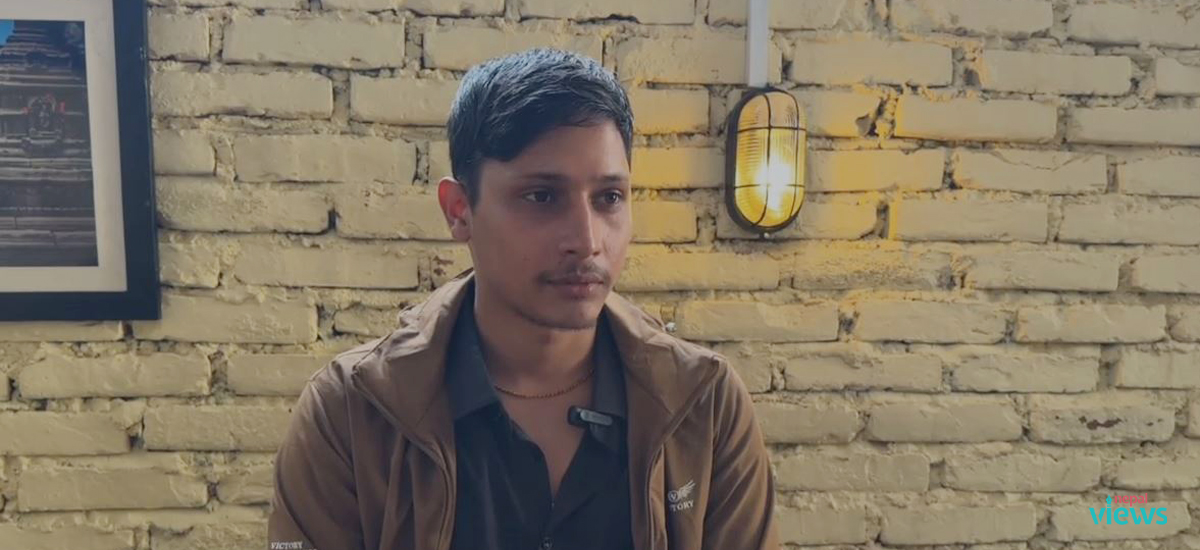 Suraj Paudel, encountered at "Chiyawala"
Across the shop, 32-year-old Prabin Gurung from New Baneshwor, Kathmandu, balances a phone in one hand and chats with a friend over two cups of steaming tea.
Asked how often politics comes up, Prabin, who works at a private company, laughs: “If anything, political talk is louder here in tea shops than it is in the Parliament.”
Many claim today’s youth show little interest in politics. Yet, in places like Chiyawala and other tea shops scattered across Kathmandu, politics inevitably seeps into conversations among the young crowd.
In Nepal, tea shops have long been more than just places to drink tea — they are the cradle of political awareness.
Prawash Gautam writes in the book Nepal in the Long 1950s, published by Martin Chautari, that the first tea shop in Kathmandu Valley was located at the Dharahara premises. Named “Tilaurey Maila ko Pasal,” it is widely regarded as the valley’s original tea hub.
Gautam’s article dives deep into the role of tea shops in the 1940s and 50s, depicting them as venues where people gathered to express their dissent. Under the oppressive Rana regime, these tea shops became intellectual centers. Politically conscious youths and Nepali Congress supporters gathered there to exchange ideas and discuss the watchful eyes of authoritarian surveillance.
Following the Rana regime’s fall in 1951, Nepal began its democratic journey. Yet, just a decade later, King Mahendra’s military coup ushered in the partyless Panchayat system, stifling freedom of speech for 30 years. Even then, tea shops persisted as the beating heart of political dialogue.
The restoration of democracy in 1990 marked a turning point for Nepali society. With economic liberalization came the rise of a new middle class, and the monopoly tea shops once held over political discourse began to loosen. Restaurants and cafés sprung up, becoming fresh hubs where young people gathered.
Pinpointing exactly when tea shops evolved into their modern form might be tricky. But spotting groups of youth flocking to these spots is easy enough.
“Tea makes it easier to open up,” says Prabin Gurung, a regular at Chiyawala. “Friends share secrets, family problems — there’s no fixed topic. The conversation flows with the mood.”
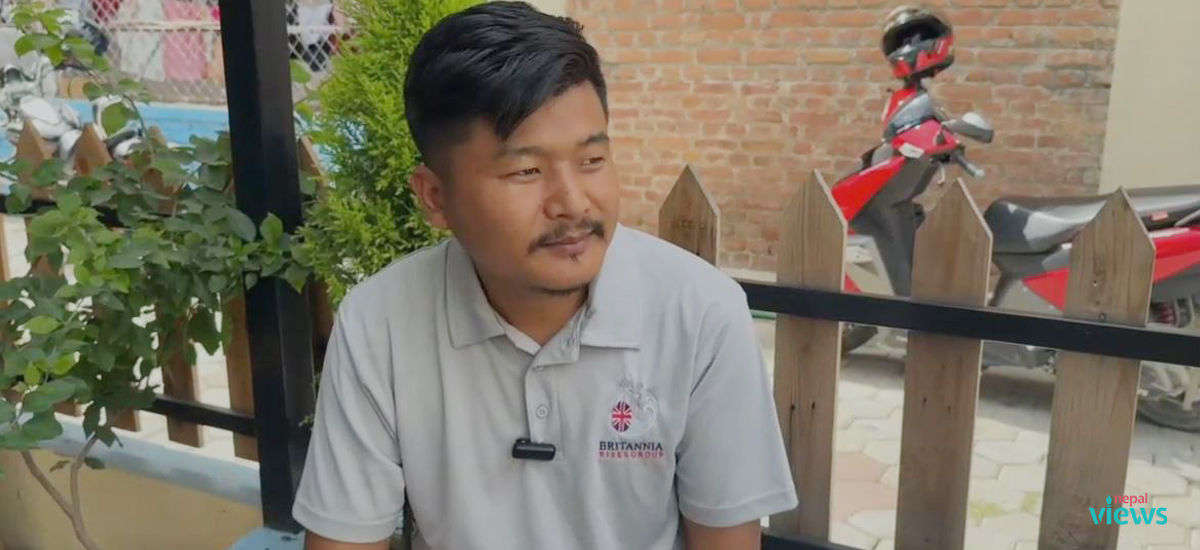 Prabin Gurung spotted at "Chiyawala"
In Budhdhanagar, Dari Bhai ko Chiya Pasal hums with life. Roommates Prabhakar Mahato, 19, freshly done with Class 12, and 17-year-old Sagar Sharma, still in school, savor lemon tea as they chat about their shared passion: tea culture.
“We want to open a tea shop ourselves,” they say in unison. “So we explore the city’s tea shops to see what services they offer, how they’re built, and what kinds of tea they serve.”
Back in the day, soldiers heading to or returning from World War I and II were regulars at Tilaurey Maila ko Chiya Pasal. Today, the battlefield has shifted from war to foreign opportunities, and the youth sitting in these tea shops dream of lives abroad.
“I’m thinking about starting a business now. We talk about the future, studies — what to study and where,” says Mahato, a fan of the shop’s lemon tea. “If it doesn’t work out in Nepal, then Canada or Australia is plan B.”
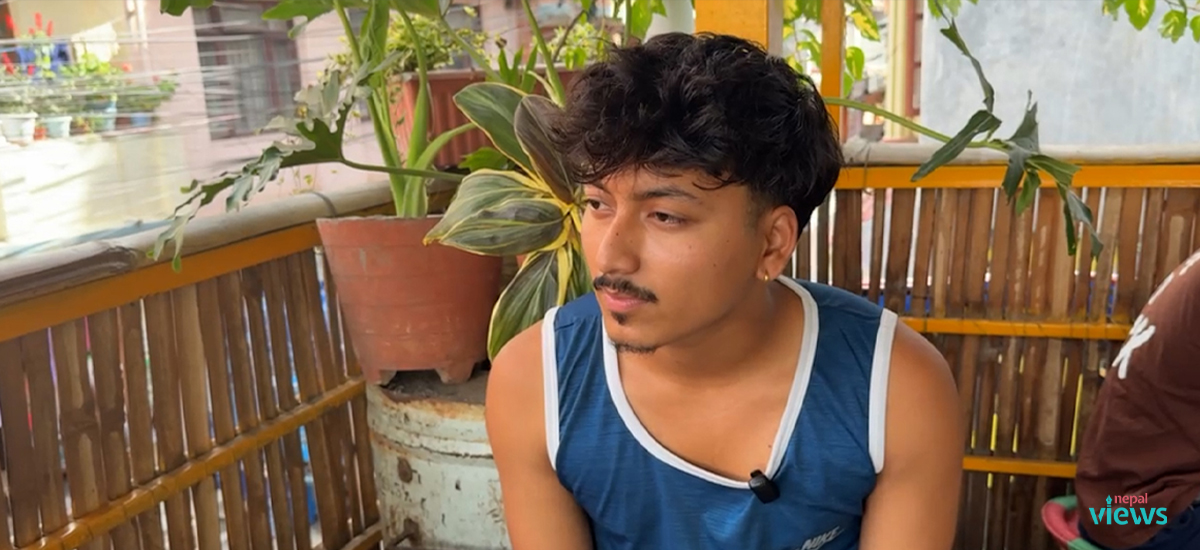 Prabhakar Mahato exploring "Dari Bhai Ko Chiya Pasal"
Mahato isn’t big on politics but values the personal space these tea shops provide for friends to share plans and stories.
According to writer Gautam, tea drinking was a symbol of modernism back in 1950. Politician Arvind Rimal’s book Dillibazaar ko Laptan ko Hotel recalls how, after Tilaurey Maila ko Pasal, the Laptan Hotel became Kathmandu Valley’s second notable tea shop.
Tea shops weren’t just places to sip; as Rimal writes, they helped spark political awareness across the valley. Under Rana Prime Minister Padma Shamsher, drinking tea at home was still a bold move, but by the regime’s end, tea had crept into public life.
“Tea was now being sold openly at places like the Dharahara area shops and elsewhere,” Rimal notes. “Educated citizens saw drinking tea outside as an expression of free thought.”
In fact, Tilaurey Maila ko Pasal earned its place in history as a secret meeting spot for politicians. B.P. Koirala, who later became Nepal’s first democratically elected Prime Minister of Nepal, is said to have visited the shop in disguise in 2004 BS, cycling in with Hariprasad Rupakheti, according to Rimal.
The Laptan Hotel closed its doors in the late 1960s, and Tilaurey Maila ko Pasal followed suit in 1979. Yet tea remained central to Nepali life.
Though tea’s roots in Nepal stretch back to the 1800s, it wasn’t until after 1950 that it truly became part of everyday routine. Its impact goes beyond taste — it shaped culture. Nepalis commonly greet each other with “Chiya khanu bho?”, a phrase that’s less a question and more a warm hello.
Tea today isn’t just a drink; it’s an excuse to meet, to linger, to talk.
In Kathmandu’s ever-crowded neighborhoods, tea shops have multiplied, offering cheap, cozy corners for young people to gather without breaking the bank.
Sociologist Nirmala Dhakal explains, “Youth may be unemployed or studying, with limited funds. Tea shops are budget-friendly spaces where they can relax and talk.”
Unlike restaurants, where waiters often interrupt, tea shops let you sit for hours on a single cup. “That freedom draws young crowds,” Dhakal says.
Traditional tea shops, once dominated by middle-aged men, are now seeing a fresh wave: tea joints catering to youthful tastes, a different vibe altogether.
Kamal Thapaliya, manager at Dari Bhai ko Chiya Pasal, shares, “About 90 percent of our customers are regulars. Mornings see more middle-aged visitors, but afternoons and evenings belong to the youth.”
Many city tea shops proudly wear the tagline “Cheap tea and expensive gossip.”
There’s no table service here — customers order at the counter and can stay as long as they like, sipping, chatting, exchanging ideas.
Sociologist Ganesh Gurung notes that humans are social creatures, craving connection. “In the past, hill people gathered at chautaras, women met at pani pandhero. Now, city dwellers flock to tea and coffee shops.”
Though coffee isn’t traditionally Nepali, its popularity has surged alongside tea since the COVID-19 lockdowns. After months at home, people sought social spaces, breathing new life into these shops.
In the hustle and bustle of urban life, tea shops remain places of pause — where stories are shared, plans made, friendships forged over a simple cup of tea.
Tea shops have evolved beyond beverage stops. One might call it a cultural shift.
“Some work here, some trade knowledge. They’ve become cultural hubs for the young generation,” Gurung says.