


Festive vacation: 13 places to explore in Lumbini Province


Butwal: The time between Dashain and Chhath marks the longest holiday period of the year in Nepal. It's a time not only to reunite with family but also to travel with friends.
This season is considered ideal for trips — the weather is neither too hot nor too cold. Depending on the budget, people plan different activities. If you’re on a tight budget but still want to travel, you might wonder: where should you go? For those hoping to make the most of this festive break, Lumbini Province offers a variety of beautiful and accessible destinations.
Lumbini Province is rich in religious, cultural, historical, and natural heritage. From the Buddha’s birthplace in the southern plains to the Putha Himal in the north, the province spans a diverse geography. It includes one Himalayan, five hilly, and six Terai districts, with many tourist spots reachable by short road trips.
Most major sites are connected by road, and the province offers cultural, environmental, rural, and archaeological attractions. Here are 13 of the best places to explore in Lumbini Province during the festive holiday.
1. Lumbini, Rupandehi
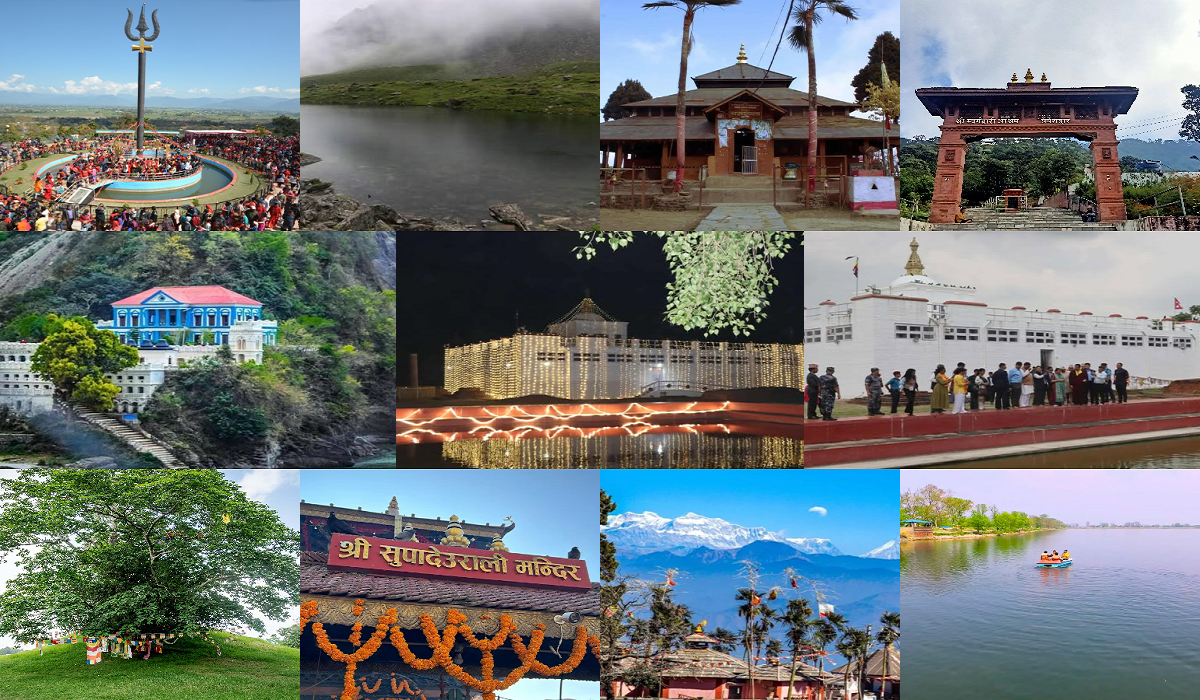
Located in the Lumbini Cultural Municipality of Rupandehi, this is the birthplace of Lord Buddha and one of Nepal’s most important tourist sites. It is a global spiritual hub for peace seekers and religious travelers.
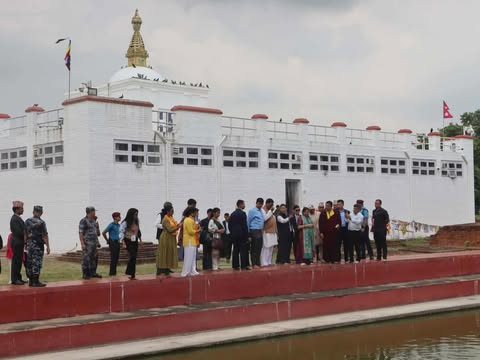
Accessible by road and air, Lumbini attracts visitors from around the world. Located about 100 km from the provincial capital Dang, the site features the sacred Maya Devi Temple, numerous monasteries, and Buddha statues.
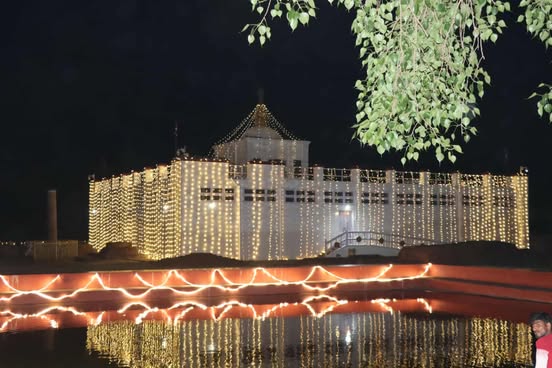
Within the Sacred Garden, there’s a central canal with boating, peaceful gardens, and the Eternal Peace Flame — all contributing to a serene atmosphere. Lumbini is a UNESCO World Heritage Site.
2. Rani Mahal (Ranighat Palace), Palpa
Known as the "Taj Mahal of Nepal," Ranighat Palace lies in Baughagumba of Tansen Municipality, Palpa, about 13 km north of Tansen Bazaar. It was built by General Khadga Shamsher between 1949 and 1954 BS in memory of his wife, Tej Kumari Devi, with help from British engineers.
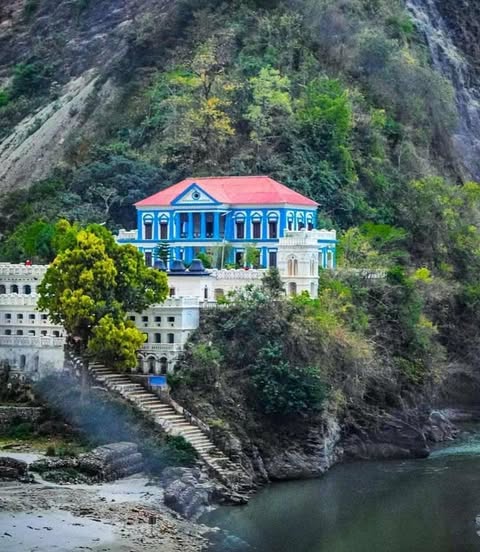
This four-story, 112-feet-tall palace stands on a cliff by the Kaligandaki River, surrounded by lush forest. The complex also includes embankments, gardens, and ponds. The opposite riverbank is called Rani Ghat, and the forest is known as Rani Ban. While it once required a two-hour walk, it can now be reached in 25 minutes by vehicle.
3. Bhairabsthan Temple, Palpa
Situated on a high hill in Ribdikot-4, Palpa, this large temple was established by the Sen dynasty. Around 1515 BS, King Mukunda Sen brought the Bhairab idol here from Kathmandu.
The temple also houses a Kali idol and is famous for rituals like bhakal puja, panchabali, and kshema puja. Roṭ (flatbread)is the main prasad. A massive trident (trishul) here is believed to have been gold-plated at the queen’s request by General Khadga Shamsher.
The roṭ houses on the southern side of the temple, located in a naturally scenic area, add to its charm. In the clean, peaceful, and beautiful temple premises, religious visitors are eager to offer prayers and take photographs. There is also an arrangement to prepare offerings from the animals and birds sacrificed here and distribute them as prasad (consecrated food).
Tourists also enjoy ropeway and zipline activities. Located 10 km west of Tansen, the temple attracts both domestic and international visitors.
4. Resunga Area and Resunga Dham, Gulmi
Overlooking Tamghas Bazaar, the Resunga area spans 255 hectares. It is rich in religious significance and natural beauty. Legend says Sage Rishishringa meditated here during the Treta Yuga.
Mahapokhari, a pond with 27 water spouts, is believed to have healing powers. The main temple with a golden pinnacle features an eternal fire on its altar.
A double modern foot trail (with stairs) stretching 796 meters, complete with railings, has been built from Mahapokhari through Yagyashala up to the View Tower. Stairs leading to Ram Kunda have also been constructed. Additionally, a 300-meter-long railing staircase connects Yagyashala to Vishnu Paduka, and a trust building accommodating up to one hundred visitors has been constructed behind the ashram for those arriving from outside.
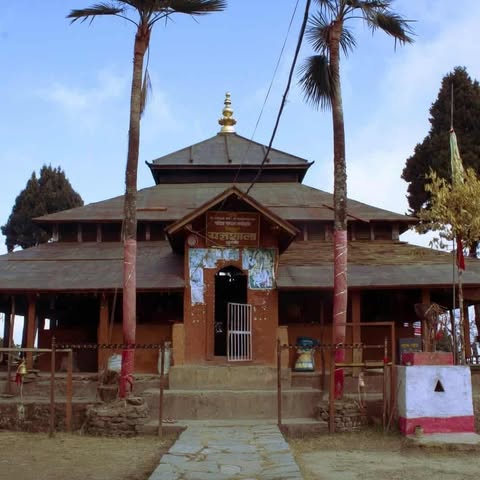
Likewise, Arjun Hill, standing to the west of Resunga, captivates visitors coming to Tamghas. On its southern slope lies a beautiful cave. From the View Tower built atop Resunga, one can enjoy a breathtaking panorama of mountain ranges and gleaming white snow peaks. During the months of Nepali months Poush and Magh, Resunga is blanketed in snow, while in Falgun and Chaitra, the forests turn crimson with blooming rhododendrons.
At the foot of Resunga lies Tamghas Bazaar. Resunga Dham is reached by ascending about seven kilometers uphill from the district headquarters, Tamghas.
5. Jagdishpur Lake, Kapilvastu
About 12 kilometers north of Taulihawa, the district headquarters of Kapilvastu, lies a place called Jagdishpur in Wards No. 9 and 10 of Kapilvastu Municipality. It is here that the Jagdishpur Lake is located.
Although the area is inhabited by the Tharu community and has abundant fertile land suitable for agriculture, a lack of irrigation has caused problems in crop production. To address this issue, in 2035 BS, the Banganga Division Irrigation Office proposed a plan to construct a dam at Laxman Ghat to create a reservoir in Jagdishpur, which would then be used to irrigate hundreds of hectares of farmland.
As a result, the lake now spreads over an area of approximately 215 hectares, of which 157 hectares are covered with water. This lake is the largest human-made biodiversity-rich lake in Nepal, with a capacity of 4,750,000 cubic meters and a depth of 3 meters.
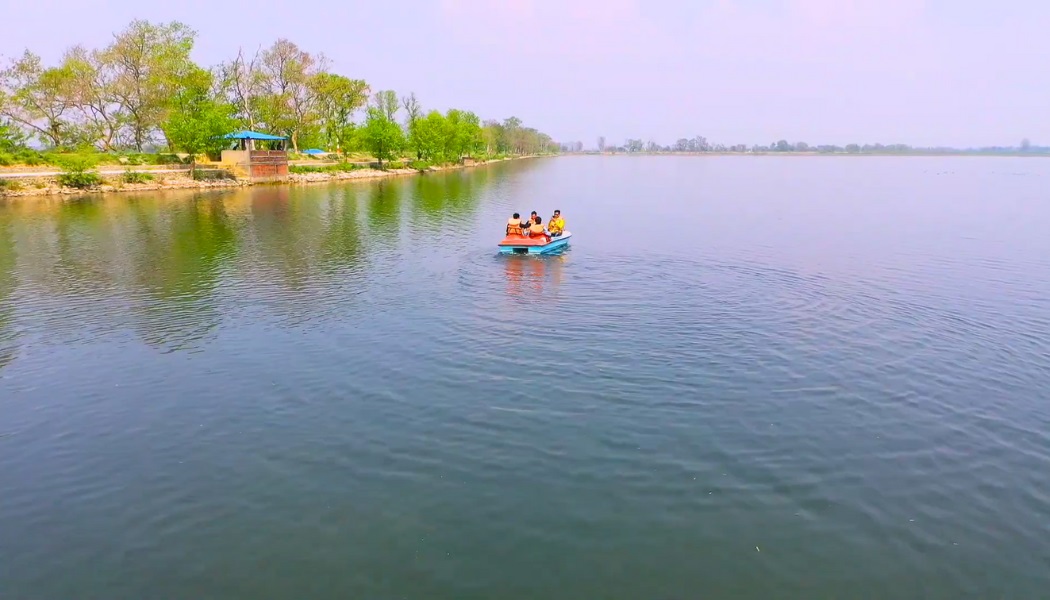
The lake is home to 46 species of fish, 42 species of reptiles, 10 species of amphibians, as well as various mammals. Additionally, there are 7 migratory species that arrive in the summer, 64 migratory species that come in winter, along with other native wildlife.
Depending on the season, foreign Siberian birds visit the lake in large numbers. In August 2003, Jagdishpur Lake was listed as a Ramsar site. As the largest man-made lake in the country, it now hosts over 118 species of birds.
Famed as a birdwatcher’s paradise and a scenic tourist spot, the lake attracts both domestic and international visitors, thanks to its abundance of aquatic and terrestrial wildlife. To enhance the tourist experience, boat rides have been offered on the lake for the past five to six years, and nearby Tharu homestays provide an opportunity to experience the local culture.
6. Supa Deurali Temple, Arghakhanchi
Located between Sitganga and Sandhikharka municipalities, this pagoda-style temple is 49.2 km north of Gorusinghe along the East-West Highway. It sits at an elevation of 4,500 ft, surrounded by scenic hills.
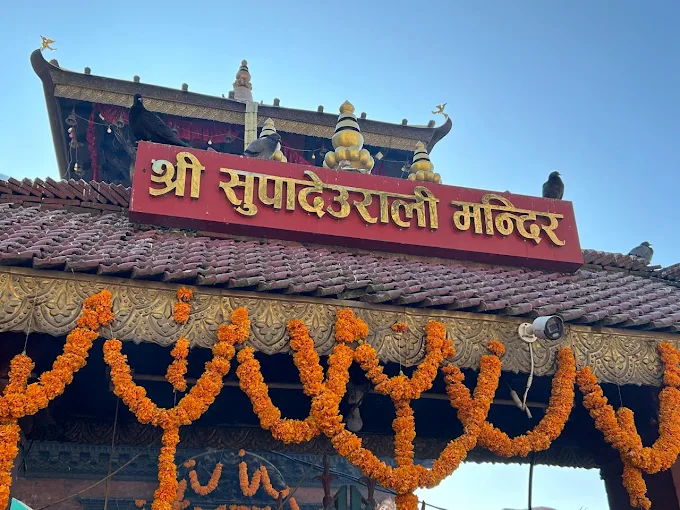
Legend tells of a soldier who pledged to the goddess but failed to fulfill it and was turned into stone — still visible against the cliff.
Although animal sacrifice is a tradition at this temple, no sacrifices are offered on the days of Aunsi (New Moon), Shree Panchami, Rishi Panchami, Krishna Janmashtami, Ekadashi, Ram Navami, and Akshaya Tritiya. The site also features a 272.85-meter suspension bridge, making it a tourist draw.
7. Ramgram Stupa, Nawalparasi West
Just 3 km south of Parasi, Ramgram is one of eight original stupas containing the Buddha’s relics.
When Emperor Ashoka tried to redistribute the relics in 249 BC, the local serpent king (Nagaraja) stopped him, making this the only stupa that still holds the original relics.
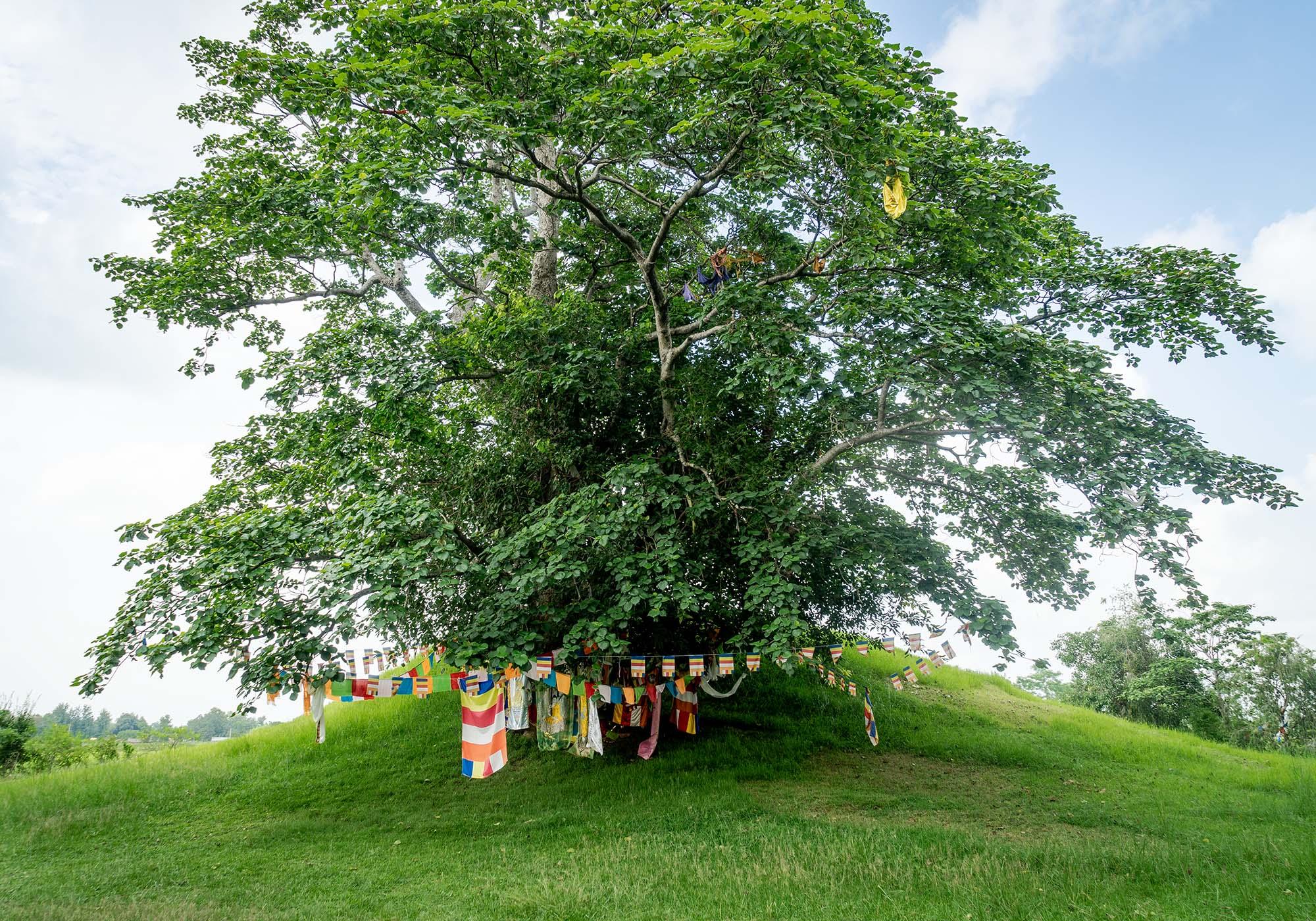
It draws international pilgrims and tourists for spiritual visits and sightseeing.
8. Dharapani, Dang
Near Ghorahi, Dharapani is a major Hindu pilgrimage site. It features the world’s tallest five-metal trident (55.5 ft), 108 Shiva lingams, sacred trees, and holy ponds.
The Pandeshwar Temple is the main attraction, especially during festivals like Shivaratri.
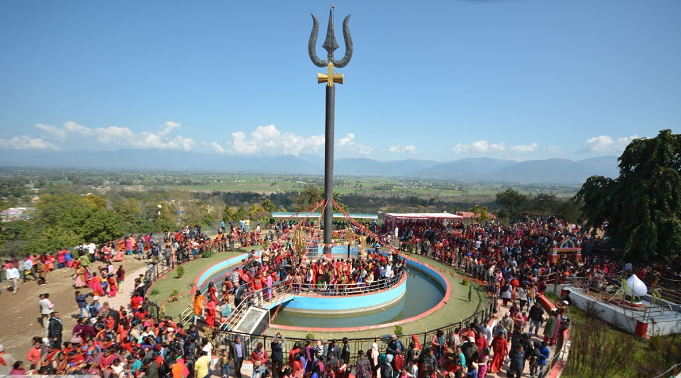
Here, physical infrastructure is being developed according to a master plan. There are dozens of ponds and reservoirs in the surrounding area.
Likewise, the Tharu Museum in Tulsipur has also become a tourist attraction. It has emerged as a must-visit historical site for those interested in studying Tharu culture.
9. Swargadwari, Pyuthan
Another major religious destination in Lumbini Province is Swargadwari in Pyuthan. Swargadwari is as rich in natural beauty as it is significant from a spiritual and religious perspective. It lies 59 kilometers from Ghorahi via Holeri, and 14 kilometers from Bighri in Pyuthan district.
From Swargadwari, one can view three Himalayan peaks rising above 8,000 meters, along with dozens of other mountain ranges. Visible from its surroundings are Dhaulagiri, Nilgiri, Machhapuchhre, Annapurna, Lamjung, Himchuli, Manaslu, Churen, and Putha ranges. Despite its breathtaking scenery, Swargadwari is more famous for its religious significance than for its natural beauty.
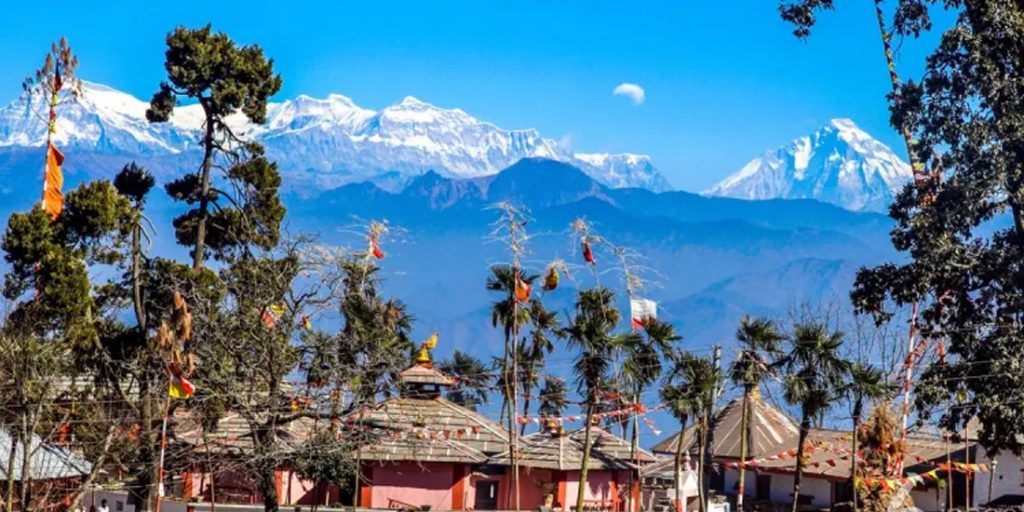
According to popular belief, the site is named Swargadwari (“Gateway to Heaven”) because the Pandavas took this route on their way to heaven. The temple complex, which appears to consist of nine shrines at first glance, houses the idols of Panchayan deities—Ganesh, Surya, Vishnu, and Shiva—inside the Yagyashala (sacrificial hall). In the four surrounding chambers are sacred fire pits, and rituals such as hom (fire offerings) are performed in the central Yagyashala.
At Swargadwari, young disciples perform daily worship, Vedic recitations, Bhagwat readings, fire rituals, and Rudrabhishek ceremonies. Cows hold special significance here. During the time of Mahaprabhu, thousands of cows were kept at Swargadwari, and history records that he personally tended to them. The site also hosts a Gurukul school.
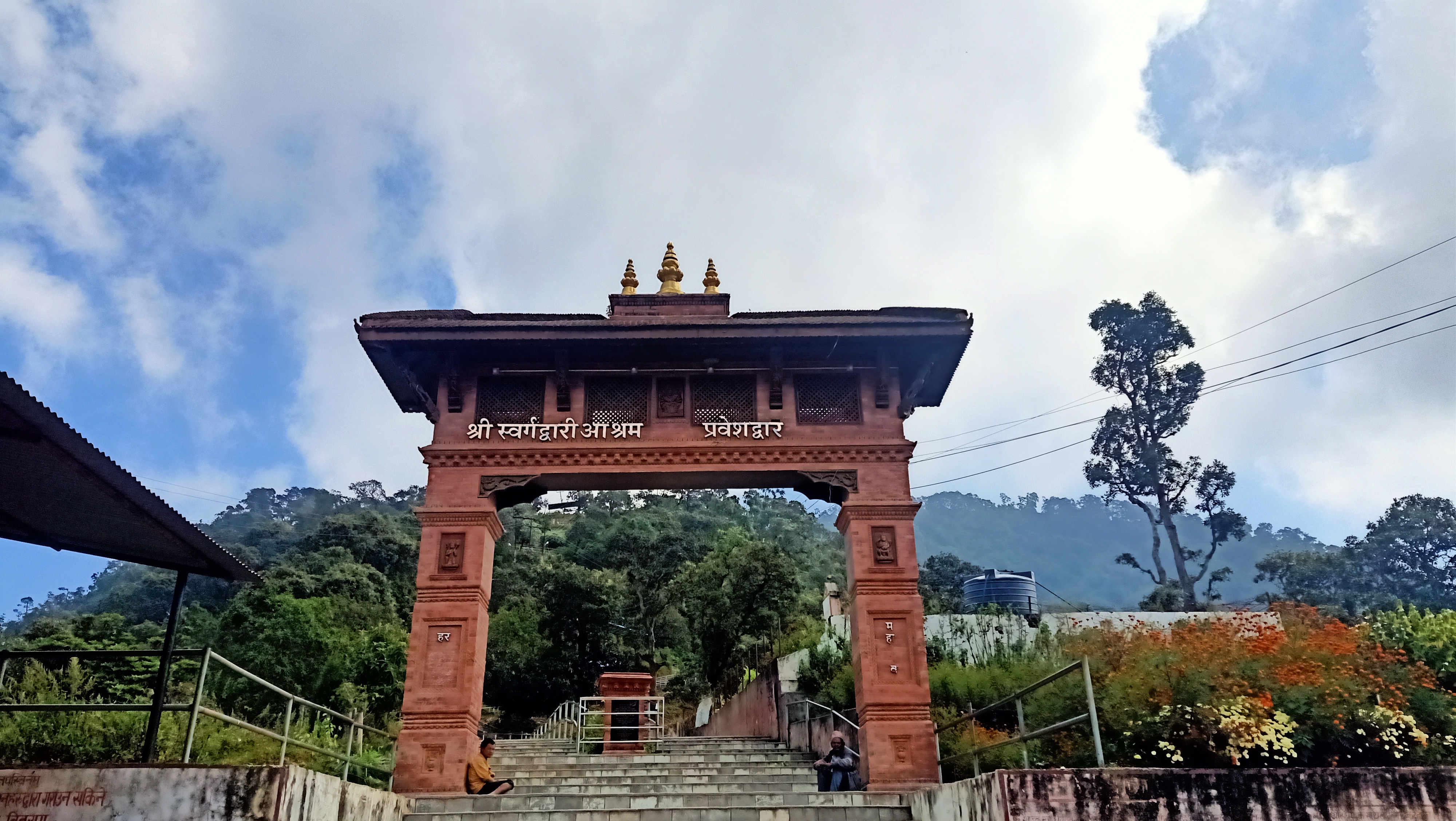
At the Gurukul, students study the Vedas, Rudri, Chandi, and Sanskrit grammar. The revered saint, 108 Mahaprabhu Bal Tapaswi, born in 1916 BS in Rumti village of Rolpa district, came to Swargadwari in 1951. In 1952 (Baisakh Purnima), he kindled an eternal flame by invoking fire through Vedic mantras and commenced the Akhand Mahayagya (eternal fire ritual) for world peace.
That sacred fire, ignited with Vedic hymns, has been continuously burning ever since. Swargadwari remains a highly popular pilgrimage site, attracting both Nepali and Indian devotees.
10. Sundaha Lake, Rukum East
Rukum East, known as the only Himalayan district in Lumbini Province and also Nepal’s youngest district, is geographically difficult to reach. Yet, its natural beauty, the lifestyle of its people, and its many tourist destinations captivate anyone who visits.
Among the highlights of Lumbini Province is Sundaha, a large lake located at the highest point of western Dhaulagiri. Situated in Putha Uttarganga Rural Municipality–3 of Rukum East, Sundaha lies at an altitude of 4,435 meters above sea level, at 28°48'44.6" N latitude and 82°50'41.6" E longitude. The lake is shaped like a shallow dish.
From one side of the lake, water flows outward, and a pathway has been built along the embankment for walking. At the center of the embankment stands a Jalki, which locals describe as a type of shrine, also known as a Deurali.
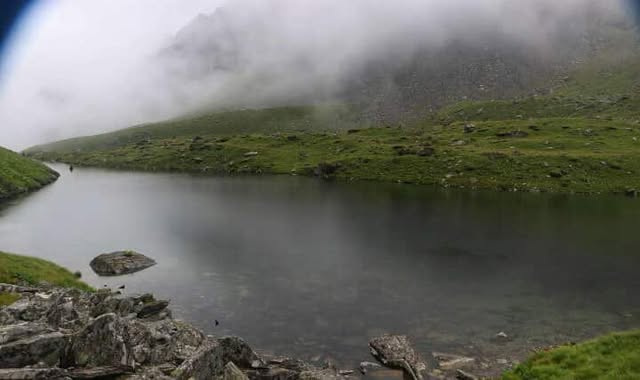
This is regarded as a cultural symbol of the region. Travelers passing through the Jalki area offer local alpine flowers and donations to Baraha Devta, believed to reside in the lake, and make personal wishes. There is a local belief that completing three barefoot circumambulations around the lake with folded hands fulfills one’s desires. It takes roughly one hour to make a full round of the lake.
According to various studies and research, Sundaha covers 10.80 hectares of land—an area of approximately 172,996.84 square meters. However, its exact depth has not yet been confirmed.
To the east of Sundaha lie the rocky cliffs of Sumlakoiko, Dhantawo, and Sunchhahra; to the west, Rakse Khagar; to the north, Kale Khagar, a range of rocky hills; and to the south, Banyapa and Matinchai Buki. Rakse Khagar marks the border between the Dolpa and Rukum East districts, i.e., the boundary between Karnali and Lumbini provinces. In recent years, Sundaha has become a popular destination for trekking enthusiasts and nature lovers. As there is no road access, reaching Sundaha requires a foot journey through scenic mountain trails.
11. Jaljala, Rolpa
Jaljala lies about 24 kilometers north of Libang, the district headquarters of Rolpa. Known as one of the highest points in the district, Jaljala falls within Thabang Rural Municipality. During the armed conflict, this area was used by the Maoists as a secure training center.
Located at an altitude of 3,193 meters above sea level, Jaljala hosts special fairs and worship ceremonies during the full moon days of Baisakh, Jestha, and Saun. The area experiences snowfall for a few months each year and is also well known as a pastureland for sheep and goats. The ground here, of the Simkhet type, feels soft and springy underfoot.
The region is rich in medicinal herbs and covered with pine, oak, white rhododendrons, and red rhododendrons, which blanket the hills in color during the blooming season. Wildlife such as danphe (Lophophorus), monal, kalij pheasant, wild boar, tiger, bear, ghoral, deer, and ratu (a local species) can also be spotted in the area.
From Jaljala, one can enjoy close-up views of the Dhaulagiri and Sisne mountain ranges. With its striking natural beauty and serene landscape, Jaljala captivates every visitor who reaches it.
12. Banke National Park, Banke
Spanning 550 sq. km across Banke, Dang, and Salyan, Banke National Park is home to a diverse ecosystem, rich vegetation, various species of mammals, birds, fish, reptiles, and amphibians. It serves both as a protected ecological zone and a popular ecotourism destination.
Bounded by the Shivkhola River in the east, the Kohalpur–Surkhet Highway in the west, the Chure Hills in the north, and the East–West Highway in the south, the park provides a suitable habitat for royal Bengal tigers and wild elephants.
It connects to Bardiya National Park and supports eco-tourism through its rich biodiversity. It forms an extended habitat for large wildlife species, supporting rich biodiversity within the region.
13. Bardiya National Park, Bardiya
Located in western Nepal, Bardiya National Park is widely recognized as one of the region’s prime tourist destinations. It is particularly famous for its tigers, which have made the park well-known both nationally and internationally.
Covering 968 sq. km, Bardiya is known as Nepal’s "Tiger Capital." It is home to 54 mammal species, 438 birds, 25 reptiles, and 60 fish species.
For those interested in Tharu culture, Bardiya is a true treasure. Visitors can stay in local Tharu homestays, enjoy traditional Tharu cuisine, and observe the community’s unique way of life. The homestay village in Dalla has become particularly popular among tourists. Famous for jungle safaris, Tharu homestays, and local cuisine, its proximity to Thakurdwara Temple adds spiritual value.
The park is accessible by road transport, and spending an evening in the park area—especially capturing the scenic views of the Karnali Bridge—offers a memorable experience.
Visitors often stay overnight to explore the wilderness and enjoy local hospitality.
Immersing oneself in nature while staying inside the park provides a truly authentic and peaceful experience.
This article is a translation of a piece originally published in Nepali. Read the original version here