


Anjan Dhamala's Taekwondo Journey: Growth, Glory, and Global Recognitions

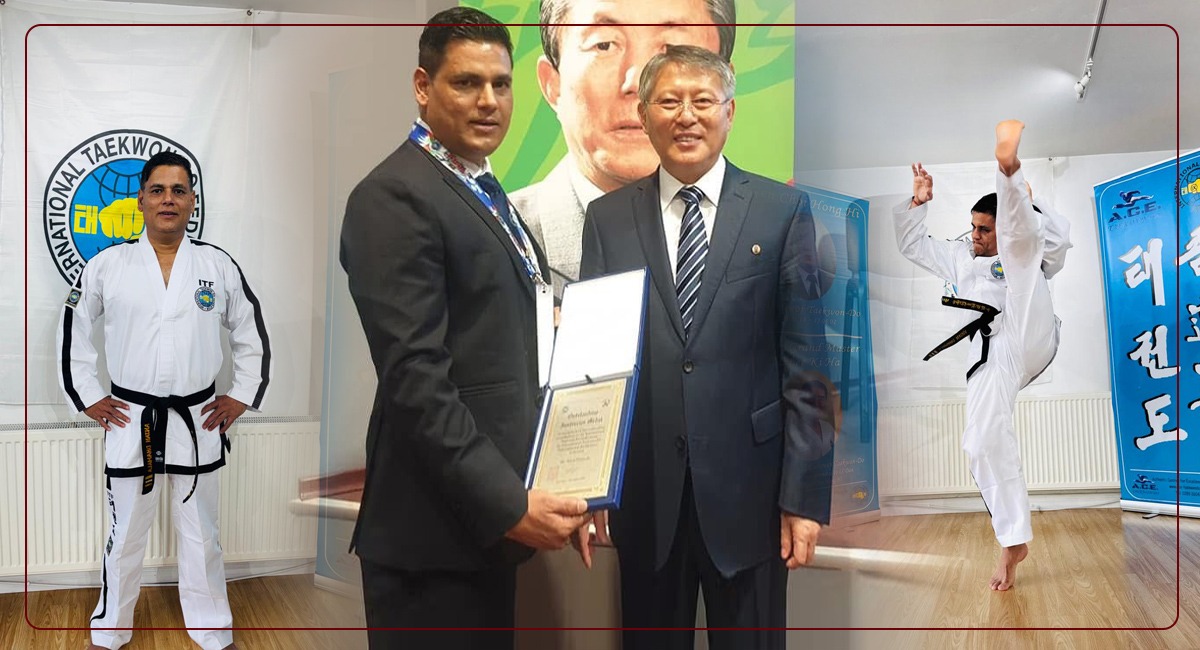

Kathmandu: Born in Gorkha, a district renowned for its rugged terrain and disciplined legacy rather than structured sports infrastructure, Anjan Dhamala grew up immersed in an atmosphere where physical activity was an integral part of daily life.
Like most boys in the village, he played volleyball and other local sports, driven not by ambition but by instinct and joy. At the time, sports were not seen as careers—they were passions, outlets, and expressions of youth.
Today, Dhamala, a native of Shahid Lakhan Ward No.6, stands among Nepal’s most influential sports administrators. He is the President of the Esports Association of Nepal (ESAN), a former board member of the National Sports Council (NSC), an executive member of the Asian Taekwondo Federation, and a senior figure in the International Taekwondo Federation (ITF) Nepal. His journey, however, did not begin with titles or authority—it started with migration, struggle, and persistence.
Late Beginnings, Strong Foundations
Dhamala’s formal introduction to Taekwondo came only after he moved to Kathmandu for further studies. He was 16 years old—an age considered late by today’s standards but acceptable at the time.
“That was the period when most players started their sporting journey in their teenage years,” he recalls. “Many legendary players of that era also began late.”
Access was the biggest challenge. In those days, structured sports training was rare outside Kathmandu. Children from rural areas had to wait until they completed their School Leaving Certificate (SLC) before migrating to the capital in search of education and opportunity.
“It was difficult for children in villages to receive proper sports training,” says Dhamala. “To get those opportunities, one had to come to Kathmandu, and that usually happened only after SLC.”
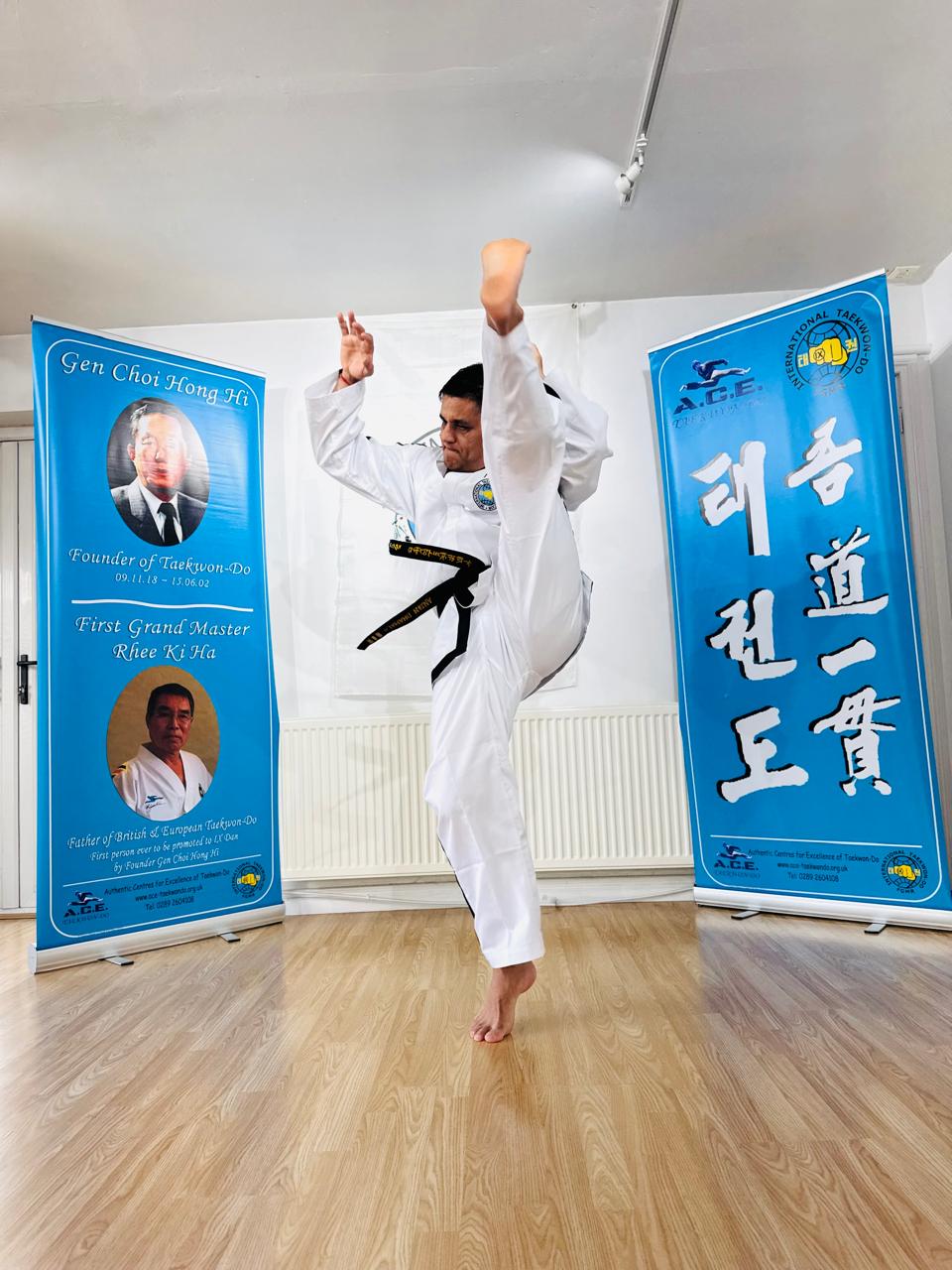
Starting late meant facing physical challenges, especially flexibility—one of the most crucial aspects of Taekwondo. But Dhamala refused to let age define his limitations.
“The challenge of flexibility was there,” he admits. “The earlier you start, the greater the advantage. But at 15 or 16, the body is not completely inflexible either.”
Through disciplined training and dedication, he overcame these hurdles. At the time, starting sports between the ages of 16 and 17 was considered normal. Today, the landscape has changed.
“In urban areas now, children start training as early as eight or ten,” he observes. “The scene has completely transformed.”
Passion Before Profession
For Dhamala, Taekwondo was initially a source of fitness, happiness, and adrenaline—not a calculated career choice. Nepal was undergoing a political transition. The monarchy was fading, multiparty democracy was emerging, and athletes were treated with a certain social respect.
“During that transition phase, players were viewed differently,” he says. “Earning a black belt—2nd or 3rd Dan—was a matter of pride. But for me, it was never about the profession at the start. It was pure passion and joy.”
Still, passion soon evolved into purpose. Like every Taekwondo practitioner, Dhamala dreamed of achieving the black belt—a milestone that typically takes at least two years of continuous training.
“If a player trains two hours daily, one can achieve a black belt in 24 months,” he explains. “It’s like completing SLC in Taekwondo.”
With relentless effort, Dhamala accomplished the feat within the minimum time frame, becoming part of the first batch of ITF Taekwondo Nepal. But instead of seeing the black belt as an endpoint, he saw it as a beginning.
From Player to Builder
“Achieving a black belt is like acquiring a license to coach,” he says. “You can form a team, open a dojang, and start contributing.”
Two years after earning his First Dan, Dhamala attained his Second Dan. At the time, sports also provided limited employment opportunities. The government recruited black belt holders in disciplines like Taekwondo, Karate, and Wushu—mostly on a contract or wage basis.
“But there was never a designated structure for coaches,” he points out. “That gap still exists.”
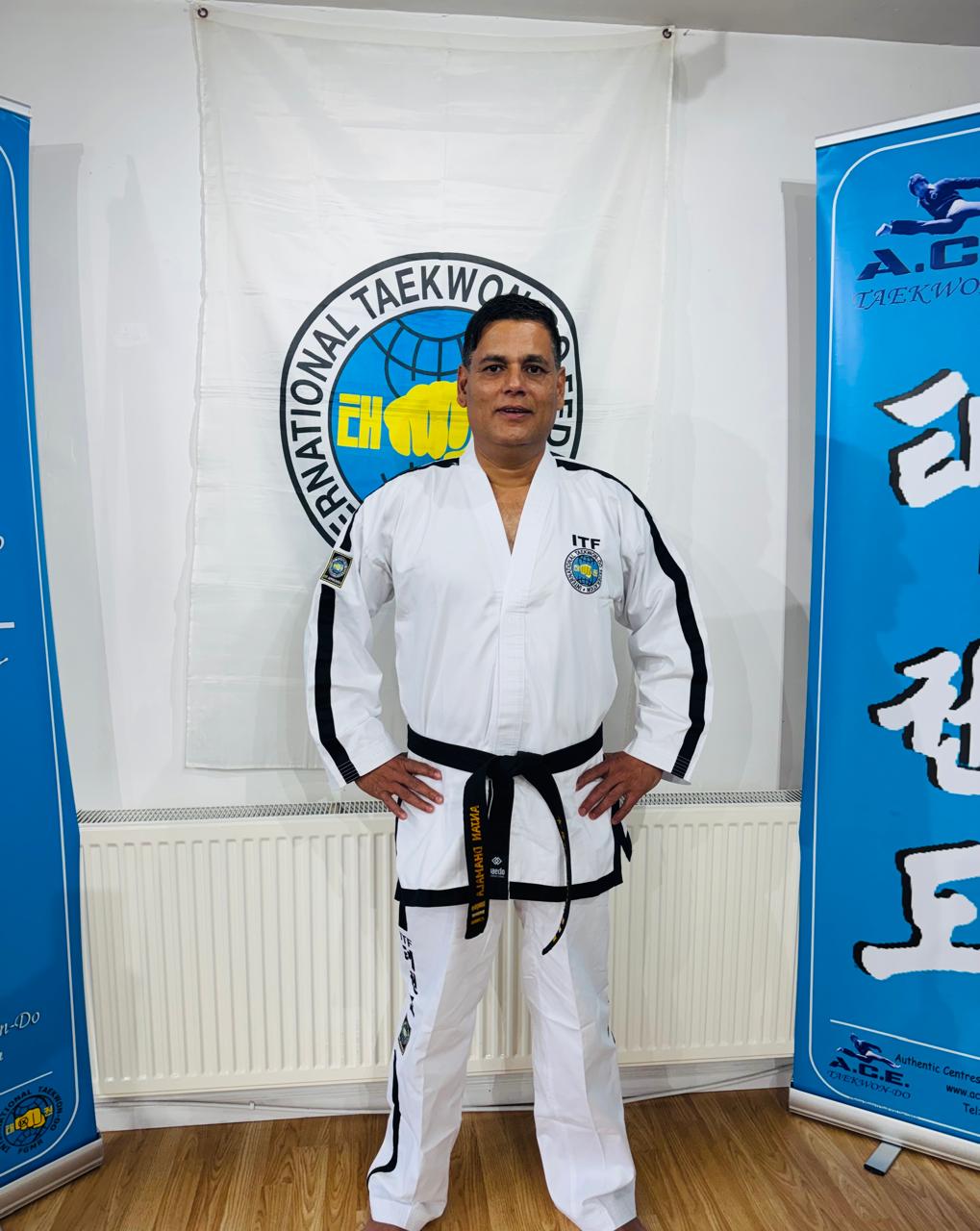
Rather than waiting for state employment, Dhamala chose a more demanding path—pursuing the 4th Dan to qualify as an international coach.
“The path was not easy,” he says. “There were many hurdles. But I was clear about my goals and kept pushing myself.”
His expanding expertise opened new doors. He became a referee, eventually serving as Head Referee of ITF Nepal.
“Attaining 4th Dan was not just about rank,” he explains. “It was about understanding the technical depth of the sport—how to evaluate performance fairly and professionally.”
International Recognition and National Responsibility
Years of contribution to Taekwondo development in Nepal, the International Taekwondo Federation (ITF) awarded Dhamala with a Diploma of Citation in 2015.
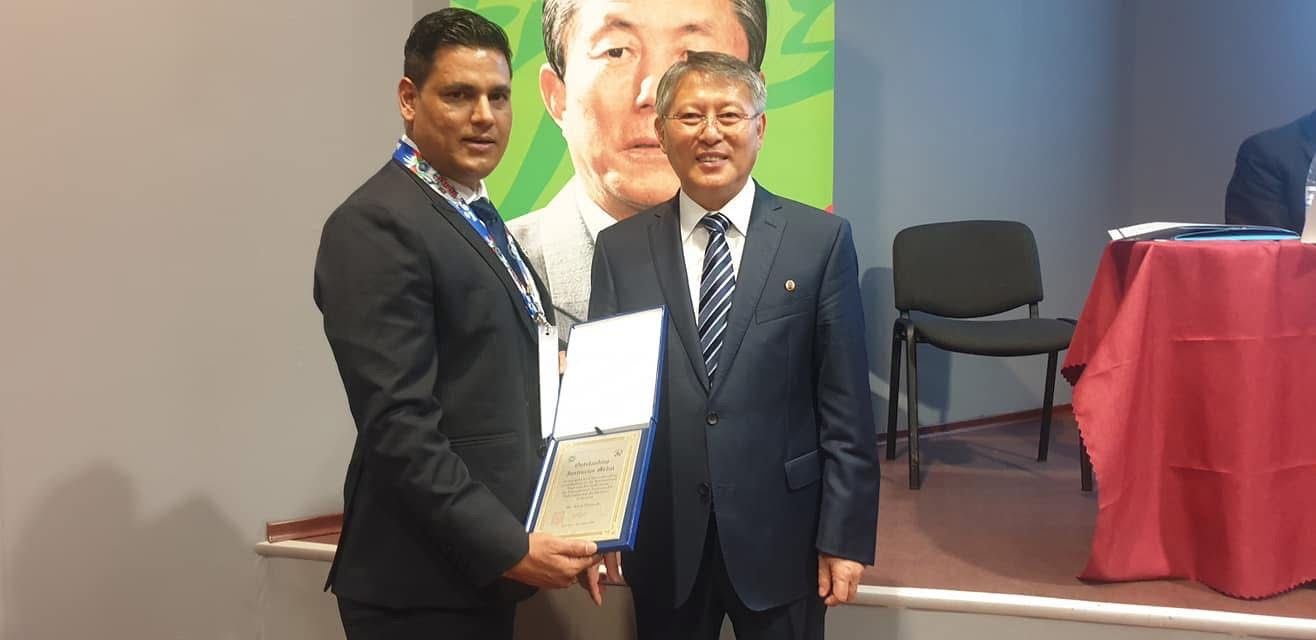
In Bulgaria, ITF awarded Dhamala with the prestigious Outstanding Instructor Medal in 2019 for his distinguished service in Taekwondo. The decision came after the ITF headquarters in Vienna reviewed Nepal’s progress reports and development initiatives.
“I started as a player, then coach, then senior vice-president and president of ITF Nepal,” he recalls. “Every small effort was made to take the sport to every corner of the country.”
He received the honor during the ITF World Championship in Bulgaria, attended by representatives from 84 nations.
“I attended as a team leader,” he says with pride. “Receiving that award for my country was unforgettable.”
The honor was just a beginning. Dhamala was also honored in the United Kingdom.
In 2021, his journey took another turn when he was appointed a board member of the National Sports Council (NSC). During the same phase, Dhamala also bore the responsibility of the Acting Member Secretary of the NSC 4 times as per the requirement.
“It was a proud moment,” he says. “But it was also a huge responsibility—working not just for Taekwondo, but for multiple sports at the policy level.”
The NSC also awarded Dhamala for his remarkable contribution to the development of Taekwondo in South Asia and Nepal in 2023.
After finishing his term, the NSC also awarded him with an honor of certification in 2025.
Also, ACE Taekwondo Uk honored Dhamala for the development of taekwondo in Nepal in November 2025.
Starting his journey as a player and reaching the governing council of Nepal, the journey allowed Dhamala to understand not only Taekwondo but the wholesome struggles of a player and the challenges of making a concrete policy for the development of sports in Nepal.
Reality Check: Sports and the State
Serving within Nepal’s apex sports body gave Dhamala a broader understanding of systemic challenges.
“To make institutions strong, the state itself needs to be strong,” he says. “Nepal is still weak in many aspects. Our per capita income is low, and infrastructure development suffers.”
In such a context, sports naturally receive lower priority than health, education, and basic development—a reality Dhamala considers understandable, though painful for athletes.
“There was a time when players received allowances only a month or two before tournaments,” he recalls. “That trend has started to change.”
After the formation of a new NSC board, extended closed camps, daily allowances, and inclusion of players from outside Kathmandu became part of the central training programs.
“Though there has been reform in the allowance for players. Still, it’s not sufficient,” he admits. “One cannot fully depend on sports to sustain life in Nepal.”
As coordinator of a subcommittee, Dhamala helped draft and implement policies to provide cash rewards for athletes winning international medals.
“This is just a beginning,” he says. “But it gives players hope that dedication can translate into dignity.”
Ambition vs Investment
Nepal dreams of Olympic gold, but investment tells a different story.
“Nepali players receive around 600 rupees per day,” Dhamala points out. “Meanwhile, countries like the USA, UK, and India invest millions in a single athlete. Expectation and reality are miles apart.”
Lack of exposure and inconsistent selection systems further demoralize athletes. The National Games—once a gateway for international selection—remain uncertain due to political instability.
“The 10th National Games should have been completed by December 2024,” he says. “Now, even with dates announced, preparations remain unclear.”
Such uncertainty, he warns, harms player morale.
“There needs to be strong leadership. Otherwise, the entire ecosystem becomes depressing.”
Looking Ahead
Dhamala believes the solution lies in routine national championships, transparent selection systems, and shared responsibility.
“The government alone cannot bear all expenses,” he says. “Corporate houses and business stakeholders must come forward.”
While sports like cricket, football, and volleyball have seen progress, many disciplines still await basic investment.
“For a sustainable future, government policy and private support must work hand in hand,” Dhamala concludes.
From a village boy discovering sport for joy, to a national policymaker shaping its future, Anjan Dhamala’s journey is a testament to persistence, purpose, and belief—that sports, when nurtured, can transform lives and societies alike.