Energy Plans handed over to Gharapjhong and Baragung Muktikshetra Rural Municipalities

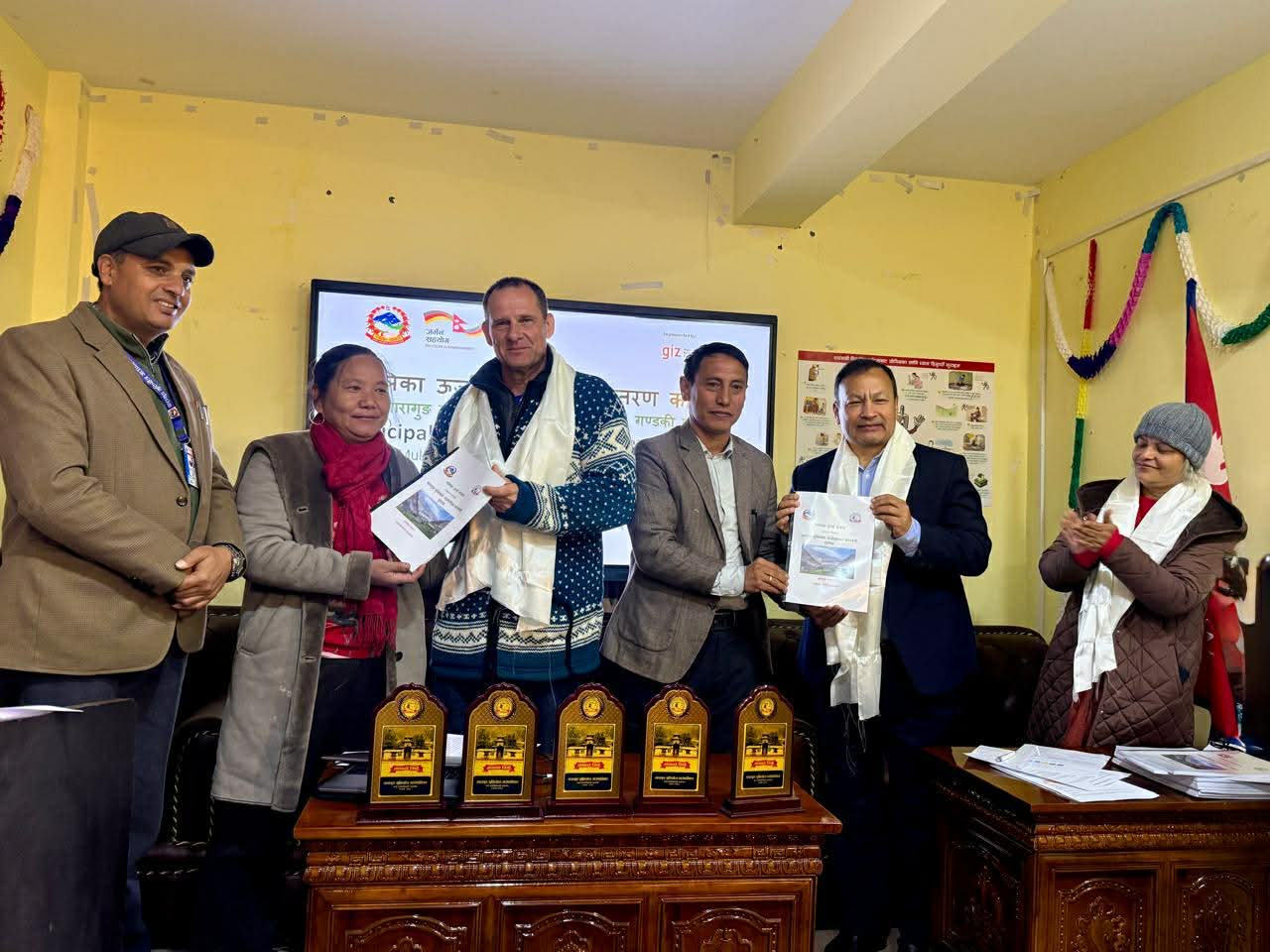

Kathmandu: Energy plans have been formally handed over to Gharapjhong Rural Municipality and Baragung Muktikshetra Rural Municipality in Mustang district.
Dr. Ranjan Prakash Shrestha, Senior Project Manager at the European Union Delegation to Nepal, and Dr. Frank Fecher, Programme Manager at GIZ Nepal, handed over the plans to Baragung Muktikshetra Rural Municipality Chairperson Rinjen Namgyal Gurung and Gharapjhong Rural Municipality Chairperson Mohan Singh Lalchan.
Under the GIZ project, relevant technical experts conducted field surveys and detailed studies in the two municipalities of Mustang, based on which five-year energy plans were developed. The Village/Municipal Energy Plans (MEPs) prepared by the local governments with financial support from the German government and the European Union, and technical assistance from GIZ, were handed over in the last week of Poush.
The energy plans for Gharapjhong and Baragung Muktikshetra were prepared with the objective of enabling systematic formulation, implementation, and monitoring of clean and efficient energy programs at the local level; expanding access to clean energy services; identifying energy-related investment sources; and supporting evidence-based policy formulation, action planning, and evaluation.
Prepared through extensive consultations with local stakeholders, these plans are expected to provide a practical roadmap for addressing energy-related challenges in the two rural municipalities.
The municipalities stated the plans aim to promote socio-economic development, climate resilience, productive use of grid electricity, and wider adoption of renewable energy technologies, while empowering local communities to advance their own growth and prosperity.
The proposed municipal energy plans include measures such as ensuring quality in household electricity use, promoting clean and energy-friendly appliances as alternatives to traditionally used household stoves, and encouraging communities to use energy-efficient appliances to reduce overall energy consumption.
“The municipal energy plan has provided us with clear direction toward affordable, locally available, and clean energy solutions,” said Rinjen Namgyal Gurung, Chairperson of Baragung Muktikshetra Rural Municipality, “Our goal is to implement these activities in coordination with government agencies and development partners.”
The MEPs include detailed market-based cost estimates, ensuring that the proposed programs are not only technically feasible but also economically viable.
Baragung Muktikshetra Rural Municipality has estimated a total implementation budget of NPR 147.3 million, while Gharapjhong Rural Municipality has allocated NPR 218.9 million for implementation over five years.
Chairperson Mohan Singh Lalchan of Gharapjhong Rural Municipality said the plan presents a clear picture of the municipality’s overall situation, priorities, and investment needs, providing a strong basis for collaboration with the government and development partners.
Chairperson Lalchan also highlighted the importance of a 21-day house-wiring training program conducted for local youth with support from REEEP-GREEN, which is expected to strengthen electrical safety in the community and improve livelihood opportunities.
“Municipal and local energy plans are important, but their success depends on local ownership and effective implementation,” said Dr. Ranjan Prakash Shrestha, “These plans can help reduce dependence on imported fuels, lower household energy costs, and strengthen climate resilience among vulnerable communities in Mustang.”
The handover event highlighted the growing importance of energy as a foundation for local development, improved public services, and climate resilience. Through the MEPs, both rural municipalities aim to systematically integrate energy planning into their annual plans and overall development strategies.
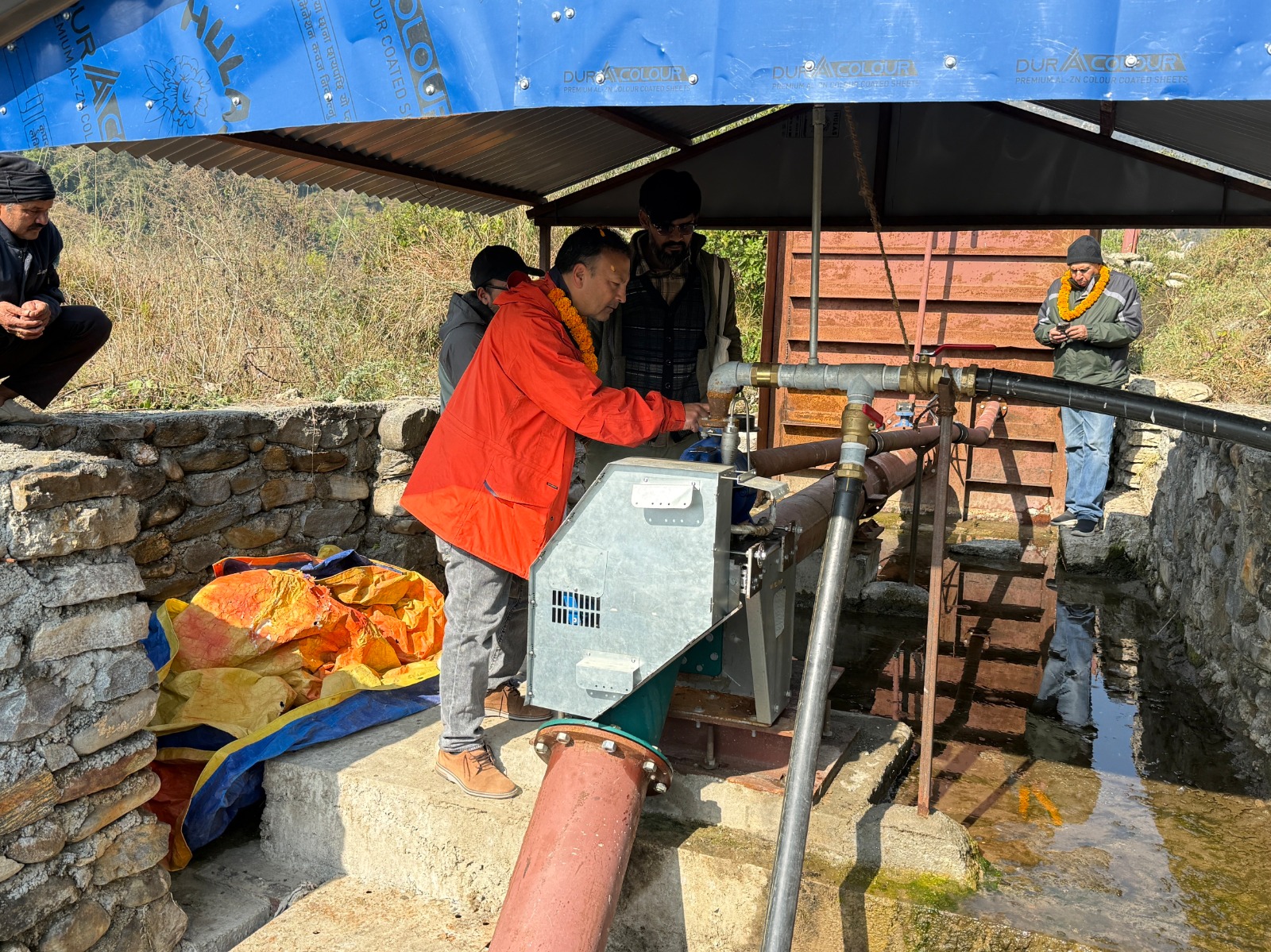
Following the energy plan handover program, the European Union and GIZ team visited Machhapuchhre Rural Municipality–5, Rivaan, in Kaski district on 25 Poush, where they observed a recently completed hydropower-based lift irrigation system.
The system was established under the Sustainable Energy Challenge Fund, managed by the Alternative Energy Promotion Centre (AEPC), with financial and technical support from the REEEP-GREEN project.
The system uses a hydro-powered pump-turbine that harnesses the energy of flowing water to provide irrigation to 7.5 hectares of arable land located at higher elevations. Operating without electricity or fossil fuels and requiring minimal maintenance, the system presents an example of an affordable and sustainable irrigation solution.
During the visit, community members shared that access to reliable irrigation has already begun transforming their agricultural practices. The system has enabled a shift from rain-fed subsistence farming to diversified cash crop production, creating opportunities to increase household income.
What is REEEP-GREEN?
The Renewable Energy and Energy Efficiency Programme – Recovery and Empowerment through Sustainable Energy (REEEP-GREEN) is a technical cooperation project between the Government of Nepal, the German Federal Ministry for Economic Cooperation and Development (BMZ), and the European Union. The project promotes renewable energy and energy efficiency across Nepal.
In addition to other activities, the project has provided technical support to prepare energy plans in more than 50 local governments. It has also implemented various renewable energy and energy efficiency initiatives in collaboration with public and private sector partners to support socio-economic development.