


Xi supports Russian claim over Japanese islands, reversing Mao's stance


Kathmandu: Bilateral relations between Russia-Japan have been long marred by dispute over the sovereignty of the islands, also known as 'Kuril Island dispute'.
Following the surrender of Japan in world war-2 on August 15, 1945, Kuril Islands have been under Russian administration. Japan has claimed the four southernmost inlands, also known as Northern Territories in Japan and Southern Kurils in Russia, as parts of its territory. Japan sees the Russian claim over the islands as 'illegal occupation'.
After Moscow's invasion of Ukraine, Japan shifted its policy of conciliation toward hostile position. In an annual foreign policy report last year compiled by Japan's foreign ministry, it was clearly stated that the northern territories are 'inherent' part of Japan and called the Russian claim as 'illegal occupation'.
As regards the Kuril Island dispute, China has maintained that they belong to Japan since Mao Zedong's time.
In July 1964, Mao told a delegation of the Japan Socialist Party sent to China that he believes the Russian-held islands “should be returned to you,” announcing Beijing’s support for Tokyo’s territorial claim.
The Chinese government had maintained this position, even though it did not publicly mention that stance in recent years. Maps in China show the disputed islands as “occupied by Russia.”
Japan says the Soviet Union illegally seized the islands — Etorofu, Kunashiri, Shikotan and the Habomai islet group — soon after Japan’s surrender in World War II on Aug. 15, 1945. Russia says the action was legitimate.
However, Chinese president Xi Jinping appears to reverse the long-held policy.
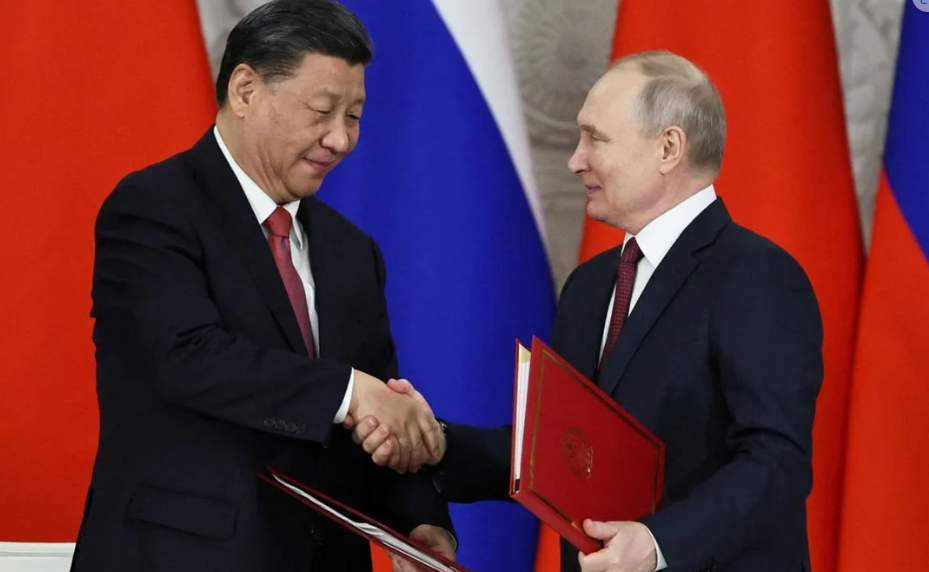
According to the Chinese source familiar with the matter, Xi did not support Japan's claim over Russian-held islands off Hokkaido. In his talks with Russian counterpart Vladimir Putin last month, he changed a long-held stance of recognizing them as Japan's territories.
Xi told Putin in their meetings in Moscow that China “does not take either side” regarding the territorial row- meaning it is a shift to neutrality from China’s position indicated by then-Chinese leader Mao Zedong in 1964 to view the four disputed islands as belonging to Japan, the source said.
Bilateral negotiations over the islands known as the Northern Territories in Japan and the Southern Kurils in Russia have been suspended since Tokyo imposed punitive sanctions against Moscow following its invasion of Ukraine.
The change in China’s position could make it more difficult to settle the decades-long dispute, as Moscow is unlikely to concede on the issue now it has backing from Beijing, observers say.
In the March 20-21 talks, Putin stressed the importance of promoting a special duty-free zone set up on the contested islands last year and called for investment by Chinese companies, according to the source.
With an improvement in Tokyo-Seoul ties marked by summit talks between Prime Minister Fumio Kishida and South Korean President Yoon Suk Yeol on March 16, Putin said Russia cannot expect investment from South Korean firms, the source added.
In response, Xi conveyed China’s neutral stance on the territorial row but declined to make it clear whether Beijing would let its businesses join the project, saying he will leave the matter to Zheng Shanjie, chairman of the National Development and Reform Commission, the source said.
Tokyo has expressed regret over the establishment of the special tax-free zone on the disputed islands in March last year.