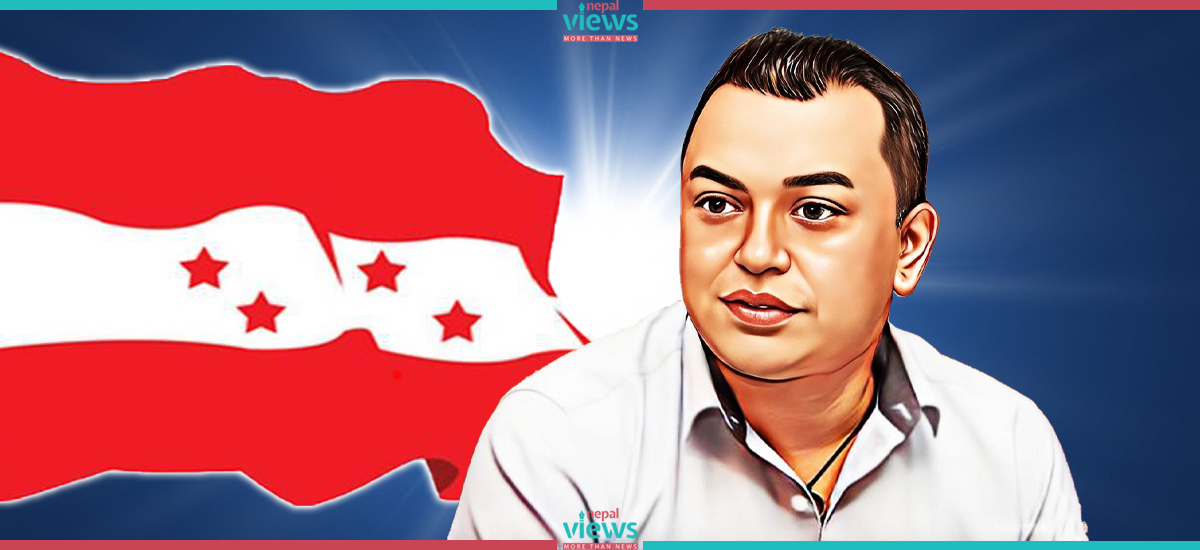
Why the Supreme Court refused interim stay in Congress leadership dispute
The bench declined to halt the Election Commission’s decision recognising the Thapa-led committee as legitimate and outlined six issues to be decided at the final hearing.

NRNHub
01/20/2026 07:54 AM EST3 min read
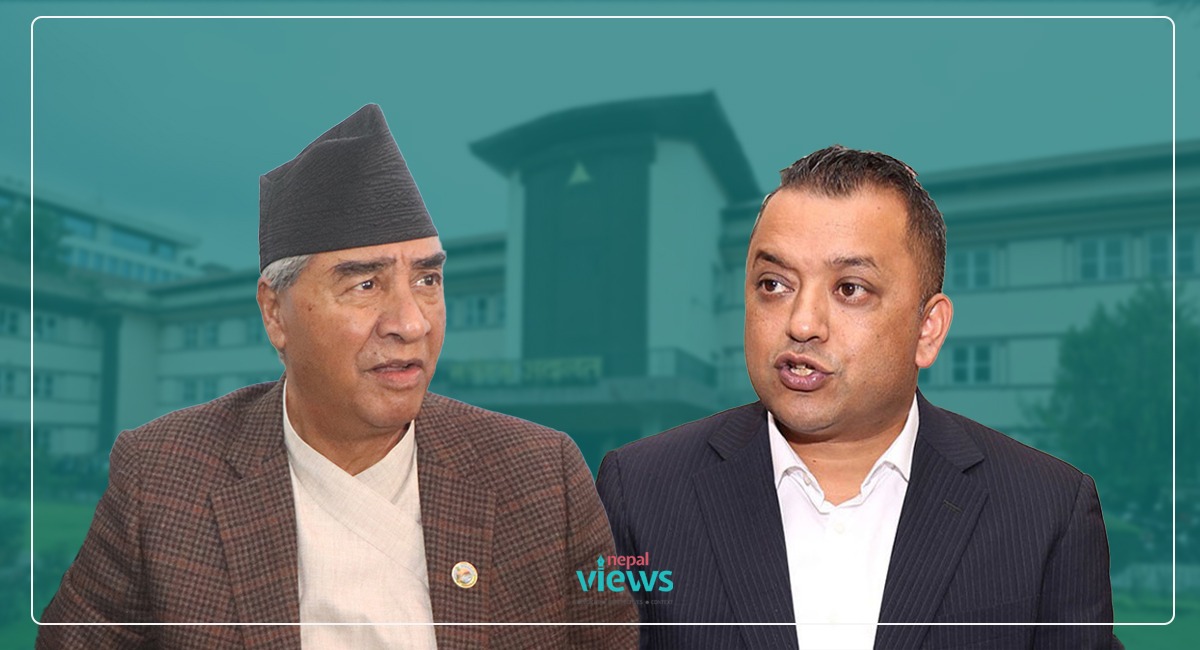

Kathmandu: The Supreme Court on Tuesday declined to issue an interim order in a writ petition filed against the Election Commission’s decision to recognise Gagan Thapa as president of the Nepali Congress.
In doing so, the single bench of Justice Sunil Kumar Pokharel explained the reasons for not granting interim relief.
The bench said that complex and serious constitutional and legal questions involved in the case must be adjudicated at the final hearing.
In its order, the court stated that, at this stage, there was no justification to halt the implementation of the Election Commission’s decision, stop the candidate nomination process, or suspend any election-related activities, as sought by the writ petitioner.
According to the order, the dispute over the official status of the Nepali Congress is not of a nature that can be resolved through an interim order alone, as it is intertwined with politico-constitutional questions.
The court observation came just as nominations were being filed for the scheduled March 5 elections.
Key question the SC must decide
The bench said that the following six core legal and constitutional questions must be examined during the final hearing:
First, whether, under the Nepali Congress statute, a special convention called by the general secretaries is valid if the Central Working Committee fails to convene a special convention within three months after 50 percent of elected representatives formally demand it.
Second, whether the decisions taken by such a special convention can be considered valid under Section 51 of the Political Parties Act, 2017 (2073 BS).
Third, whether office-bearers whose four-year term has expired — but whose tenure was extended under special circumstances — can legally challenge decisions taken by their own majority.
Fourth, in the absence of a clear appellate mechanism against Election Commission decisions under the Political Parties Act, 2017, whether the Supreme Court can exercise its extraordinary jurisdiction to examine factual issues.
Fifth, whether an election process for the House of Representatives that has already begun can be halted solely due to a dispute over the official status of office-bearers within a political party.
Sixth, in light of Article 269(4)(a) of the Constitution and Sections 48 and 51 of the Political Parties Act, to what extent the Supreme Court can intervene in decisions made by the Election Commission.
Priority hearing
The bench said that, given the seriousness and sensitivity of these questions, issuing an interim order at this stage would not be appropriate. However, noting the need for a swift resolution, the court ordered that the writ be given priority for final hearing within 15 days of receiving written responses from the respondents or upon the expiry of the deadline to submit them.
The court also directed the Election Commission and other respondents to submit their written replies within 15 days, excluding travel time.
Context
Following the Gen Z protests in September, the faction led by Thapa and Bishwo Prakash Sharma — both elected general secretaries at the 2021 convention — called for a special convention.
More than 54 percent of delegates from the last convention submitted their signatures in October demanding a special convention. Under the Congress statute, a special convention is mandatory if more than 40 percent of delegates make such a demand. The call, however, was rejected by the Deuba faction.
Technically, the committee elected under Sher Bahadur Deuba at the last convention expired in December. His faction invoked a statutory provision allowing the committee’s tenure to be extended by one year under “special circumstances.”
After the Deuba-led central committee extended its tenure by a year and scheduled a regular convention for mid-May, the Thapa group went ahead with the special convention to elect new leadership, effectively ending Deuba’s term as party president. When both sides submitted competing claims, the Election Commission on Friday recognised the Thapa-led committee as legitimate. The Deuba faction subsequently approached the Supreme Court.
The Supreme Court’s ruling means the EC’s Friday decision —recognising the new Nepali Congress leadership under Thapa — will remain in force.
NRNHub
01/20/2026 07:54 AM EST3 min read
_LqGDyrjJvx.jpg)