Can the March 5 elections save Nepal’s democratic process?
As the interim government prepares for national polls, a mix of political resistance, legal hurdles, and Gen Z demands complicates the path forward.

NRNHub
10/06/2025 05:03 AM EDT7 min read
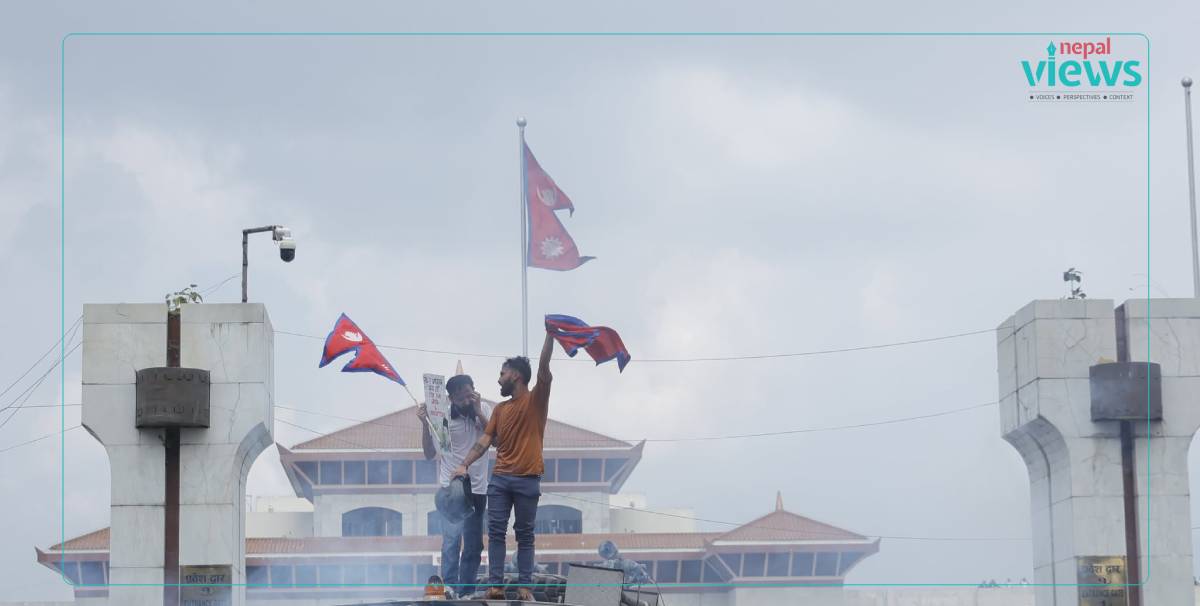

Kathmandu: In the wake of the recent Gen Z movement, the interim government formed last month is expected to hold elections for the new House of Representatives on March 5 — an effort to bring the democratic process back on track.
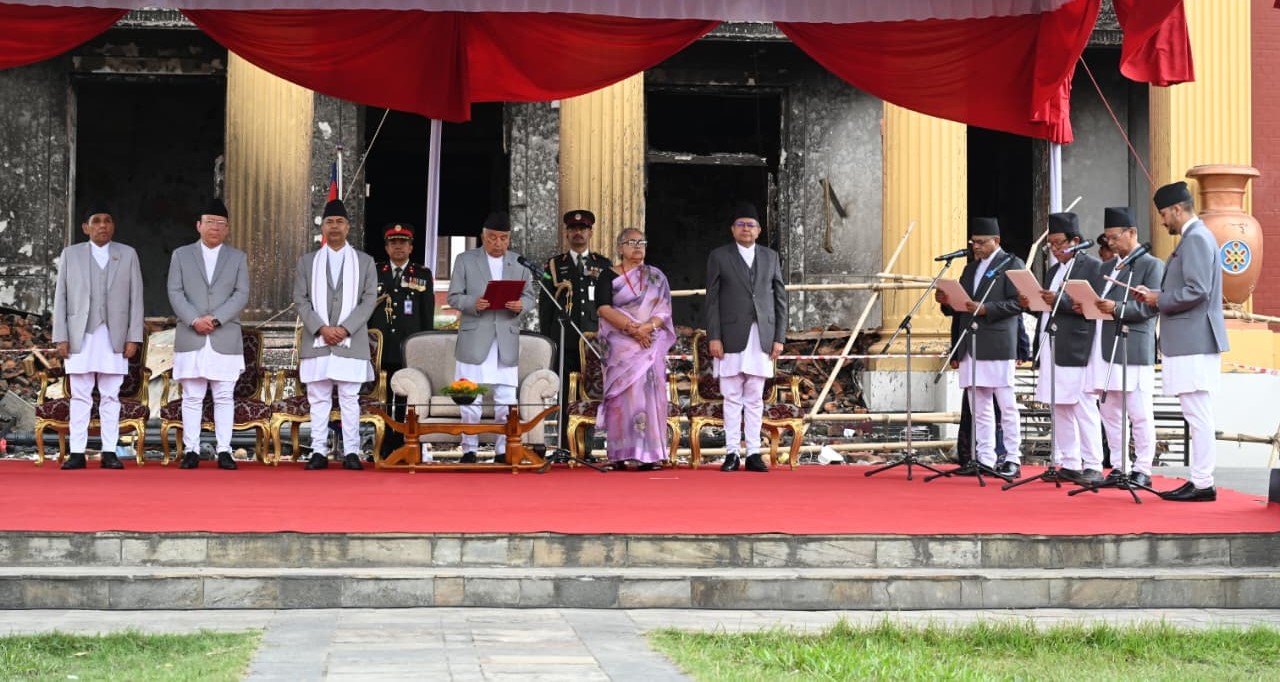
Sushila Karki, the head of the interim government, has clarified the limitations of her administration and its mandate. According to her, changing the form of government or the electoral system lies beyond the jurisdiction of the interim government. The government will not engage in any attempt to amend the Constitution. Whatever changes are necessary will be addressed by the Parliament elected on March 5.
However, doubts remain about whether the election will take place on the scheduled date. Many are asking: will the election really happen on March 5? In the remaining five months, can the government prepare the political environment, as well as the necessary administrative and security arrangements, for a credible election? If the election cannot be held by the declared date — what then?
There appear to be four main reasons for skepticism about the likelihood of holding the election on March 5.
The Old Guard resistance
Most of the parties that were represented in the dissolved House — including the Nepali Congress, CPN (UML), and CPN (Maoist Centre) — have yet to come to terms with the Gen Z movement and its aftermath. These parties and their senior leaders regard the Gen Z movement as a foreign conspiracy against them and view the interim government as extra-constitutional — one not recognised by the Constitution.
If new elections are held immediately, the shift in voter psychology driven by the Gen Z movement, along with the discredit brought upon the old parties due to their harsh suppression of the protests, creates a high likelihood that those parties will suffer defeat.
Participating in elections would, in effect, amount to acknowledging the legitimacy of both the movement and the interim government. As a result, these parties may seek some pretext to obstruct the election scheduled for March 5.
Analysts observing the mindset of the Nepali Congress and UML suggest that the real strategies of these parties will become clear only from late November. Both parties have called meetings of their central committees in the second week of October.
For now, perhaps to allow the intensity of the movement to subside, they have adopted a more subdued and less vocal posture. However, if these parties later become outspoken against holding a new election, the political landscape could become increasingly complex.
At present, the old parties remain relatively silent. If they become vocal in opposing the announced elections, it would further complicate the political environment. Holding elections without the inclusion of long-established major parties could prove unproductive in the long run. On the other hand, the newer parties are not yet sufficiently organised. A multiparty election without the participation of established forces is difficult to imagine. If the old parties such as the Congress and UML adopt a policy of boycott, the situation may become even more entangled.
Gen Z as a crucial player
Following such a significant movement, marked by sacrifice and disruption, many consider a simple, ordinary parliamentary election to be inadequate. In particular, Gen Z activists are dissatisfied with the current process. Among them, there is a strong sentiment that a new election should take place only after reforming the government structure and electoral system.
Some factions within the Gen Z movement may initiate further street protests demanding constitutional amendments via ordinance and the establishment of a directly elected executive before any election is held.
With the Dashain holidays now over, the festival lull has ended. Some believe there could be an escalation in street protests advocating for constitutional amendments, a directly elected executive, and a new election. Some believe these protests could begin as early as October 9. However, there is no consensus within the Gen Z groups about whether to launch a new phase of protests on that date. A section of Gen Z groups has already dissociated from the October 9 protest plans.
Supreme Court’s role
Whether or not the election on March 5 proceeds — and how the broader political process unfolds — will hinge significantly on the Supreme Court. With the conclusion of the Dashain holidays and the resumption of regular court proceedings, writ petitions challenging the dissolution of the House of Representatives are expected to be filed. The Court’s ruling on these petitions will play a decisive role.
Since the adoption of the current Constitution, the House of Representatives has been dissolved twice before — on December 20, 2020 and May 21, 2021 — by then-Prime Minister KP Sharma Oli. On February 23, 2021 and July 12, 2021, the Supreme Court ruled those dissolutions unconstitutional and reinstated the House.
However, the nature of the current dissolution differs. The earlier dissolutions were initiated by then Prime Minister Oli, influenced by intra-party conflicts and backed by then-President Bidhya Devi Bhandari. This time, the dissolution followed widespread street protests. Given past precedents, one might expect the Supreme Court to again order reinstatement.
Yet, the differing sequence of events, gravity of the situation, and political context may lead the Court to a different conclusion. Furthermore, since many judges were appointed during the tenure of the Congress-UML alliance and have ties to those parties, it would not be surprising if the Court rules for reinstatement by majority vote.
March an unfriendly month for polls
Conducting a nationwide, single-phase election in March is impractical. Since 1990, no general election has been held during this month. The general election of 2022 took place in November, and most past elections have occurred in April-May (Chaitra-Baisakh). The primary concern is the harsh winter in mountainous regions. Even into early Chaitra (second week of March), heavy snowfall can severely disrupt these areas. Campaigning becomes difficult in extreme cold, and political mobilization is significantly hindered. Logistical and administrative challenges also increase. Due to such weather conditions, postponement may become inevitable.
It can only be hoped that the elections scheduled for March 5 proceed as planned, and that the political process follows the will of the sovereign people. It is hoped that the newly elected Parliament will address the aspirations of the public — including those expressed through the Gen Z movement — and implement necessary constitutional reforms.
But what if the election cannot take place? Four potential courses of action may follow.
Setting a new date
If the elections cannot be held on March 5, a new date could be announced. According to experts, the ideal window for holding a nationwide election in a single phase lies between the first week of Chaitra and the first week of Jestha (last week of March and third week of May) . In such a case, the interim government led by Karki could remain in office until the rescheduled election.
Dismissal of the government
If the Karki government fails to hold the elections by March 5, it could face a legitimacy crisis. President Ramchandra Paudel may declare the government incapable and seek alternatives. A new prime minister could be appointed, and a different date for the election announced.
Reinstatement of the dissolved House
If the elections do not take place as planned, the old parties may intensify demands for reinstatement. This could trigger protests, and public opinion would play a crucial role. If the Gen Z movement retains strong public support, reinstatement might not occur. However, if momentum fades, the old parties could regain control.
Renewed uncertainty, further protests
If none of the above options materialise, public distrust toward President Paudel, the Karki government, and state institutions may deepen. This could lead to another wave of protests. The country might enter a phase of multiparty conflict.
Various political forces have differing goals — some seek the restoration of the monarchy, old parties like Congress and UML aim to recover their previous political status, while Gen Z and emerging parties push for constitutional reforms and a more advanced democracy.
The clash between these competing objectives could invite instability, creating a prolonged period of uncertainty and delay. Even though every group has its own political interests, creating a conducive environment for the scheduled elections could be a point of broad agreement — and a viable way forward. In a democracy, elections must eventually be held.
Lest one forget, one election alone cannot resolve the country's problems. It would be unrealistic to expect that the election alone will fulfill all the demands of the Gen Z movement or meet the constitutional, political, economic, and social aspirations of the people.
But the March 5 election would represent a meaningful political step forward amid the prevailing complexities.
This article is a translation of a piece originally published in Nepali. Read the original version here
NRNHub
10/06/2025 05:03 AM EDT7 min read