COMMENTARY
A narrow window and an urgent task
Instead of swiftly focusing on its core objective, the interim administration increasingly appears to be operating in a vacuum.
NRNHub
09/23/2025 10:45 AM EDT5 min read
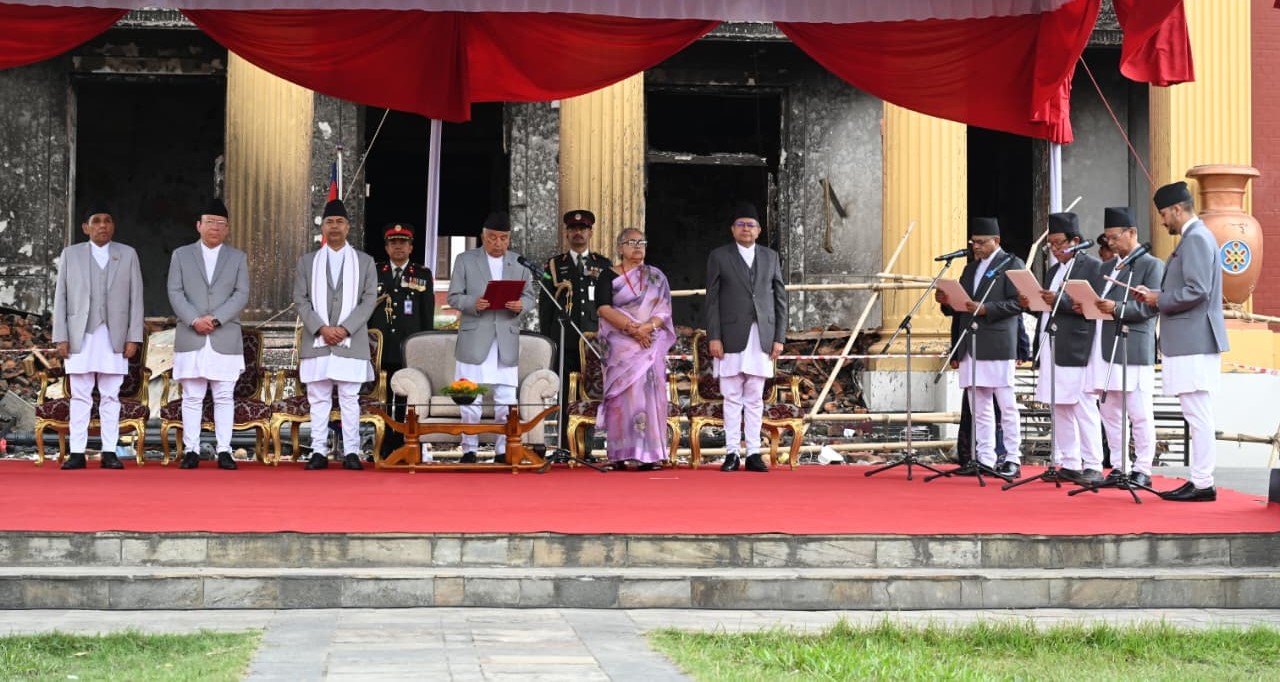

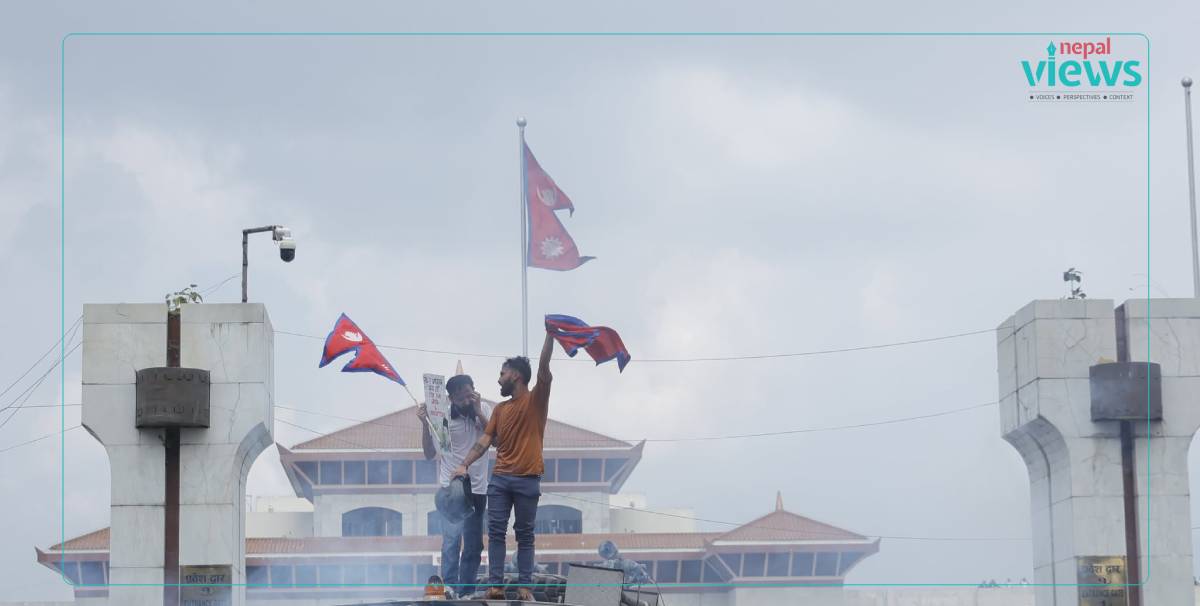
It was supposed to be a response to the crisis. A move to restore order and stability after the Gen Z uprising changed the face of Nepali politics.
The initial struggles and questions over the legality and constitutionality of the interim government, led by former Chief Justice Sushila Karki, hold no relevance now.
It is entrusted with but one job — elections in six months.
Just weeks into its tenure, however, the interim government seems to be faltering at the starting line. It appears mired in indecision and delay — adrift, caught in a vacuum. This raises uncomfortable questions about its direction.
In a fragile transitional period in a country still trying to get back on its feet after recent protests with unprecedented consequences, uncertainty in governance isn’t benign; it’s dangerous.
When the Karki-led government was formed on September 12, following the Gen Z protests, it was seen as a necessary corrective measure to a political order that had lost touch with ordinary citizens.
Much of the attention initially focused on who would make it into the Cabinet — and for good reason. As Karki, in her role as interim head, dissolved the House of Representatives and announced elections on Day 1, people understandably kept a close eye on the Cabinet composition.
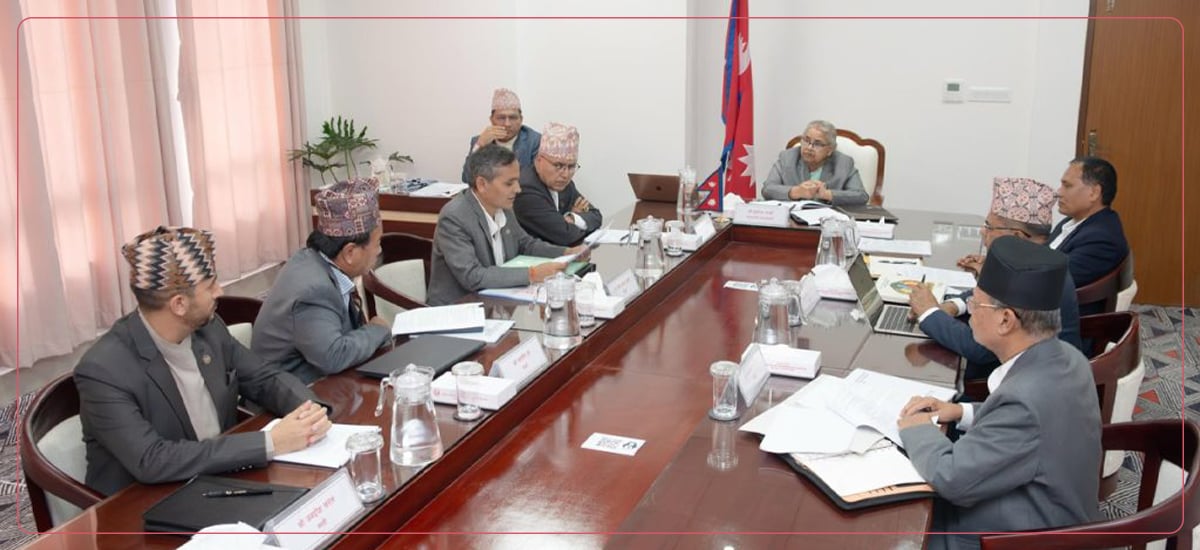
After an initial batch of three ministers and a second round of four on Monday, the Karki Cabinet now stands at eight members. Two or three more may be added, going by Karki’s own admission that her Cabinet would consist of 11 members. But the delay has prompted many to wonder if there are underlying causes: Internal tussles? External pressure? Unclear priorities? A government struggling to find its footing?
Six months is not a long time, and each day matters. The sluggish pace of the government may not merely be viewed as a procedural hiccup — it could be perceived as a warning sign.
If anyone expected that this interim government would have it easy, that was a mistake from the start. Born in the wake of a youth-led movement and amid a total political breakdown, it was bound to carry immense pressure.
Despite having a limited mandate — conducting elections, investigating the September 8–9 incidents, and tackling corruption-related issues — public expectations ran high. And those expectations aren’t entirely irrational. After all, Karki’s reputation as a former Chief Justice, along with the backgrounds of some of her ministers, fed hope for ethical leadership in a society fed up with years of misrule, misgovernance, and corruption.
But public hope must be met with clarity and action. Romantic idealism is one thing, but unclear and unrealistic pursuits can lead to chaotic indecision.
A section of the media hasn’t helped. Instead of toning down expectations and providing critical oversight, some were quick to spin narratives suggesting that this interim government would magically wipe out all of Nepal’s long-standing ills in six months and usher in a new golden era. That is unrealistic by any standard.
Feeding such fantasies only creates more obstacles for a government whose scope is tightly defined by the very nature of its interim status.
A limited mandate means limited power. No matter how capable the ministers are, they can't override systemic and legal boundaries. Hero worship isn’t helpful — it’s a distraction, one that risks derailing the government from its primary objective.
What the government must do — urgently
The interim government must regain control of its narrative and establish structure — the sooner, the better.
A few steps it can take:
Keep the Cabinet small and focused
As Karki herself has suggested, a lean 10–11 member Cabinet is more than enough. It can maintain administrative continuity and deliver essential public services without veering into grandstanding. Ministers must avoid speeches about prosperity and development — they should leave that to the next elected government. Their job is to build a clean, credible runway to elections.
Form a two-tier advisory council
One of the first things this government should have done was form an expert advisory group. If bureaucracy has been the obstacle, the government should have pushed through. Two types of advisory groups should now be formed: A small expert group (7–8 members), paid and empowered to guide decision-making. A larger “pro bono” council, composed of respected professionals willing to serve without pay. Nepal is not short of civic-minded individuals ready to contribute a few hours a week for the greater good.
Transparency is key. The government must publicly disclose who these advisors are.
These are not big asks, but rather foundational steps that could help prevent further erosion of public trust.
Information and transparency
At the heart of the Gen Z movement were two core demands: an end to corruption and the establishment of good governance. And both begin with something simple but essential: transparency.
So far, the government has been vague on critical questions: Who is advising the interim head and the Cabinet? How are decisions being made?
Who speaks on behalf of the government?
By tradition, the Minister of Communications serves as the government spokesperson in Nepal. In this case, the newly appointed minister is an experienced journalist, someone who understands the importance of dissemination of right information. It is now his job to ensure that timely, clear, and truthful information reaches the public.
Alternatively, the government could appoint a designated information officer — but the public deserves to know who holds that responsibility.
In the age of conspiracy theories and information overload, poor communication is not just a weakness — it’s a threat. In this fluid and volatile situation, the government must own and reclaim the narrative, or risk losing it entirely.
Mandate over myth
It should be clear to all that this government was not formed to transform Nepal in six months. It wasn’t created to build expressways, announce populist packages, hand out token gestures, or make grand speeches about prosperity. It exists for one primary reason: to hold credible elections and hand power back to the people — safely, transparently, and constitutionally — so that the democratic process is back on track.
Trying to do more, or pretending it can, will only lead to frustration, disillusionment, and failure, which could fuel further disenchantment.
It’s the Karki government that must first understand, more than anyone else, its limitations. It must clarify its priorities and focus on delivering within its mandate.
Note: This is a thematic translation of an article originally published in Nepali. For the original version in Nepali, click here:
NRNHub
09/23/2025 10:45 AM EDT5 min read