Time To End ‘Who Cares’ Attitude Towards Care Economy

Shisir Dhakal
11/14/2025 03:05 AM EST6 min read
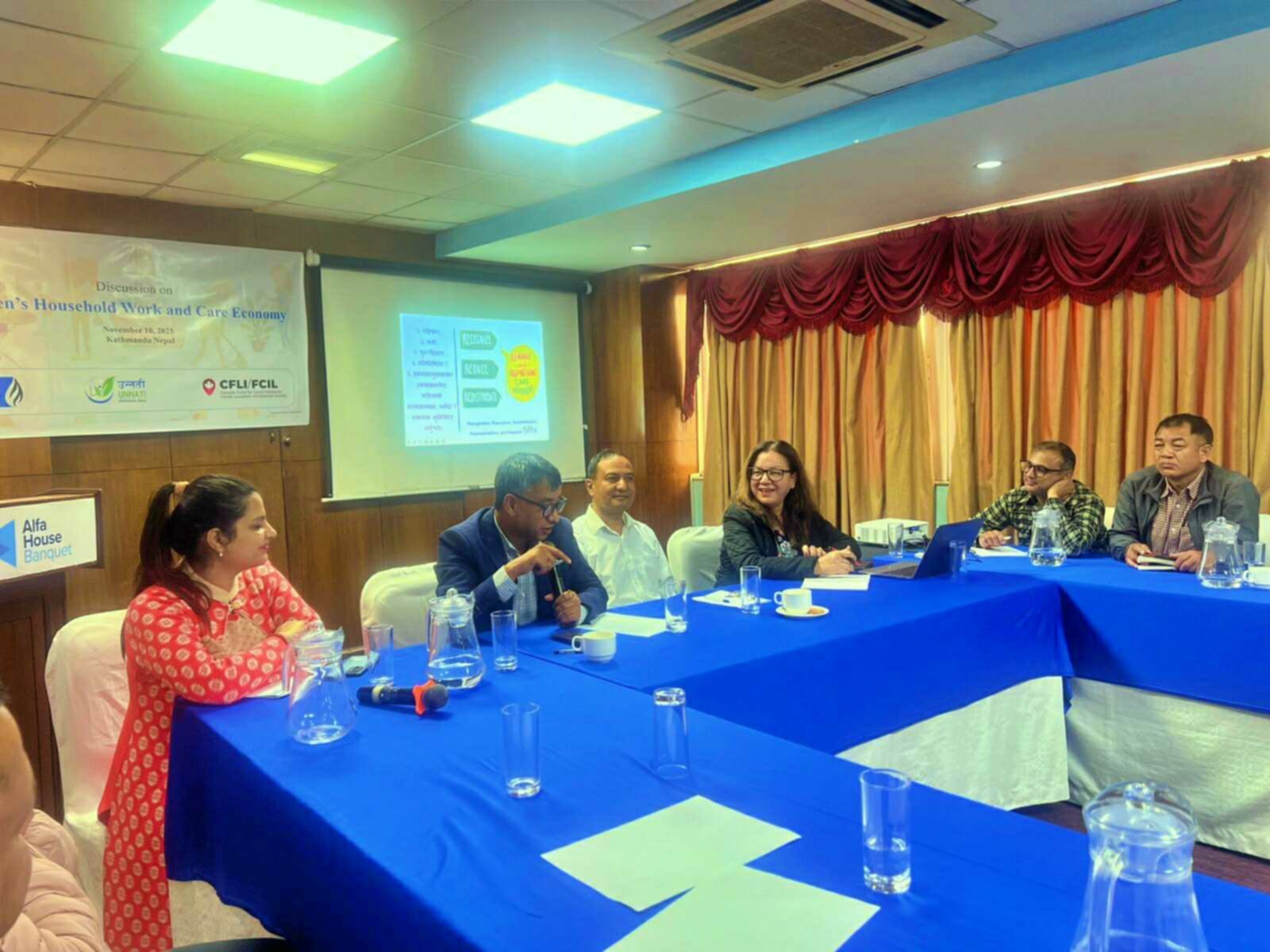

Kathmandu: Harikala Adhikari starts her day at 5 a.m., managing not only her own household chores but also those for four neighboring families in the Balkot suburb. Her labor enables other women to pursue paid employment, yet she earns below the minimum wage prevailing in most sectors. "I not only care for my family but also handle the household work for four families. People say it's simple household work, but my job keeps their households running," she explained with a tired smile.
Adhikari faces stark vulnerabilities. If illness prevents her from working, she forfeits pay entirely. "There are no protections for our jobs. I am already underpaid; if I fall sick, I remain unpaid," she said, highlighting the precarious plight of informal care workers. Nepal's Labour Act, updated in recent years, now covers domestic workers—even those working just one hour daily—offering basic protections like weekly rest days, paid holidays, and sickness benefits from day one. However, enforcement remains weak, with social security contributions challenging due to the sector's informality.
Amrita Limbu's story mirrors the same struggle. Working independently in Suryabinayak Ward No. 2, she provides eldercare for a dementia patient in a private home, demanding empathy, alertness, patience, and emotional labor that defies easy quantification. Yet her wage fails to reflect the job's true value. "People think it is a simple job; they ignore the complexities, skills, and responsibilities it carries," she stated.
The experiences of Adhikari and Limbu underscore the pressing need to integrate Nepal's care economy into the formal sector. Experts emphasize that recognizing and investing in care work is essential for economic growth, gender equality, and human development. Factors like migration, urbanization, and shifting family structures have heightened this urgency.
Gender and socio-economist Bina Pradhan argues that the formal market economy relies on the care economy's foundational social, emotional, and physical investments within households. Formalizing care through policies like expanded childcare infrastructure, minimum wage enforcement, and social security could unlock jobs and boost women's workforce participation, as outlined in Nepal's ongoing labor reforms. ‘The formal market economy cannot be smooth without the foundation work provided by the care economy with its social, emotional, and physical investment within households,’ Pradhan states in her article Nepal’s care economy: Opportunity to create employment and close the gender gap.
Nepal’s Obligations and Initiatives to Formalize the Care Economy
Nepal is primarily obligated to formalize its care economy under the SAARC Social Charter (2004). The Charter compels member states to ensure balanced social development by providing special services for children and mothers, including prenatal and postnatal care, early childhood development, nutrition, and immunization. Article I emphasizes comprehensive social policy strategies that promote maternal and child health protections—an approach that directly aligns with care-economy formalization through public investment in care-related services and infrastructure.
As a signatory state, Nepal is influenced by regional practices. For instance, India’s Mahatma Gandhi National Rural Employment Guarantee Act (MGNREGA, 2005) mandates on-site childcare facilities for rural employment, with at least one-third of the jobs reserved for women. India has also introduced the Palna Scheme, designed to ease childcare burdens. Similarly, Bangladesh enacted the Child Daycare Act (2021) to ensure improved childcare services and reduce women’s unpaid care responsibilities. Pakistan and Sri Lanka have advanced social protection measures for informal-sector workers, with Sri Lanka extending insurance access to workers engaged in care work.
Globally, Nepal has reinforced its obligations through international commitments. By ratifying the UN Convention on the Elimination of All Forms of Discrimination Against Women (CEDAW), Nepal is required to address gender disparities in unpaid care work and promote women’s economic participation through recognition, redistribution, and reduction of unpaid care responsibilities. Additionally, as a signatory to ILO Convention No. 102 on Minimum Standards of Social Security, Nepal must ensure benefits such as sickness and maternity coverage for care workers. These frameworks collectively urge Nepal to implement time-use surveys, enforce minimum wages, strengthen social protection, and create paid employment opportunities in care sectors.
In recent years, Nepal has begun formally acknowledging the care economy through national planning. The 16th Periodic Plan explicitly prioritizes the formalization of care work, the creation of decent jobs, and the advancement of women’s economic empowerment. It seeks to transform care work into dignified employment through a structured labour-promotion programme. Recognizing that nearly half of Nepal’s population—women—still faces barriers to participating in the formal economy, policymakers and stakeholders have stressed that valuing, recognizing, and redistributing unpaid care work is essential for sustainable and irreversible LDC graduation.
Nepal’s plan envisions investing in care infrastructure, expanding public care services, and encouraging private-sector participation as care providers. These steps are expected to support a socially progressive and economically resilient Nepal by improving women’s employment, labour-market participation, productivity, and inclusive growth.
The Vice-Chairman of the National Planning Commission, Dr. Shivaraj Adhikari, highlights this strategic direction clearly.“Nepal’s 16th Plan aims to formalise care work, create jobs, and emphasise women’s economic empowerment. Investing in the care economy is not just social or ethical—it is a smart move toward generating employment, boosting productivity, and enabling inclusive economic growth.
Care Economy in Nepal: Value and Global Support
Nepal’s care economy contributes substantially to its GDP, with unpaid care and domestic work estimated to account for between 6% and 17% of the total GDP, which surpasses the contribution of the manufacturing sector. According to the ILO, Nepal has significant capacity to expand the care economy into a more formal and productive sector. ILO estimates that, if Nepal invests about 2% of its GDP directly into the care sector, it could generate roughly 1.38 million jobs, nearly 60% of which would be filled by women.
Strategic investments in care infrastructure, such as childcare and eldercare services, could release women’s time for formal employment, thereby increasing female labor force participation from the current 28.7%. This will assist in enhancing gender equality, generating employment, and improving health and education outcomes in Nepal. The ILO itself has expressed interest in supporting Nepal in formalizing the care economy.
ILO Nepal Director Numan Özcan emphasized the need for stronger policies and investment in care services. He said, “It is a shared responsibility for all governments, employers, and workers to promote international labor standards, invest in research, expand care services, and close financing gaps. We stand ready to support Nepal’s journey in building a resilient, inclusive, and sustainable care economy.”
As Nepal is a signatory to international conventions, and the international community has expressed its commitment to support the care economy, it is time to end the prevailing ‘who cares’ attitude toward care work.
Shisir Dhakal
11/14/2025 03:05 AM EST6 min read