Congress convention: Scrapping of the Central Working Committee, elected by the 14th general convention, proposed

NRNHub
01/12/2026 02:25 AM EST4 min read
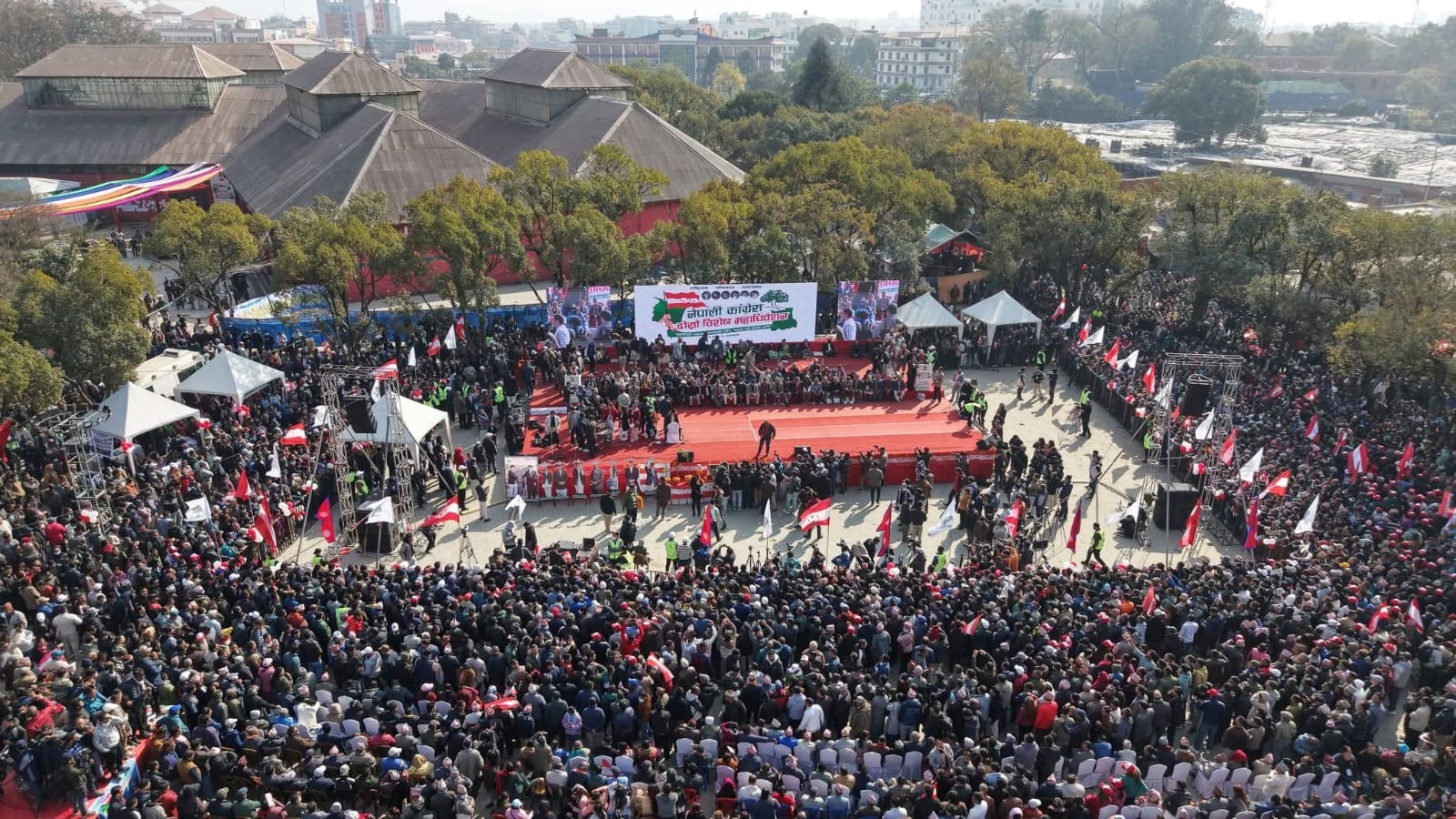

Kathmandu: The special general convention of the Nepali Congress — only the second in the party’s 79-year history — began on Sunday, with its closed session proceeding on Monday (January 12).
The special convention, pushed by General Secretaries Gagan Thapa and Bishwo Prakash Sharma, saw participation from more than half of the party’s convention representatives. This came despite party President Sher Bahadur Deuba, who leads the establishment faction, making an all-out effort to stop the gathering.
With Thapa and Sharma managing to bring a majority of delegates into the convention, attention has now shifted to the closed session, which is expected to determine the convention’s course.
On Monday, the closed session proposed scrapping the Central Committee elected at the 14th general convention in December 2021. A new committee would be constituted until the 15th general convention is held. If passed, this would effectively mark the end of Deuba’s reign in the party.
In the opening session, the two general secretaries had said they would accept whatever decisions the closed session makes. Thapa said, “Whatever the floor decides, we will accept it. This convention can change policy, leadership, and even the party statute.”
Deuba and his establishment faction have boycotted the convention altogether. Only three of the 14 central committee office-bearers attended: the two general secretaries and co-general secretary Farmullah Mansur. Senior leaders, including Deuba and Vice President Purna Bahadur Khadka (appointed party president by Deuba in October), did not take part.
Some leaders once considered close to Deuba did attend, including Gopalman Shrestha, Pushpa Bhusal, Devendra Raj Kandel, Uday Shamsher Rana, Bharat Shah, Amrit Aryal, Sudhir Shivakoti, Kedar Karki, Dilman Pakhrin, and Yogendra Chaudhary.
By Monday morning, Deuba made it clear that he would not go to Bhrikutimandap, the convention venue, reiterating his position that the special convention was unnecessary. As of Monday, it is apparent that Deuba and the central working committee majority have rejected the convention.
Even if the convention decides to remove Deuba as party president, implementation will not be straightforward. Enforcing decisions when one faction refuses remains a central question.
On Sunday, as delegate participation exceeded initial expectations — the establishment faction had earlier dismissed the convention, claiming even 40 percent would not attend — Deuba held a meeting with leaders from his faction. Reports suggest he concluded the Thapa-Sharma group would be unable to split the party.
A key issue now is whether the Election Commission will update the party’s records based on the special convention’s decisions, if any leadership change is effected. The dispute could ultimately reach the Supreme Court.
The standoff comes ahead of the House of Representatives election scheduled for March 5, 2026, with nominations for candidates under the direct election system due on January 20, 2026. Resolution of the dispute is therefore time-sensitive.
How did Congress reach this point?
Following the Gen-Z movement on September 8–9, General Secretary Thapa called for changes in the party’s leadership and policy. When it became clear that a regular general convention would not be held, signatures were collected from delegates in Ashoj to demand a special convention.
On October 15, roughly 54 percent of convention representatives submitted a petition calling for a special general convention to push for policy change, leadership change, and a review of the Gen-Z movement.
The party constitution requires that if at least 40 percent of delegates demand it, a special convention must be held within three months. However, during a Central Working Committee meeting that began on October 14 and lasted more than a month, the demand was not discussed. Instead, a schedule for the regular general convention was proposed for mid-January.
The Nepali Congress last held its general convention in December 2021, with the next due by December 2025. The party, however, did not begin preparations, invoking a statutory provision that allows a one-year extension of the elected committee’s term under “special circumstances.”
After being attacked by demonstrators at his residence on September 9, Deuba appointed Vice President Purna Bahadur Khadka as acting president on October 14 and left for Singapore for medical treatment. Upon his return a month later, Deuba reasserted his authority and dismissed calls for a special convention, prompting the general secretary duo to take a decisive step.
NRNHub
01/12/2026 02:25 AM EST4 min read
_LqGDyrjJvx.jpg)