Pre-poll PM picks: Is it Nepal’s shift towards presidential-style politics?
As major parties declare their prime ministerial candidates ahead of votes, Nepal grapples with the growing presidentialisation of its parliamentary system and the rise of personality-driven politics.

Krishna Bahab
01/26/2026 02:38 AM EST8 min read

Kathmandu: As Nepal heads to elections, major political parties are increasingly projecting their prime ministerial candidates even before a single vote has been cast — a practice that is reshaping election campaigns and raising questions about the spirit of the country’s parliamentary system.
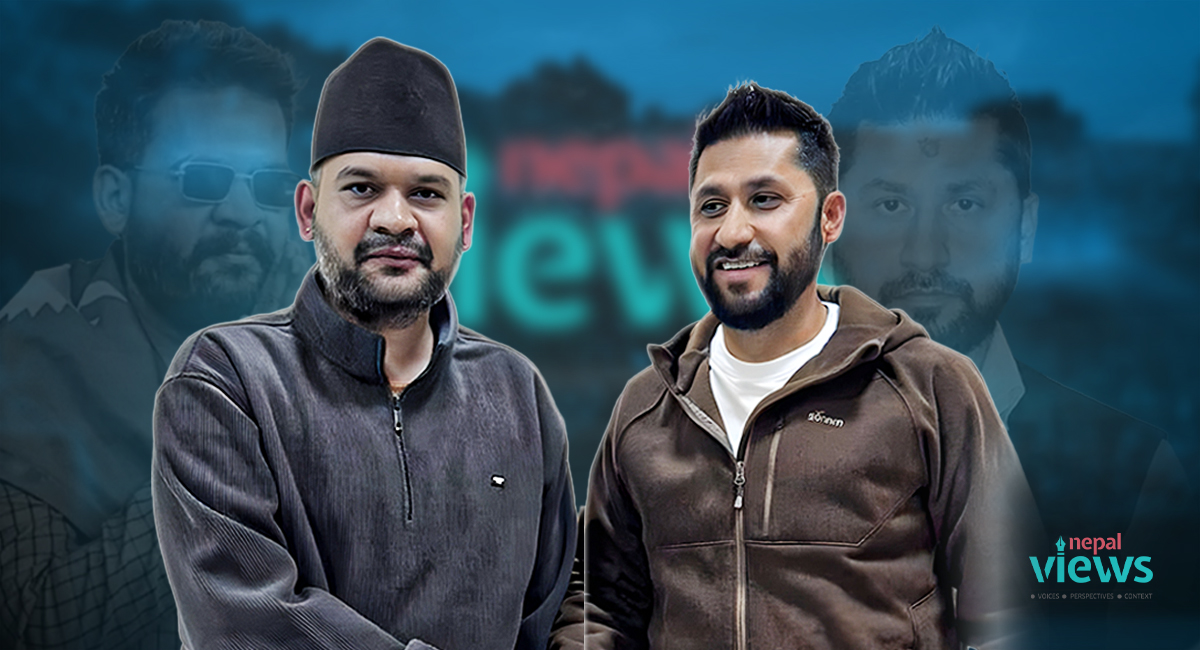
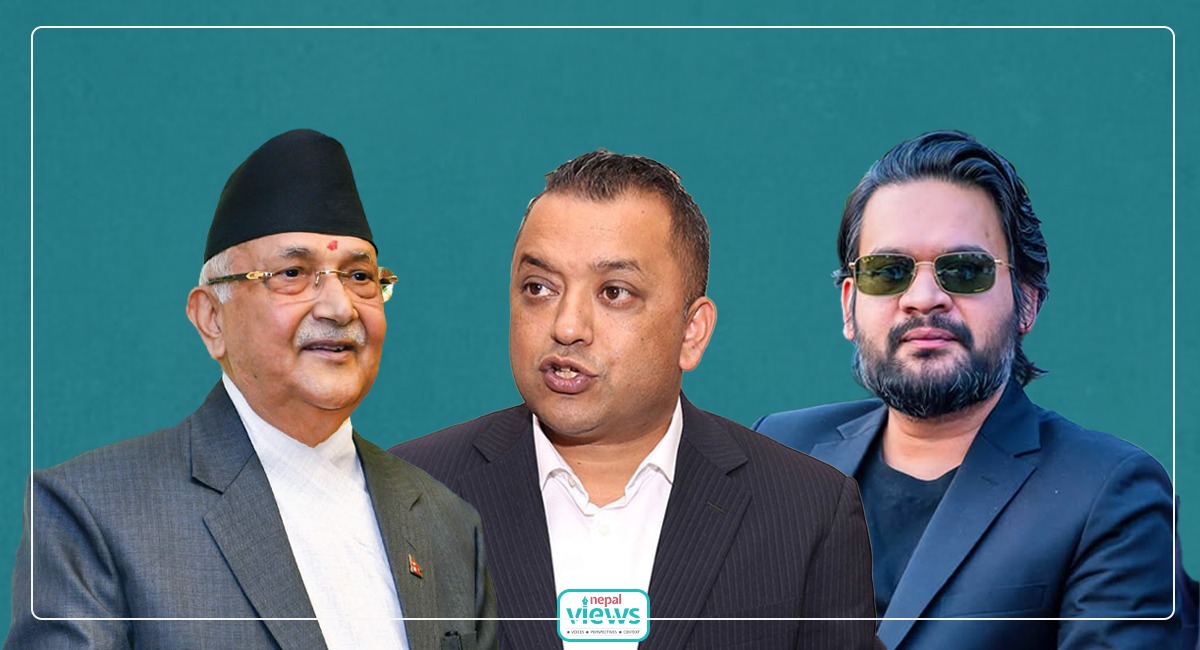
On December 28, 2025, Kathmandu Metropolitan City (KMC) Mayor Balendra Shah, known as Balen, reached an agreement to join the Rastriya Swatantra Party (RSP). As per the agreement, the RSP projected Balen as its prime ministerial candidate. In return, Balen agreed to accept Rabi Lamichhane as the chairperson of the RSP.
The CPN-UML followed suit, also announcing its prime ministerial candidate ahead of the election. At the January 17 secretariat meeting of the UML, chairperson KP Sharma Oli was declared the party’s future prime minister. Oli’s ascension to the post has never been a matter of debate if the party leads the government. However, the RSP’s move may have created pressure, prompting the largest communist bloc in the country to officially place Oli at the forefront as its prime ministerial candidate.
Likewise, the Nepali Congress, the largest party in the dissolved House of Representatives, is also on the same track. A central working committee meeting of the Nepali Congress, held at the party office in Sanepa on Friday, decided to officially put forward Gagan Kumar Thapa, the newly elected party president, as the party’s prime ministerial candidate.
Discussion within the Nepali Congress on making Thapa the prime ministerial candidate and contesting the election began after the Gen Z movement of September 8 and 9. Even when Thapa was the general secretary, joint general secretary Farmullah Mansur proposed Thapa as the prime ministerial candidate and suggested his participation in the federal election during a central working committee meeting on November 5.
However, after the special convention and a shift in the party’s internal power equation, Thapa became party president. As a result, the earlier proposal was transformed into an official party decision. According to Congress leaders, projecting a prime ministerial candidate before the election is also an attempt to address demands for leadership change raised during the Gen Z protests.
Past precedent of the Nepali Congress
This is the second time the Nepali Congress has entered an election after announcing its prime ministerial candidate. Previously, during the 1999 election, following a decision by then party president Girija Prasad Koirala, the Nepali Congress projected former party president Krishna Prasad Bhattarai as its prime ministerial candidate.
At the time, internal conflict within the party was at its peak. The bitterness between Koirala and Bhattarai had reached such a level that they had even stopped communicating with each other. The Maoist armed insurgency was also at its height. Nepali Congress leader Arjun Narasingh KC recalled that it was Koirala’s proposal to project Bhattarai as the prime ministerial candidate.
This move was regarded as the best possible solution to resolve the conflict between the two leaders.
A key figure in drafting the Constitution after the restoration of democracy, Bhattarai had suffered defeats in the 1991 and 1994 elections. As a result, the Nepali Congress fielded him as a candidate from Parsa in 1999. In the 205-member House of Representatives, the Nepali Congress won 111 seats, securing a clear majority, and Bhattarai was appointed prime minister.
However, the agreement between Koirala and Bhattarai did not last long. Although Koirala proposed Bhattarai as prime minister before the election, he later tabled a no-confidence motion against him in March/April 2000. The Bhattarai government subsequently fell.
Presidentialisation of the parliamentary system
Cut to 2026. Oli and Balen, the two projected prime ministers, are contesting from Jhapa-5 — Oli’s home turf. Thapa, meanwhile, has left his Kathmandu-4 stronghold and filed his candidacy from Sarlahi-4 in Madhesh Province.
This development has not only intensified electoral competition but has also raised questions about the core spirit of the parliamentary system. In a parliamentary system, parliamentary leaders are selected only after Members of Parliament are elected, and only then is the prime minister appointed. In contrast, in a presidential system, the executive chief is declared before the election, and the electoral process follows.
In a parliamentary system, the head of state and the head of government are distinct. Although executive actions are carried out in the name of the president, actual executive authority rests with the prime minister.
The prime minister must secure a vote of confidence and can remain in office only as long as he or she maintains the confidence of the MPs, despite constitutional provisions that prevent a no-confidence motion from being introduced for two years under the improved parliamentary system.
The practice of contesting elections by projecting prime ministerial candidates has evolved at a time when there is growing advocacy for a directly elected executive, whether prime minister or president.
After the restoration of democracy in 1990, Nepal adopted the Westminster model based on the British system. Following the abolition of the monarchy after the second people’s movement in 2006–2007, Nepal adopted a Westminster-style system closer to the Indian model, featuring a bicameral legislature, a prime minister appointed from the lower house, and a president in a largely constitutional role.
Political science student Nimesh Ghimire defines the trend of projecting prime ministerial candidates before elections as a result of the Gen Z movement. He says that, to address demands for a directly elected executive raised during the protests, parties have begun announcing their prime ministerial candidates ahead of elections.
“The RSP, the UML, and the Nepali Congress projecting Balen, Oli, and Thapa respectively as prime ministerial faces before the election might offer some relief to those advocating a directly elected executive,” Ghimire wrote on social media. “However, it is not right to elect anyone as prime minister before the House of Representatives election.”
What is the international experience?
Across parliamentary democracies worldwide, this practice varies.
India: An example of explicit declaration
In India, the Bharatiya Janata Party (BJP) has institutionalised the practice of announcing its prime ministerial candidate before elections. In September 2013, Narendra Modi was declared the party’s prime ministerial candidate for the 2014 election.
Later, in 2022, Home Minister Amit Shah again announced Modi as the BJP’s prime ministerial candidate for the 2024 election. In all three elections — 2014, 2019, and 2024 — Modi was projected as the prime ministerial candidate.
In contrast, the Indian National Congress (INC) chose not to declare a prime ministerial candidate in the 2014 election, fearing that doing so would turn the contest into a presidential-style race.
United Kingdom and Australia: Undeclared
In countries such as the United Kingdom, Australia, and New Zealand, there is no tradition of formally declaring a prime ministerial candidate before elections. However, the leader of the party is implicitly regarded as the prospective prime minister.
In the UK, voters cast ballots for their local Members of Parliament rather than for a prime minister, even though the leader of the majority party is widely viewed as the future head of government.
Nevertheless, since the 1990s — the same period as Nepal’s democratic restoration — the UK has witnessed a growing trend of the “presidentialisation of the parliamentary system.” As Tony Blair’s central role within the Labour Party expanded, leadership became increasingly personalised. Media coverage further amplified this shift, bringing individual leaders to the forefront at the expense of traditional party structures.
This resulted in a concentration of power and a departure from collective decision-making. Politics became increasingly leader-centric, with election campaigns focusing more on personalities than policies. Later leaders such as David Cameron and Boris Johnson also became highly media-driven figures.
Is this practice necessarily wrong?
In parliamentary systems, entering an election after clearly naming a prime ministerial candidate may appear incompatible with established norms and does carry drawbacks. However, this does not mean it is entirely wrong.
Its primary advantage is that it could create a strong, visible leader capable of offering direction and stability. In a country like Nepal, where coalition governments are almost inevitable, strong leadership can help advance policies more decisively.
It can also simplify voters’ decision-making by allowing them to focus on leadership potential rather than party platforms alone. When clarity increases, voters may gravitate towards decisive leadership. Hypothetically, personality-driven elections may also compel leaders to be more accountable.
However, the disadvantages are significant. This approach can weaken the foundational principles of parliamentary democracy, where governance rests on collective decision-making and responsibility rather than individual authority.
Excessive focus on individual leaders can diminish the role of the legislature, weaken party cohesion, and undermine Cabinet and parliamentary deliberation. Personality-driven leadership may also encourage authoritarian tendencies.
The erosion of checks and balances cannot be ruled out. Over time, this trend may foster patronage politics, prioritising personal loyalty over policy debate and institutional decision-making. In such a fragile environment, political instability may once again dominate.
In essence, while presidentialisation may promise strong leadership, it risks transforming parliamentary democracy into personality-driven politics, undermining the collective foundations on which it is built.
Why the race to declare a PM candidate?
In Nepal, a long-standing grievance has been persistent government instability and the emergence of weak and ineffective prime ministers due to coalition dynamics and political pressure.
The current debate therefore, raises the question of whether declaring a specific individual as a prime ministerial candidate can generate public confidence.
However, with three major parties announcing their respective prime ministerial candidates, emphasis has shifted more towards personalities than policies and programmes. Given the parliamentary system, simply declaring a candidate guarantees nothing — the election must first be won.
More importantly, if prime ministers in Nepal have failed in the past, what were the structural reasons behind those failures? Why did prime ministers become weak or ineffective? Without identifying and addressing these root causes, merely naming a candidate cannot solve the problem. Announcements without substantive debate offer no long-term solution.
While the current practice may attract a portion of votes, it also risks rendering political parties secondary.
As analyst Chandrakishor notes, “[In this practice] the leader’s ‘brand’ gains importance, and politics witnesses the emergence of new ‘poster boys.’”
Krishna Bahab
01/26/2026 02:38 AM EST8 min read