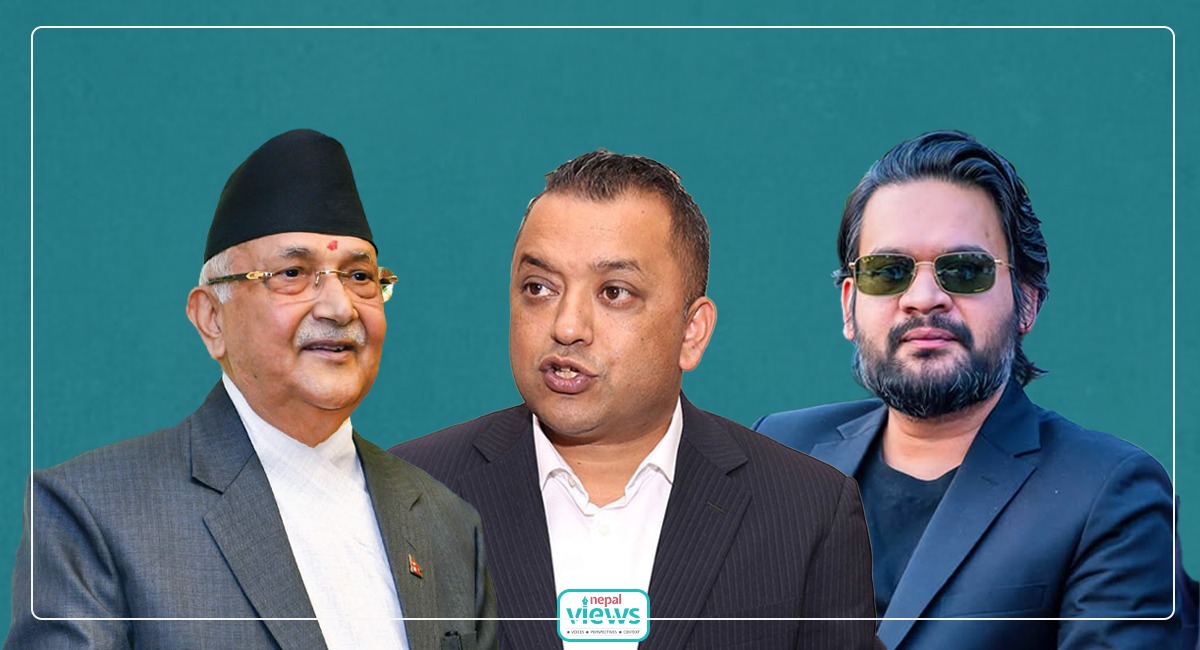
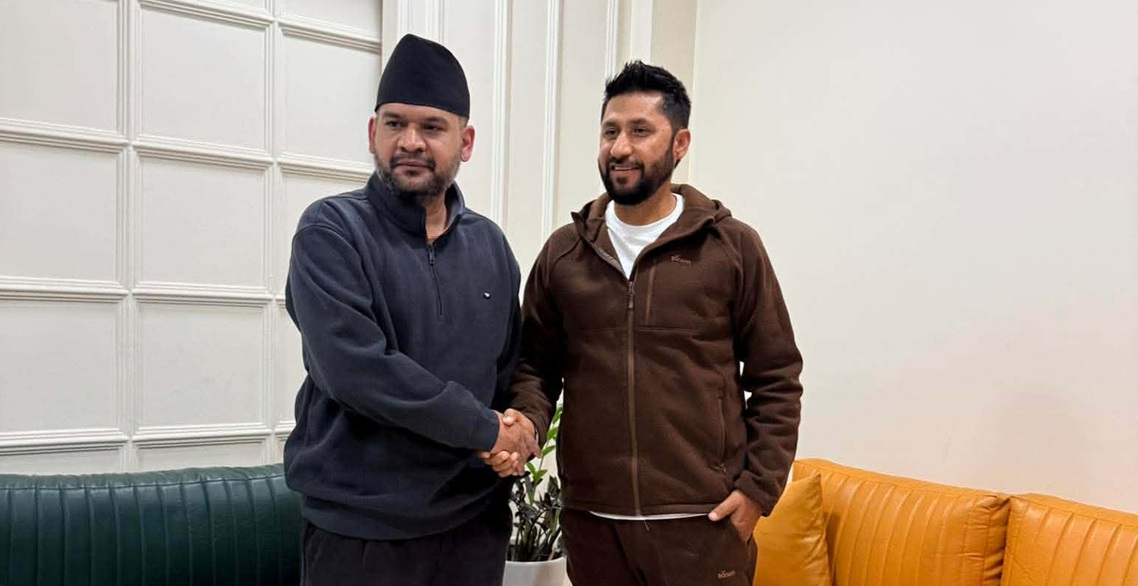
Balendra Shah is RSP’s PM candidate. But where will he contest?
The Kathmandu mayor initially eyed Oli’s Jhapa-5, but surveys showing limited prospects have led him to consider his ancestral home district, Mahottari.

NRNHub
01/06/2026 01:45 AM EST4 min read
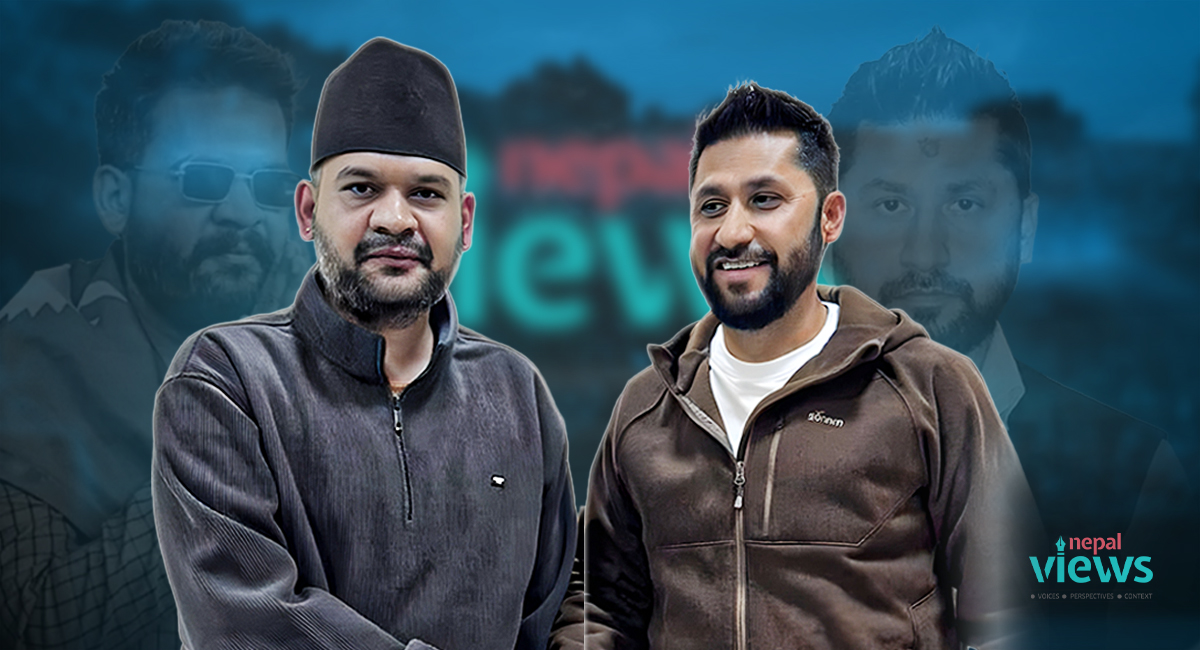

Kathmandu: Kathmandu Mayor Balendra Shah is officially in national politics. He is now a senior leader of the Rastriya Swatantra Party (RSP), which has already projected him as its prime ministerial candidate as the country eyes parliamentary elections on March 5.
Since his election as Kathmandu mayor in the 2022 local elections, his popularity has grown beyond the capital, yet his political capital at the national level is yet to be tested.
But being popular is one thing; winning the Prime Minister race is another. First, one needs to contest (and win) — and for that, you need a constituency. So, where is Shah running?
Buoyed by his municipal election success and soaring popularity, his supporters expect him to pull off something similar in the federal elections.
Shah was apparently eying Jhapa-5, the constituency of CPN-UML chairman KP Sharma Oli. His secretariat had also earlier suggested he might contest from Jhapa-5, though it was just conjecture; no formal announcement had been made.
According to sources close to Shah, he initially expressed interest in contesting from Jhapa, but after surveys showed weak prospects there, he is reconsidering.
“Our team conducted surveys in Jhapa-5 with help from Gen Z activists and some journalists, but the results were not promising,” said a source close to Shah. “This is only part of our study. He had not finalized a constituency before, and now he will decide in consultation with the party.”
The survey indicated that Shah had limited support in Jhapa-5. Consequently, he is now considering contesting from his ancestral home in Mahottari, with discussions underway to brand him as the “first Prime Minister from Madhesh.”
He has instructed his team to evaluate three options: his Kathmandu home constituency (Kathmandu-2), his ancestral home in Mahottari (Mahottari-3), and Jhapa-5, where Oli is contesting.
Before uniting with Rabi Lamichhane, the RSP chair, Shah had said he would contest where the heavyweights fight to inflict defeat—but after the Jhapa survey, he is now leaning toward a safer choice.
Jhapa-5 is Oli’s traditional stronghold. He has consistently won elections there, except for one defeat in the 2008 Constituent Assembly election. In the 2022 elections, he won Jhapa-5 with 52,319 votes, even when the Nepali Congress and CPN (Maoist Centre) had supported a common candidate under an alliance.
Shah only became widely known after winning as an independent candidate in Kathmandu. His ancestral home is in Madhesh, but he was born and raised in Kathmandu. Hence, his popularity in Madhesh is unknown, and the RSP’s influence in the region will also significantly shape his electoral journey.
Although RSP has had success in Kathmandu and Chitwan in the last federal elections, its presence in Madhesh is not very strong. As voters frustrated with old parties begin to shift, smaller Madhesh-centric parties are also moving toward unity.
The day after Shah and Lamichhane reached an agreement, four Madhesh-based parties united: Janata Samajwadi Party, Janata Samajwadi Party-Nepal, Loktantrik Samajwadi Party, and Loktantrik Samajwadi Party-Nepal.
Against this backdrop — Madhesh-centric parties coming together and RSP’s limited presence in the region — Shah’s personal popularity, or lack thereof, is a key factor.
Chandrakishore, a journalist and commentator who has long followed national and Madhesh politics, notes that influence in Madhesh depends more on agendas than individuals, and Shah’s impact there is not guaranteed. According to him, Shah’s constituency and political agenda are not yet clear.
“And it is also unclear how his positions on the constitution, federalism, and the republic resonate with voters,” he told NepalViews.
In Madhesh, the influence of both new and old parties is declining. Even alliances between leaders like Upendra Yadav and Mahanta Thakur have not significantly boosted their sway. The influence of CK Raut’s Janamat Party has also decreased compared to before.
“People are frustrated with old parties like Congress and UML, but the agenda of new forces is not clear either,” said Chandrakishore. “No individual alone can create a strong impact in Madhesh, and it is uncertain what effect RSP will have on the region.”
NRNHub
01/06/2026 01:45 AM EST4 min read