


Convention vs establishment: Nepali Congress stares at split
Leadership election moves forward as Deuba refuses to concede; standoff escalates into a full-blown internal power struggle

NRNHub
01/14/2026 01:31 AM EST4 min read
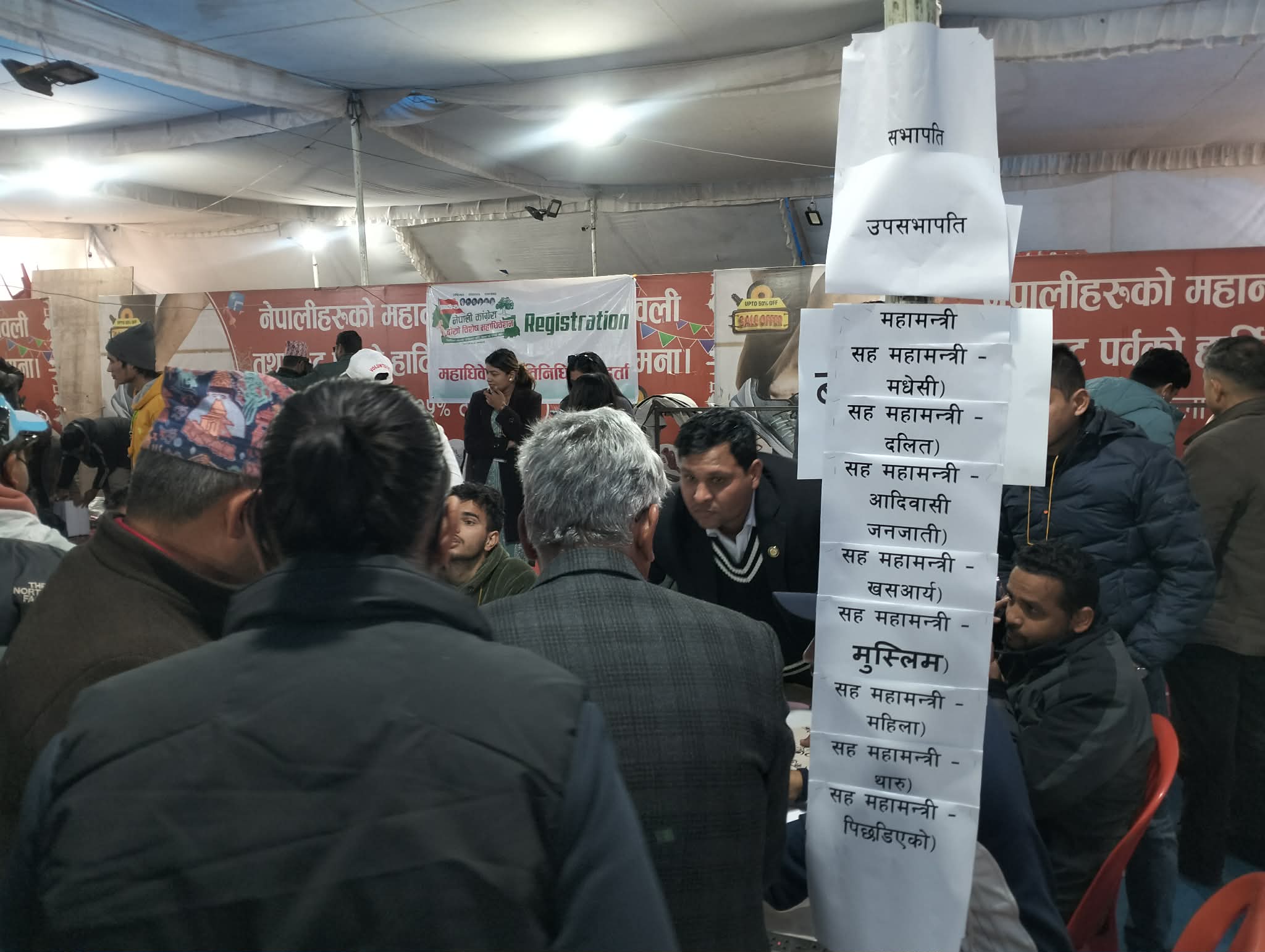

Kathmandu: The election process to choose new leadership from the Nepali Congress special convention has moved forward at Bhrikuti Mandap, even as party President Sher Bahadur Deuba refuses to budge, pushing the country’s oldest party toward a possible split.
Meanwhile, a meeting of the party’s Central Working Committee (CWC), which had ended within minutes on Tuesday, is scheduled to convene at the party headquarters in Sanepa.
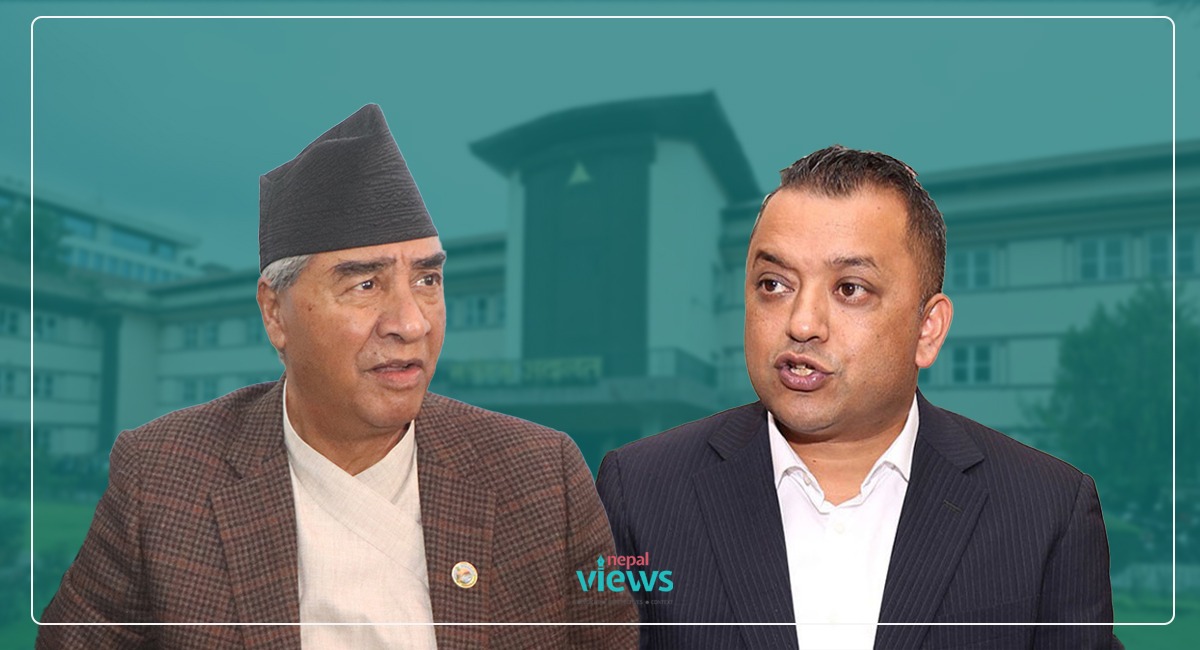
After Deuba rejected a request by Gagan Thapa and Bishwa Prakash Sharma — the two leaders who forced the special convention — to step aside, the party appears locked in an irreconcilable deadlock. The purpose of the CWC meeting remains unclear.
Leaders from the Deuba faction say it is meant to discuss the party’s current situation, though a decision on taking action against the “dissidents” cannot be ruled out. The special convention, however, has already proposed dissolving the Deuba-led CWC elected by the 2021 general convention, although the proposal is yet to be formally endorsed.
The Deuba faction continues to control the CWC and argues that the ongoing special convention violates statutory procedures. The pro-special convention group counters that the gathering was convened in line with party rules, which mandate a special convention if more than 40 percent of delegates from the previous convention demand one. The Thapa-Sharma camp submitted an application for a special convention in October with the signatures of 54 general convention representatives.
More than 50 percent of delegates attended the special convention and called for leadership change, prompting the launch of the election process — moves that effectively challenge Deuba’s authority. Deuba, however, has dismissed the convention and stuck to his guns. Hours-long talks between representatives of the special convention faction and Deuba’s establishment group on Tuesday failed to find a middle ground. Even direct talks between Deuba and the Thapa-Sharma duo on Wednesday morning proved futile.
While the precise cause of the deadlock remains unclear, two factors stand out. First, Deuba — elected party president for a second and final term — appears unwilling to accept an unceremonious exit. Second, with the March 5 elections less than two months away and nominations for direct elections due on January 20, control of the party machinery has become critical. In the Nepali Congress, whoever leads the party ahead of elections wields decisive influence over ticket distribution.
While the special convention faction denies seeking control over nominations, Deuba is widely believed to be reluctant to forfeit what could be his last opportunity to oversee the process. After the Gen Z protests, Deuba had hinted at stepping back from active politics, but he soon reasserted his influence within the party.
When Thapa and Sharma pushed for either a regular or special convention before the March polls, the CWC remained undecided. Deuba later extended the committee’s term and scheduled a regular convention for mid-May, prompting the Thapa-Sharma camp to mobilize for a special convention instead.
Buoyed by strong delegate support, the challengers initially believed the leadership change was inevitable. That assessment now appears premature. Backed by a tight inner circle, Deuba has refused to concede, turning the standoff into a full-blown internal power struggle with no immediate resolution in sight. Now, the special convention faction appears left with no option but to formally split the party — though the path ahead is complicated. For the Thapa-Sharma group to stake a claim as the “real” Nepali Congress, it would need recognition from the Election Commission (EC), which has already moved forward with preparations for the March elections, registering parties willing to participate.
If the EC refuses to recognise the Thapa-Sharma-led faction, it would effectively be shut out of the election race. A final settlement, in that case, would likely be left to the courts. If the EC does recognise the Thapa-Sharma group as the legitimate party, the Deuba faction is expected to challenge the decision legally. Either scenario would plunge the party into prolonged legal and organisational uncertainty. Nepal’s Election Commission has historically been cautious in recognising breakaway factions, particularly on the eve of elections.
In past party splits, the commission has relied heavily on court verdicts, organisational continuity, and control over party symbols before granting recognition. Any delay in this process would leave both factions in limbo at a time when campaign preparations, candidate selection, and alliance negotiations are already underway.
A split would also weaken the Nepali Congress at the grassroots level. Local party units, district committees, and cadres would be forced to choose sides, paralysing organisational work during a crucial pre-election period. Rival parties — especially the CPN-UML and emerging political forces such as the Rastriya Swatantra Party — stand to benefit from a divided Congress vote bank. Even if the dispute is eventually resolved through the courts, the damage to party cohesion and voter confidence may already be done.
NRNHub
01/14/2026 01:31 AM EST4 min read
_LqGDyrjJvx.jpg)