Nepal, India at odds once again over Lipulekh ahead of Oli’s visit to the south
Fresh row surfaces as Kathmandu reacts to India-China deal to reopen trade via Nepali territory; Delhi reiterates long-standing claim

NRNHub
08/21/2025 02:14 AM EDT4 min read
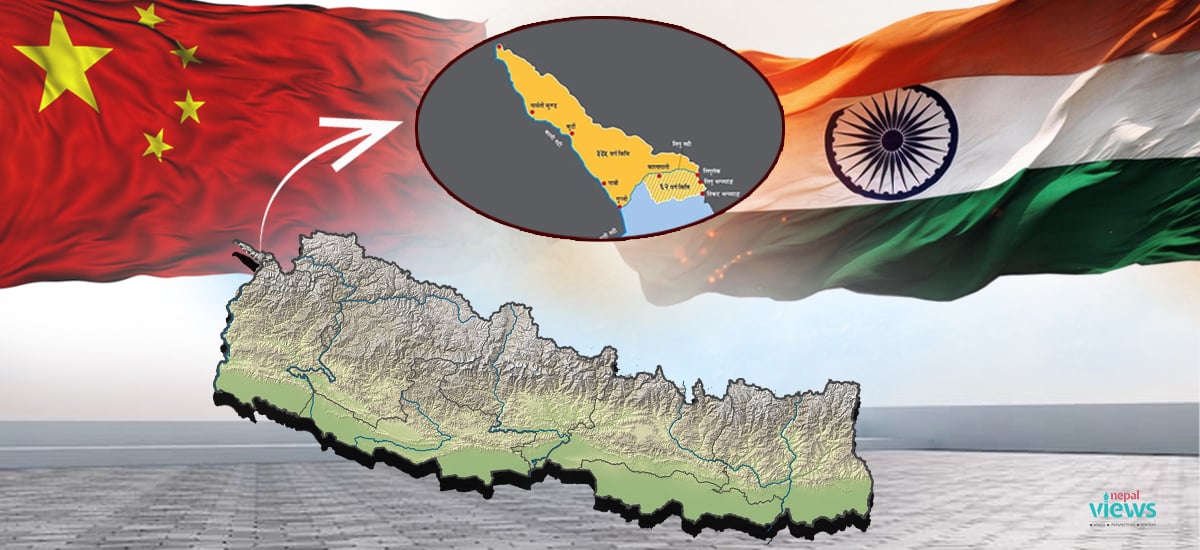

Kathmandu: Nepal and India are at odds once again over Kalapani, a region both claim as their own.
The fresh dispute arose after India and China on Tuesday agreed to reopen a trade route via Lipulekh.
Nepal reacted, saying: “The Constitution of Nepal has already incorporated Nepal's official map, and the Government of Nepal is clear on the fact that the territories east of the Mahakali River — Limpiyadhura, Lipulekh and Kalapani — are integral parts of Nepal.”
A statement issued by Nepal’s Foreign Ministry spokesperson, Lok Bahadur Kshetri, also said that “the Government of Nepal has requested the Government of India not to carry out any activities such as road construction, expansion, or border trade in that region.”
He further mentioned that China had also been informed that the area in question is part of Nepali territory.
“In keeping with the spirit and sentiment of the close and friendly relations between Nepal and India, the Government of Nepal remains committed to resolving the border issue between the two countries through diplomatic means, on the basis of historical treaties and agreements, facts, maps, and evidence,” the statement read.
Hours later, India reacted, saying it had taken note of Nepal’s comments regarding the resumption of border trade between India and China through Lipulekh.
“Our position in this regard has been consistent and clear. Border trade between India and China through Lipulekh Pass commenced in 1954 and has been going on for decades. This trade had been disrupted in recent years due to COVID and other developments, and both sides have now agreed to resume it,” India’s Ministry of External Affairs said in a statement.
The ministry added: “As regards territorial claims, our position remains that such claims are neither justified nor based on historical facts and evidence.”
This is the second time Kathmandu and New Delhi have faced off over the same issue.
Earlier, in 2019, in response to India’s new political map that showed the area within Indian territory, Nepal had dispatched diplomatic notes to New Delhi. After failing to elicit any response, in 2020 Nepal released a new map including Lipulekh, along with Kalapani and Limpiyadhura, within its territory.
Delhi had then dubbed Kathmandu’s move a case of "cartographic assertions."
The incumbent KP Sharma Oli was also the prime minister in 2020. That move had led to a souring of relations between Nepal and India. But ties have been on the mend lately, with Oli’s rapprochement efforts and Delhi’s apparent willingness to reset relations with the Nepali prime minister.
The fresh Nepal-India row surfaced on Wednesday, just as Kathmandu is preparing for Oli’s visit to India, scheduled for September 16.
India and China — Nepal’s two giant neighbours, historically at odds — have moved closer in recent months. Chinese Foreign Minister Wang Yi was in New Delhi on Monday for a two-day visit amid signs of growing India-China rapprochement.
Delhi and Beijing have drawn closer in recent times against the backdrop of India’s deteriorating ties with the United States after a series of setbacks in its neighbourhood. China, meanwhile, has also been seeking stability in the region amid escalating tensions with the West, particularly the US.
Indian Prime Minister Narendra Modi is set to visit China later this month — his first in seven years — in a sign of thawing ties between Delhi and Beijing.
One of the points in the 12-point agreement signed between India and China on Tuesday states: “Both sides agreed to the re-opening of border trade through the three designated trading points, namely Lipulekh Pass, Shipki La Pass, and Nathu La Pass.”
The Chinese statement, however, does not mention Lipulekh but refers to Gunji, an area in Nepal just south of Lipulekh Pass.
The India-China agreement to reopen Lipulekh for border trade — without keeping Nepal in the loop — has come as a shock for Kathmandu, for the second time.
The signing indicates that Beijing too has refused to recognise Lipulekh as Nepali territory. In 2023, when China issued its standard map, it did not include Nepal’s new map that incorporated the Kalapani region.
New Delhi, however, had lodged a strong protest at the time, saying China had shown Arunachal Pradesh and Aksai Chin as part of Chinese territory. Beijing had then responded, asking Delhi to stay calm and “refrain from overinterpreting.”
On Tuesday, the two countries discussed border peace and trade to boost cooperation.
Before his visit to India, Oli is travelling to China to participate in the Shanghai Cooperation Organization (SCO) summit.
NRNHub
08/21/2025 02:14 AM EDT4 min read