Govern, communicate, deliver: Nepal’s interim government has 149 days
The Karki-led administration must rebuild trust, engage political actors, and restore institutional confidence — or risk deepening the democratic crisis.

NRNHub
10/08/2025 01:28 AM EDT7 min read
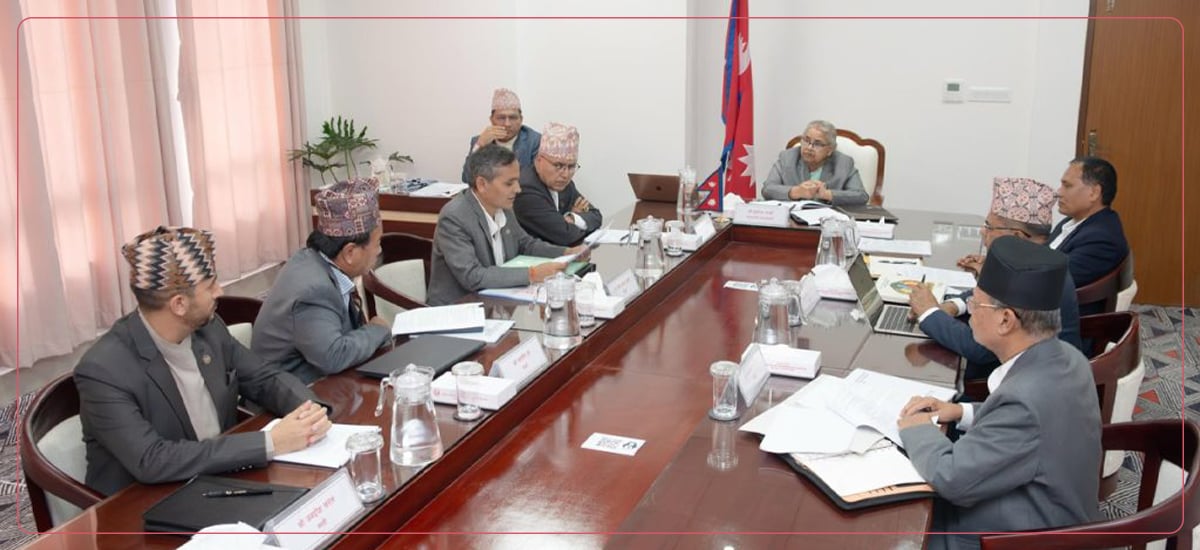

Kathmandu: The Dashain holidays and the media lull provided a brief respite for the interim government. Its response to the rain-induced disasters received a fair share of applause, yet 53 people died across the country in various incidents of floods and landslides.
In five days, the Sushila Karki administration will mark one month in office. The skies have now cleared — and it must now refocus to clear the cloud of uncertainty.
After last month’s Gen Z protests shook the old order — with more than 70 lives lost, including 19 on the first day due to excessive force used by security forces — Nepal is at a pivotal juncture.
The Karki government has one clear and time-bound responsibility: to hold parliamentary elections on March 5. While the mandate is simple in theory, the path forward is fraught with challenges.
With just 149 days remaining, concerns are growing over whether this transition marks a new democratic beginning or risks plunging the country back into the familiar cycle of instability, disillusionment, and political paralysis.
For the interim government, the task is not just about conducting elections — it’s about rebuilding public trust, laying the groundwork for strengthening key democratic institutions, and ensuring a peaceful transition to a more accountable political future.
Communication and more communication
The first and most urgent task is rebuilding trust with a disillusioned public.
Decades of broken promises and performative politics have left much of the population — especially the youth — deeply skeptical of government intentions. In a time when a single misstep can be construed as a complete deviation from duty, the interim government faltered in communication during its early days, creating room for doubt.
One of the key challenges it faces comes from the bureaucracy — the state apparatus through which government policies are implemented. It would be an understatement to say that Nepal’s bureaucracy is notoriously rigid. It tends to resist rapid change, let alone reform.
The political order may have changed, but the unyielding bureaucracy — often dubbed the permanent government — remains firmly in place, and its resistance can often prove insurmountable.
While Nepal’s political class has largely been blamed for entrenching corruption and fueling misgovernance, the bureaucratic apparatus is increasingly perceived as a central enabler.
Without a proactive strategy and strong political will to push through reforms, the current government risks further alienating the very citizens it is meant to serve. Nepali bureaucracy is not only infamous for convoluted communication but also has a poor reputation for being opaque.
Since transparency will be key, the government must work to overcome the lethargy emanating from the bureaucracy. It, however, appears to be struggling to establish consistent and reliable channels to communicate with the public and other stakeholders, including political parties.
Engaging key constituents
Elections are more than a technical exercise — they must be free, fair, and legitimate. This means ensuring that all stakeholders, especially political parties, feel included in the process.
The recent protests were a rejection of the political class’s misrule. This should not be misread as a call to do away with political parties, even though they continue to remain on the defensive. Many harbour deep resentment toward the protests and are dismissive of the current administration.
No matter how discredited they are, political parties remain key constituents of democracy. To ensure credible elections, immediate dialogue across the political spectrum — from established parties to emerging forces — is essential.
Electoral credibility depends on broad political consensus and buy-in.
The current leadership, however, has shown no signs of constituting or delegating a team to initiate meaningful dialogue with political parties. This vacuum could render political outreach ineffective or altogether absent.
The current Cabinet includes technocrats who are competent in their domains. They manage day-to-day administrative tasks efficiently — an essential function. However, elections are inherently political. The participation of political parties is necessary to make the entire exercise democratic.
The government needs a team of individuals who can pave the way for dialogue with political parties and bring them into confidence.
Groundwork for accountability
One of the central demands of the protests was accountability — particularly on corruption. While the interim government may not have the time or mandate to launch sweeping anti-corruption drives, it can still lay the groundwork.
Unless it initiates institutional audits and preparatory steps now, the incoming government — likely led by the same old parties — may again refuse to pursue investigations.
Here too, the bureaucracy poses a challenge.
Over the years, political parties have deeply entrenched themselves within administrative institutions. Any move that threatens to enable future scrutiny will likely be quietly resisted by officials who have benefited from their political affiliations.
Empowering the EC
Central to this transition is the Election Commission (EC). The constitutional authority to conduct, supervise, and declare results rests with this independent body — not the interim government.
However, public understanding of this institutional separation remains weak, and the media has largely failed to clarify it. This confusion could foster misplaced expectations and blame.
The government and the EC must clearly and repeatedly explain their respective roles, or else risk erosion of public confidence. What must not be forgotten is that the EC itself is currently under strain — it is headless, lacking a Chief Election Commissioner.
Karki has called on the EC to initiate dialogue with political parties, but it must be remembered that it is the government that should take the lead in this regard, not the election-conducting body.
While five to six months should be sufficient to hold elections, the EC was not prepared for this immediate duty. It had been working at its usual pace, preparing for the three-tier elections two years from now.
The interim government must make a serious assessment of the EC’s preparedness and take steps to strengthen it. Inertia — and perhaps political calculation — may delay timely action, affecting the elections.
This government is an interim arrangement, and its role is to facilitate the elections. The bulk of the responsibility lies with the EC.
Ensuring security readiness
In the aftermath of the protests, the morale of the security forces is low. They have been widely blamed for the brutal killings of youth on the first day and for failing to control the chaos on the second.
The protests exposed how deeply the forces had been hollowed out by political interference. While their weapons and uniforms were looted, security infrastructure was also attacked and torched.
Security forces can only perform their duty of maintaining law and order and ensuring safety when they are logistically equipped and psychologically confident.
In light of the attacks and the torching of politicians' homes — with leaders like Sher Bahadur Deuba and Arzu Rana Deuba beaten up by demonstrators — political parties may continue to feel insecure. Without their sense of safety, they may hesitate to participate in elections. And not just that: without their participation, elections could lack legitimacy.
A prepared and confident security apparatus is a key pillar of successful elections. It is the responsibility of the security forces to ensure peace throughout the entire electoral process — from campaign rallies to polling stations to the announcement of results.
Urgent strategic security planning is a must. Without a capable and trusted security force, a safe and conducive electoral environment cannot be ensured.
Test of intent and capability
The current government faces both the pressure and opportunity of a unique nature: it was installed from the streets, unlike past interim administrations that had political backing.
The Gen Z protests made it abundantly clear that the old ways are no longer acceptable.
It would be wrong to interpret the protests as a demand for elections alone. The youth — and the broader public — are demanding a meaningful break from the dysfunction that has long plagued Nepali democracy.
This interim government does not need to reinvent the wheel. Its success will be measured by its will, discipline, transparency, and integrity in fulfilling its limited but crucial mandate.
If it fails to communicate, coordinate, and prepare, the country risks descending into yet another cycle of political instability and public despair. And this time, the cost of failure may be far more difficult to contain.
The next five months are not merely a waiting period until March 5; they are a proving ground for democratic resilience.
Whether Nepal’s institutions rise to the occasion — or fall back into the familiar abyss of mismanagement — will depend, above all, on the clarity of purpose and courage of leadership this interim government is willing to show.
NRNHub
10/08/2025 01:28 AM EDT7 min read